
How to Sell Car in Georgia

Selling a car in Georgia doesn’t have to be complicated. Whether you’re upgrading, downsizing, or just ready for a change, this guide walks you through every step—from preparing your vehicle to finalizing the sale legally and safely. We’ll cover pricing, paperwork, advertising, and Georgia-specific rules so you can sell with confidence.
Key Takeaways
- Prepare your car for sale: Clean it inside and out, fix minor issues, and gather maintenance records to boost value and buyer trust.
- Research fair market value: Use tools like Kelley Blue Book, Edmunds, or NADA Guides to price your car competitively based on condition, mileage, and location.
- Complete required paperwork: You’ll need the title, bill of sale, odometer disclosure, and emissions certificate (if applicable) to transfer ownership legally.
- Advertise effectively: Use online platforms like Facebook Marketplace, Craigslist, or Autotrader, and include clear photos and a detailed description.
- Meet buyers safely: Choose public places, bring a friend, and avoid sharing personal information until you’re ready to finalize the deal.
- Understand Georgia DDS rules: The Georgia Department of Driver Services has specific requirements for title transfers and liability release.
- Release liability promptly: Notify the DDS within 30 days of sale to avoid responsibility for tickets or accidents after the sale.
📑 Table of Contents
- How to Sell a Car in Georgia: A Complete Step-by-Step Guide
- Step 1: Prepare Your Car for Sale
- Step 2: Determine the Right Price
- Step 3: Advertise Your Car Effectively
- Step 4: Handle Test Drives and Negotiations Safely
- Step 5: Complete the Paperwork Correctly
- Step 6: Finalize the Sale and Get Paid Safely
- Bonus Tips for a Smooth Sale
- Conclusion
How to Sell a Car in Georgia: A Complete Step-by-Step Guide
So, you’ve decided it’s time to sell your car. Maybe you’re upgrading to something newer, switching to a more fuel-efficient model, or just ready to part ways with your current ride. Whatever the reason, selling a car in Georgia can be a smooth and even profitable process—if you know what you’re doing.
But where do you start? There’s more to selling a car than just slapping a “For Sale” sign in the window and hoping for the best. From figuring out how much your car is worth to handling the legal paperwork, there are several important steps to follow. And because every state has its own rules, it’s crucial to understand Georgia-specific requirements to avoid headaches down the road.
This guide will walk you through the entire process of how to sell a car in Georgia—from prepping your vehicle to finalizing the sale and protecting yourself legally. Whether you’re selling privately or trading in at a dealership, these tips will help you get the best deal while staying compliant with state laws. Let’s get started.
Step 1: Prepare Your Car for Sale

Visual guide about How to Sell Car in Georgia
Image source: heritagechristiancollege.com
Before you even think about listing your car, take the time to make it as attractive as possible to potential buyers. A well-prepared vehicle not only sells faster but can also command a higher price.
Clean It Inside and Out
First impressions matter. A dirty, cluttered car can turn buyers off instantly, even if it’s mechanically sound. Start by giving your car a thorough cleaning—both inside and out.
Wash the exterior to remove dirt, grime, and road salt. Waxing it can restore shine and make it look newer. Don’t forget the wheels and tires—cleaning them can make a big difference.
Inside, vacuum the carpets and seats, wipe down surfaces, and remove any personal items like old receipts, sunglasses, or air fresheners. Consider using a fabric cleaner for seats and a glass cleaner for windows. A clean interior shows that you’ve taken good care of the car.
Address Minor Repairs and Maintenance
You don’t need to spend thousands on major repairs, but fixing small issues can increase your car’s value and appeal. Replace burnt-out light bulbs, fix cracked windshields, and top off fluids like oil, coolant, and windshield washer fluid.
If your tires are worn, consider replacing them—especially if they’re close to the legal tread depth limit. Buyers will appreciate knowing the car is safe and road-ready.
Also, check the brakes, battery, and belts. If you’ve been keeping up with regular maintenance, gather your service records. Having proof of oil changes, brake jobs, and other repairs can reassure buyers that the car has been well-maintained.
Gather Important Documents
Before you list your car, make sure you have all the necessary paperwork. This includes:
– The car’s title (must be signed and notarized if selling privately)
– Maintenance and repair records
– Owner’s manual and spare keys
– Warranty information (if still valid)
– Emissions test certificate (if required in your county)
Having these documents ready shows buyers you’re serious and organized. It also speeds up the sale process.
Step 2: Determine the Right Price
Visual guide about How to Sell Car in Georgia
Image source: mybillofsale.com
Pricing your car correctly is one of the most important steps in how to sell a car in Georgia. Overprice it, and you’ll scare away buyers. Underprice it, and you’ll lose money.
Research Market Value
Start by researching what similar cars are selling for in your area. Use trusted online tools like:
– Kelley Blue Book (KBB)
– Edmunds True Market Value (TMV)
– NADA Guides
Enter your car’s make, model, year, mileage, trim level, and condition. These tools will give you a price range based on local listings.
For example, a 2018 Honda Civic with 60,000 miles in good condition might be valued between $14,000 and $16,000 in Atlanta. But if it has high mileage or needs repairs, the price drops.
Adjust for Condition and Extras
Be honest about your car’s condition. If it has dents, scratches, or mechanical issues, adjust the price accordingly. On the other hand, if it has low mileage, new tires, or upgraded features (like a premium sound system or navigation), you can justify a higher price.
Also, consider the season. Convertibles and SUVs often sell for more in spring and summer, while trucks and all-wheel-drive vehicles may fetch higher prices in winter.
Set a Competitive Asking Price
Once you have a range, set your asking price slightly above the midpoint to leave room for negotiation. For instance, if similar cars are listed at $15,000, you might list yours at $15,500.
But don’t overdo it. A car priced too high will sit on the market for weeks, which can make buyers suspicious. Aim for a fair price that reflects value and attracts serious buyers.
Step 3: Advertise Your Car Effectively
Visual guide about How to Sell Car in Georgia
Image source: heritagechristiancollege.com
Now that your car is clean, priced right, and ready to go, it’s time to find a buyer. Advertising is key—you want to reach as many potential buyers as possible while standing out from the crowd.
Choose the Right Platforms
There are several great places to list your car in Georgia:
– **Facebook Marketplace:** Free, easy to use, and widely popular. You can target local buyers and respond quickly to messages.
– **Craigslist:** Still a go-to for many private sellers. Be cautious of scams, but it’s effective for local sales.
– **Autotrader and Cars.com:** These sites attract serious buyers and often lead to quicker sales, though they may charge a listing fee.
– **OfferUp and Letgo:** Mobile-friendly apps that are great for quick, local transactions.
You don’t have to use all of them—pick 2 or 3 that fit your style and budget.
Write a Compelling Listing
Your ad should be clear, honest, and detailed. Include:
– Year, make, model, and trim
– Mileage
– Condition (excellent, good, fair)
– Key features (sunroof, leather seats, backup camera, etc.)
– Recent repairs or upgrades
– Reason for selling
Avoid vague statements like “runs great” or “must see.” Instead, say, “New brakes installed in March 2024,” or “Only 45,000 miles—mostly highway driving.”
Take High-Quality Photos
Photos are the first thing buyers see. Take pictures in good lighting—early morning or late afternoon works best. Capture:
– Exterior shots from multiple angles
– Close-ups of the wheels, grille, and badges
– Interior photos of the dashboard, seats, and trunk
– Any damage or wear (be transparent)
A well-lit, clean car with clear photos will get more views and inquiries.
Respond Promptly to Inquiries
When buyers message you, reply quickly and professionally. Answer questions honestly and offer to schedule a test drive. If you’re not available, let them know when you can meet.
Avoid sharing personal details like your home address or phone number until you’re ready to meet. Use email or the platform’s messaging system for initial contact.
Step 4: Handle Test Drives and Negotiations Safely
Once you start getting interest, it’s time to meet potential buyers. This is where things can get tricky—safety and negotiation skills are key.
Schedule Safe Meetings
Always meet in a public, well-lit place like a shopping mall parking lot, police station, or busy gas station. Avoid meeting at your home or in remote areas.
Bring a friend or family member with you, and let someone know where you’re going and when you expect to return.
If the buyer wants to test drive the car, make sure they have a valid driver’s license and insurance. Some sellers ask for a copy of the license and proof of insurance before allowing a test drive.
Be Prepared for Negotiations
Most buyers will try to negotiate. That’s normal. But don’t feel pressured to accept a lowball offer.
Know your bottom line—the lowest price you’re willing to accept. If a buyer offers $13,000 on a $15,000 listing, you can counter with $14,500 and explain why (e.g., “It has new tires and a clean service history”).
Stay calm and polite. If the buyer isn’t serious or is being unreasonable, it’s okay to walk away.
Consider Offers Carefully
Once you receive a serious offer, take time to think it over. Don’t rush into a decision. If the offer is close to your asking price and the buyer seems trustworthy, it might be worth accepting.
But if they’re asking for extras—like you paying for a mechanic inspection or including accessories for free—factor that into your decision.
Step 5: Complete the Paperwork Correctly
This is where many sellers make mistakes. In Georgia, transferring ownership legally requires specific documents and steps.
Required Documents for Sale
To sell a car in Georgia, you’ll need:
– **Signed Title:** The title must be signed by the seller(s) in the presence of a notary public. If there are two owners, both must sign.
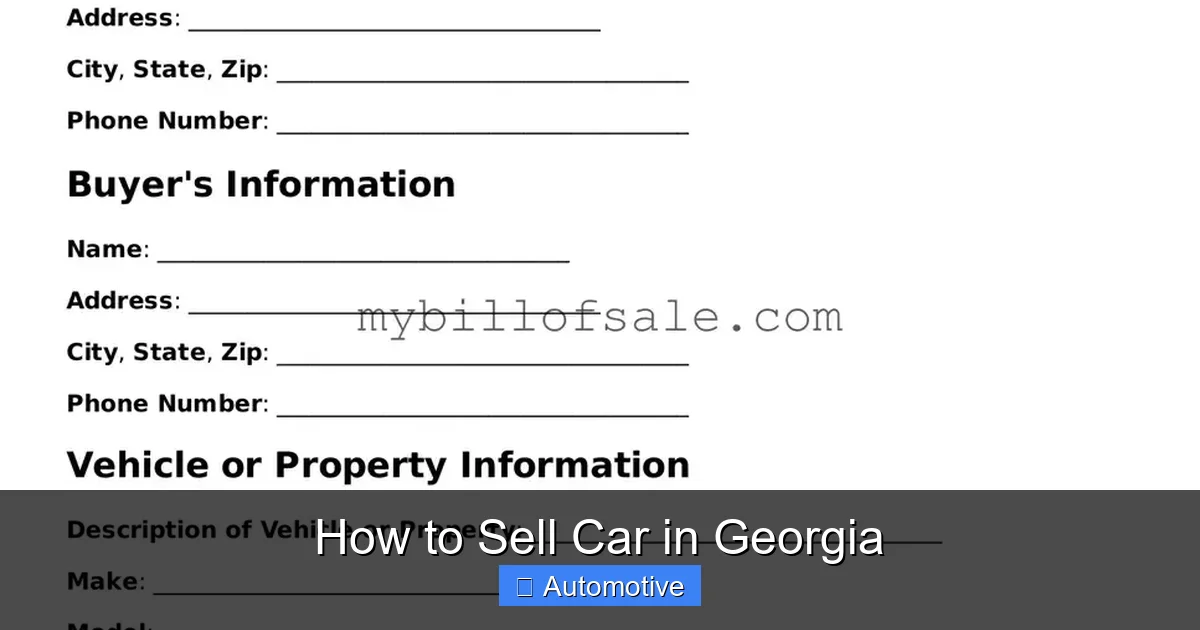
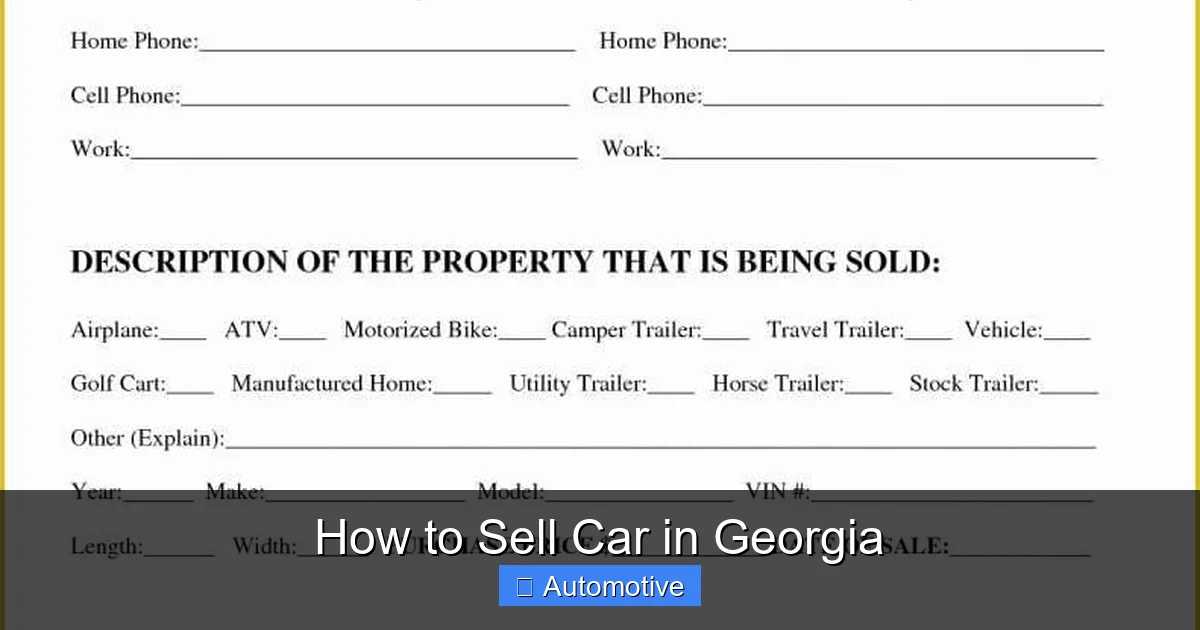
– **Bill of Sale:** While not always required, it’s highly recommended. It protects both parties and includes sale price, date, and vehicle details.
– **Odometer Disclosure:** Federal law requires you to disclose the mileage at the time of sale. This is usually done on the title or a separate form.
– **Emissions Certificate:** Required in certain counties (like Fulton, Cobb, and Gwinnett) if the car is more than 3 years old. The buyer must get this, but you should provide proof if you have it.
– **Release of Liability Form:** You must notify the Georgia DDS within 30 days of the sale to avoid liability for future tickets or accidents.
How to Transfer the Title
The buyer is responsible for registering the car in their name, but you must sign over the title correctly.
On the back of the title, fill in the buyer’s name, address, sale price, and odometer reading. Sign in the designated area—this must be notarized.
If you’re selling to a dealership, they’ll handle the title transfer. But for private sales, both parties should be present during the signing to avoid fraud.
Provide a Bill of Sale
A bill of sale isn’t legally required in Georgia, but it’s a smart move. It includes:
– Seller and buyer names and addresses
– Vehicle identification number (VIN)
– Sale price
– Date of sale
– Signatures of both parties
You can download a free template from the Georgia DDS website or create your own. Keep a copy for your records.
Release Liability with the DDS
Within 30 days of the sale, you must submit a Release of Liability form to the Georgia Department of Driver Services. This can be done online at the DDS website.
This step is crucial—it protects you from being held responsible for parking tickets, tolls, or accidents after the sale. Without it, you could still be liable.
Step 6: Finalize the Sale and Get Paid Safely
The final step is completing the transaction and getting paid. This is where scams often happen, so be cautious.
Accept Secure Payment Methods
Avoid cash for high-value transactions—it’s risky and hard to trace. Instead, use:
– **Cashier’s Check:** Get it from a bank and verify it’s legitimate before handing over the keys.
– **Bank Wire Transfer:** Safe and instant, but confirm the funds have cleared.
– **Certified Check:** Similar to a cashier’s check, but issued by the buyer’s bank.
Never accept personal checks—they can bounce.
Hand Over the Keys and Documents
Once payment is confirmed, give the buyer:
– The signed title
– Bill of sale
– Keys (including spare)
– Owner’s manual and service records
Make sure the buyer understands they need to register the car and get insurance before driving it.
Cancel Your Insurance
After the sale, contact your insurance company to cancel or transfer coverage. Don’t wait—driving an uninsured car, even for a day, can lead to fines.
If you’re buying a new car, you can often transfer your policy. Otherwise, cancel the old one and get a new quote.
Bonus Tips for a Smooth Sale
– **Be honest about the car’s condition.** Hiding problems can lead to disputes or legal issues.
– **Don’t rush.** Take your time to find the right buyer and price.
– **Use a mechanic inspection.** Offer to pay for a pre-purchase inspection to build trust.
– **Keep records.** Save copies of all documents and communication.
– **Stay safe.** Trust your instincts—if something feels off, walk away.
Conclusion
Selling a car in Georgia doesn’t have to be stressful. By following these steps—preparing your vehicle, pricing it right, advertising effectively, handling test drives safely, completing the paperwork correctly, and getting paid securely—you can sell your car quickly and for a fair price.
Remember, the key to a successful sale is transparency, preparation, and attention to Georgia’s legal requirements. Whether you’re selling a sedan, SUV, or truck, taking the time to do it right will pay off in the end.
So, grab your title, clean up your car, and get ready to hand over the keys to a happy new owner. With this guide, you’re well on your way to a smooth and successful sale.
Frequently Asked Questions
Do I need a notary to sell a car in Georgia?
Yes, the signature on the title must be notarized when selling a car in Georgia. This is a legal requirement to prevent fraud and ensure the sale is valid.
Can I sell my car without a title in Georgia?
No, you must have a valid title to sell a car in Georgia. If your title is lost, you’ll need to apply for a duplicate through the Georgia DDS before selling.
How long do I have to report a car sale to the DDS?
You must submit a Release of Liability form to the Georgia DDS within 30 days of the sale. This protects you from future liability.
Do I need an emissions test to sell my car in Georgia?
Emissions testing is required in certain counties for vehicles over 3 years old. The buyer is responsible for getting the test, but you should provide any existing documentation.
Can I sell my car if I still owe money on it?
Yes, but you’ll need to pay off the loan first or arrange for the buyer to assume the loan. Most private buyers prefer a clear title with no liens.
What happens if I don’t release liability after selling my car?
If you don’t notify the DDS, you could be held responsible for parking tickets, tolls, or accidents involving the car after the sale. Always file the Release of Liability form.
