
How to Sell a Car in Gt7

Selling a car in GT7 is more than just clicking a button—it’s about timing, market awareness, and smart strategy. Whether you’re upgrading your garage or cashing in on rare rides, understanding the in-game economy and auction system is key to getting top credit value.
So, you’ve been tearing up the tarmac in Gran Turismo 7, collecting cars like they’re going out of style. Maybe you’ve got a garage full of dream machines—some you love, some you’ve outgrown, and a few you just grabbed because they were on sale. Now, you’re thinking: “How do I sell a car in GT7 and turn that virtual ride into cold, hard credits?”
Well, you’re in the right place. Selling a car in GT7 isn’t as simple as dragging it to a trash can. It’s a nuanced process that blends strategy, timing, and a bit of market savvy. Whether you’re a weekend racer or a full-on car hoarder, knowing how to sell your vehicles effectively can supercharge your progression in the game. From upgrading to a faster ride to funding that dream supercar, every credit counts.
In this guide, we’ll walk you through everything you need to know about how to sell a car in GT7—step by step. We’ll cover the basics of the auction system, how to price your cars fairly, when to list them, and even how to avoid common pitfalls like scams or undervaluing rare models. By the end, you’ll be flipping cars like a pro and building the garage of your dreams—all without spending real money.
Key Takeaways
- Use the Auction House wisely: List cars during peak hours (evenings and weekends) for maximum visibility and bidding competition.
- Know your car’s value: Research recent sale prices using community tools or in-game trends to avoid underpricing.
- Clean and upgrade before selling: Fully tuned and clean cars attract higher bids, especially rare or collector models.
- Avoid scams and fake listings: Only sell through official channels and double-check buyer legitimacy in private trades.
- Time your sale with events: Limited-time events often boost demand for specific car classes or brands, increasing resale value.
- Keep a balanced garage: Don’t sell every car—some may become valuable later due to rarity or event relevance.
- Use credits strategically: Reinvest earnings into high-demand vehicles or tuning parts to grow your in-game wealth faster.
📑 Table of Contents
Understanding the GT7 Car Marketplace
Before you even think about hitting that “Sell” button, it’s important to understand how the GT7 economy works. Unlike real life, where you might list your car on Craigslist or trade it in at a dealership, GT7 uses a dynamic in-game auction house system. This means every car you sell goes up for bid, and other players decide how much it’s worth.
The auction house is where most of the action happens. It’s accessible from the main menu under “Garage” and then “Auction House.” Here, you can browse what others are selling, check recent sale prices, and list your own vehicles. The system is designed to simulate a real-world car market, with supply and demand playing a big role in pricing.
For example, if a new update introduces a rare Nissan Skyline GT-R with special liveries, demand might spike—even if it’s not the fastest car on the track. Players might be willing to pay top credits just to own it. On the flip side, common hatchbacks like the Toyota Corolla might sell for next to nothing unless they’re fully upgraded or have unique modifications.
One key thing to remember: the auction house isn’t instant. Listings last for a set time (usually 24 hours), and the highest bidder wins. This means you can’t just sell a car and get credits immediately. You have to wait for the auction to close. But that also means you can potentially get more than your car’s base value if bidding gets competitive.
Another factor is regional pricing. GT7 has a global player base, but the auction house is region-specific. If you’re playing in North America, your car will be listed in the NA auction house, where prices might differ from Europe or Asia due to player behavior, event schedules, or even time zones. This is why timing your sale matters—more players online usually means more bidders.
How the Auction System Works
Let’s break down the auction process step by step. First, go to your garage and select the car you want to sell. Once you’ve chosen it, look for the “Sell” option—usually found in the car’s detail menu. From there, you’ll be taken to the auction listing screen.
Here, you’ll set your starting bid and buyout price. The starting bid is the minimum amount someone can bid, while the buyout is the price at which a player can instantly purchase the car without waiting for the auction to end. It’s smart to set a reasonable starting bid—too high, and no one will bid; too low, and you might sell for less than it’s worth.
You’ll also choose the auction duration. Most players go with 24 hours, but you can select shorter or longer periods. Longer auctions give more time for bids, but shorter ones can create urgency. For rare or high-demand cars, a 24-hour listing during peak hours (evenings or weekends) often yields the best results.
Once listed, your car appears in the auction house for other players to see. They can view its stats, condition, tuning level, and any special features like liveries or decals. The more detailed and appealing your listing, the more likely it is to attract serious bidders.
After the auction ends, the highest bidder wins, and you receive the credits directly into your account. If no one bids, the car returns to your garage. No harm, no foul—just relist it with a lower starting bid or wait for better timing.
Factors That Influence Car Value
Not all cars are created equal in GT7. Some are worth a fortune, while others barely fetch a few thousand credits. So what makes one car more valuable than another? Let’s look at the key factors.
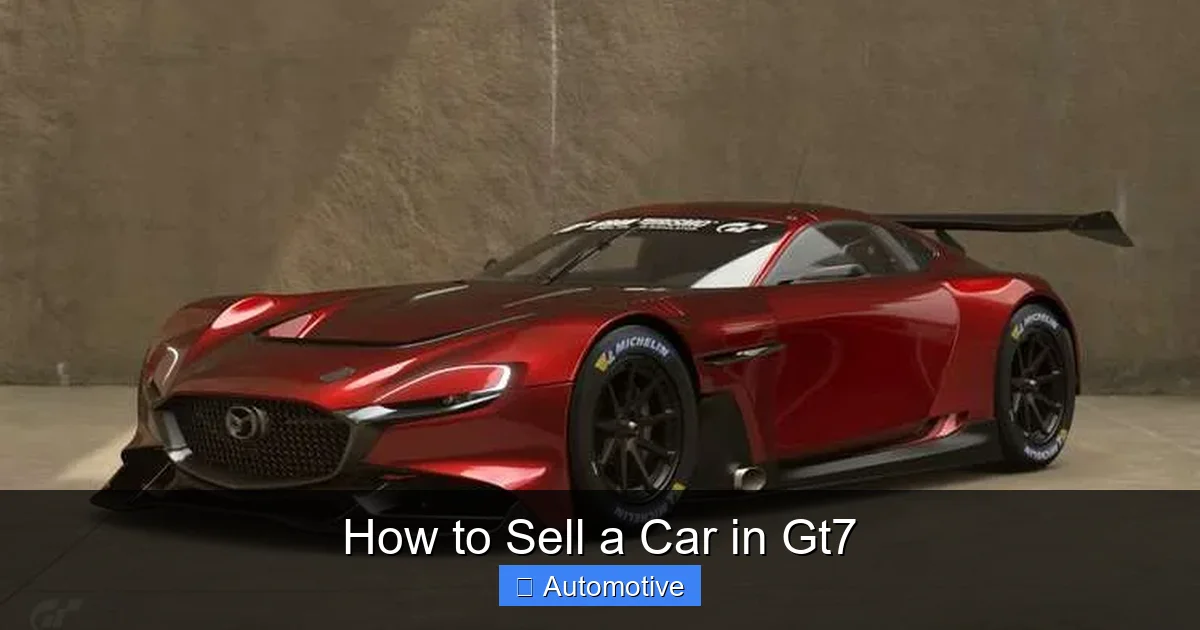
First, rarity. Limited-edition cars, event-exclusive models, or vehicles only available during special campaigns tend to hold or increase in value over time. For example, the Mazda RX-Vision GT3 Concept was only available during a specific event. Players who missed it now have to buy it from the auction house—often for a premium.
Second, performance. High-powered supercars like the Lamborghini Aventador or the Porsche 911 GT3 RS naturally attract more interest. But even among performance cars, tuning matters. A fully upgraded, clean, and well-maintained car will sell for more than a stock version, even if they’re the same model.
Third, aesthetics. Custom liveries, unique paint jobs, or rare decals can make a car stand out. Some players collect cars purely for their visual appeal, not their speed. If you’ve spent time designing a cool wrap or adding rare stickers, that effort can pay off in the auction house.
Fourth, condition. Just like real cars, GT7 vehicles have a condition rating—ranging from “Poor” to “Excellent.” A car in “Excellent” condition with no damage will always sell for more than one that’s scratched or dented. Always repair and clean your car before listing it.
Finally, demand. This is the wild card. Sometimes, a car becomes popular because of a new race series, a YouTube trend, or a developer spotlight. If everyone wants a Toyota GR Supra because it’s dominating in a new championship, prices will rise—even if it’s not the rarest car.
Step-by-Step Guide to Selling Your Car
Visual guide about How to Sell a Car in Gt7
Image source: drifted.com
Now that you understand the market, let’s walk through the actual process of how to sell a car in GT7. It’s straightforward, but a few smart moves can make a big difference in your final payout.
Step 1: Choose the Right Car to Sell
Not every car in your garage should be sold. Before listing anything, ask yourself: Do I still use this car? Is it rare or event-exclusive? Could it be valuable later? If the answer is “no” to all three, it’s probably safe to sell.
Focus on duplicates, outdated models, or cars you’ve fully upgraded and no longer need. For example, if you have three Honda Civics and only race one, sell the extras. Or if you’ve moved on from front-wheel drive to AWD rally cars, that old FWD hatchback might be prime auction material.
Avoid selling cars that are part of ongoing events or championships. If you’re competing in a series that requires a specific class of car, keep those until the event ends. You don’t want to sell your only Group B rally car right before a big race.
Step 2: Prepare the Car for Sale
First impressions matter—even in a video game. Before listing your car, give it a little TLC. Go to the “Customize” menu and clean it. Remove any dirt, scratches, or damage. A spotless car looks more valuable and cared for.
Next, check the tuning. If the car is fully upgraded with high-end parts, make sure those are included in the sale. Some players forget that tuning parts are sold with the car, so a maxed-out engine or suspension can significantly boost value.
If you’ve added custom liveries or decals, keep them on. Unique designs can attract collectors. But if the livery is messy or low-effort, consider removing it—sometimes less is more.
Finally, take a screenshot or note the car’s stats. This helps you remember what you’re selling and can be useful if you want to track your sales over time.
Step 3: Set the Right Price
Pricing is where many players go wrong. Set it too high, and no one bids. Set it too low, and you lose credits. So how do you find the sweet spot?
Start by researching. Go to the auction house and search for the same or similar cars. Look at recent sale prices—not just current listings. This gives you a real-world benchmark. For example, if three Mazda MX-5s sold for 150,000 credits in the last week, listing yours for 200,000 might be too optimistic.
Use the “Average Sale Price” as a guide, but don’t rely on it completely. If your car is in better condition or has rare parts, you can price it slightly higher. Conversely, if it’s stock or damaged, go lower.
Set a competitive starting bid—maybe 10–20% below the average sale price. This encourages early bidding and can trigger a bidding war. For the buyout, aim for 10–15% above the average. This gives serious buyers a chance to grab it instantly without overpaying.
Step 4: List the Car and Monitor the Auction
Once you’ve set your price, confirm the listing. Your car will appear in the auction house within minutes. Now, keep an eye on it. You can check the status from the “My Auctions” tab.
If you see no bids after a few hours, don’t panic. Sometimes it takes time. But if it’s been 12 hours and still nothing, consider lowering the starting bid or extending the auction. You can also relist it with a better description or during a busier time.
Avoid canceling the auction unless absolutely necessary. Once canceled, you can’t relist the same car for 24 hours—a rule designed to prevent spam.
Step 5: Collect Your Credits
When the auction ends, the highest bidder wins. You’ll receive a notification, and the credits will be added to your account automatically. No need to do anything else.
If no one bids, the car returns to your garage. You can relist it with a lower price or wait for a better time. Sometimes, patience pays off—especially with rare cars.
Tips to Maximize Your Sale Price
Visual guide about How to Sell a Car in Gt7
Image source: gtplus.app
Selling a car in GT7 isn’t just about listing it and hoping for the best. With a few smart strategies, you can significantly increase your earnings.
List During Peak Hours
Timing is everything. The auction house is busiest in the evenings and on weekends, especially between 6 PM and 10 PM local time. More players online means more potential bidders. Avoid listing during early mornings or weekdays when activity is low.
If you’re in a different time zone than most players, adjust accordingly. For example, if you’re in Europe but most bidders are in North America, list your car in the late afternoon European time to catch the NA evening rush.
Highlight Unique Features
When listing your car, make sure its best features are visible. If it has a rare livery, maxed-out engine, or event-exclusive parts, those should be front and center. Some players even take custom screenshots to showcase the car’s design.
You can’t add text descriptions in GT7, so rely on visuals. A clean, well-lit photo with the car’s name and stats visible can make a big difference.
Bundle with Tuning Parts (Indirectly)
While you can’t sell cars with separate part bundles, a fully tuned car is essentially a package deal. Buyers know they’re getting not just the car, but all the upgrades. This is especially valuable for high-performance models where tuning can cost hundreds of thousands of credits.
If you’ve invested heavily in a car, don’t sell it stock. Max it out first—then sell. The return on investment is usually worth it.
Watch for Market Trends
The GT7 economy shifts constantly. New updates, events, and community trends can suddenly make certain cars hot commodities. For example, when Polyphony Digital added a new rally championship, demand for Group B cars skyrocketed.
Follow GT7 forums, Reddit, or YouTube channels to stay informed. If you hear rumors of a new event requiring Japanese cars, consider holding onto your Nissan or Toyota models—they might be worth more soon.
Avoiding Common Mistakes
Visual guide about How to Sell a Car in Gt7
Image source: media.karousell.com
Even experienced players make mistakes when selling cars. Here are a few to watch out for.
Selling Too Early
It’s tempting to sell a car as soon as you get a new one. But sometimes, holding onto it pays off. Rare cars can increase in value over time, especially if they become event-exclusive or hard to obtain.
Ask yourself: Will I regret selling this in a month? If yes, keep it.
Ignoring Condition and Tuning
A dirty, damaged car with stock parts will sell for pennies. Always clean and upgrade before listing. It only takes a few minutes and can double or triple your sale price.
Falling for Scams
While GT7’s auction system is secure, private trades can be risky. Never accept offers outside the official system. If someone messages you offering “double credits” in exchange for a direct trade, it’s almost always a scam.
Stick to the auction house. It’s safer, fairer, and backed by the game.
Overpricing Common Cars
Just because you love your Ford Focus doesn’t mean everyone else does. Be realistic about pricing. Use recent sales as a guide, not your personal attachment.
When to Hold vs. When to Sell
Deciding whether to sell or keep a car is part art, part science. Here’s a quick rule of thumb:
– Sell: Duplicates, outdated models, cars you no longer use, or those with low rarity.
– Hold: Event-exclusive cars, rare liveries, high-performance models you might need later, or cars with sentimental value.
If you’re unsure, wait. The GT7 garage has plenty of space, and holding a car costs nothing. But once you sell it, it’s gone forever—unless you buy it back, often at a higher price.
Conclusion
Learning how to sell a car in GT7 is a valuable skill that can accelerate your progress and help you build the ultimate garage. It’s not just about getting rid of old rides—it’s about understanding the in-game economy, timing your sales, and presenting your cars in the best possible light.
By using the auction house wisely, pricing your vehicles fairly, and avoiding common pitfalls, you can turn every sale into a win. Whether you’re funding your next supercar or just clearing space, smart selling puts you in control of your GT7 journey.
So next time you’re staring at a car you no longer need, don’t just delete it. List it. Clean it. Price it right. And watch the credits roll in. With a little strategy, that old hatchback could be the key to your dream ride.
Frequently Asked Questions
Can I sell a car directly to another player in GT7?
No, GT7 does not support direct player-to-player sales outside the auction house. All car transactions must go through the official auction system to ensure fairness and security.
How long does it take to sell a car in GT7?
Auction listings typically last 24 hours, but you can choose shorter or longer durations. The sale completes once the auction ends and the highest bidder wins.
Do tuning parts sell with the car?
Yes, all installed tuning parts are included when you sell a car. This means a fully upgraded car can sell for significantly more than a stock version.
What happens if no one bids on my car?
If the auction ends with no bids, the car returns to your garage. You can relist it with a lower starting bid or wait for better market conditions.
Can I cancel an auction after listing?
Yes, but canceling prevents you from relisting the same car for 24 hours. It’s best to wait it out unless you made a serious error in pricing or listing.
Are rare cars always worth more?
Not always. Rarity increases potential value, but demand, condition, and tuning also matter. A rare car in poor condition may sell for less than a common but pristine model.
