
How to Sell a Car in Tennessee

Selling a car in Tennessee doesn’t have to be stressful. Whether you’re upgrading, downsizing, or just ready to part ways with your ride, this guide walks you through every step—from preparing your vehicle to finalizing the sale legally and safely. We’ll cover everything you need to know to sell your car quickly and get the best price in the Volunteer State.
Key Takeaways
- Understand Tennessee’s title and registration laws: You must have a clear title and current registration to sell a car legally in Tennessee.
- Get a vehicle history report: Providing a Carfax or AutoCheck report builds buyer trust and can increase your car’s value.
- Price your car competitively: Use tools like Kelley Blue Book and Edmunds to research fair market value based on your car’s condition, mileage, and location.
- Prepare your car for sale: A clean, well-maintained vehicle with recent maintenance records sells faster and for more money.
- Choose the right selling method: Decide between private sale, trade-in, or selling to a dealer based on speed, convenience, and profit.
- Complete the Bill of Sale and title transfer: Both documents are required by the Tennessee Department of Revenue to finalize the sale legally.
- Notify the DMV after the sale: Filing a Notice of Sale protects you from liability if the new owner gets a ticket or causes an accident.
📑 Table of Contents
- How to Sell a Car in Tennessee: A Complete Step-by-Step Guide
- Step 1: Prepare Your Vehicle for Sale
- Step 2: Determine the Right Price
- Step 3: Choose How to Sell Your Car
- Step 4: Complete the Paperwork Correctly
- Step 5: Advertise Your Car Effectively
- Step 6: Finalize the Sale and Protect Yourself
- Common Mistakes to Avoid When Selling a Car in Tennessee
- Final Thoughts: Sell Your Car in Tennessee with Confidence
How to Sell a Car in Tennessee: A Complete Step-by-Step Guide
Selling a car can feel overwhelming—especially if you’ve never done it before. But in Tennessee, the process is actually pretty straightforward once you know the steps. Whether you’re selling a sedan, SUV, truck, or even a classic car, the Volunteer State has clear rules and procedures to help you complete the sale safely and legally.
The good news? You don’t need a dealer license or special training to sell your car privately. With the right preparation, a little research, and attention to detail, you can sell your vehicle quickly, avoid scams, and walk away with cash in hand. This guide will walk you through every step—from cleaning your car to handing over the keys—so you can sell your car in Tennessee with confidence.
Step 1: Prepare Your Vehicle for Sale
Visual guide about How to Sell a Car in Tennessee
Image source: images.template.net
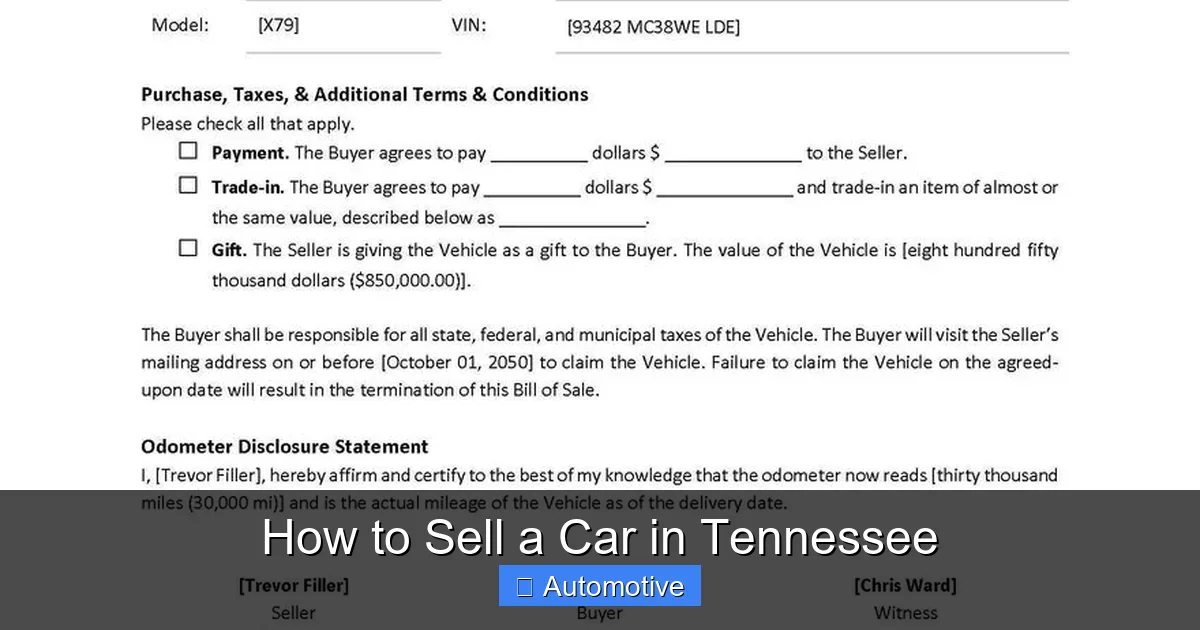
Before you even think about listing your car, take the time to get it ready. First impressions matter, and a well-prepared vehicle not only sells faster but often for a higher price. Think of it this way: you wouldn’t show up to a job interview in wrinkled clothes, right? The same goes for your car.
Clean Inside and Out
Start with a thorough cleaning. Wash the exterior, wax it if possible, and clean the windows inside and out. Don’t forget the tires—dress them up with tire shine for that “just-detailed” look. Inside, vacuum every crevice, wipe down surfaces, and remove any personal items like old receipts, air fresheners, or loose change. If your car has odors, consider using an odor eliminator or placing an open box of baking soda overnight.
Address Minor Repairs
You don’t need to spend hundreds on repairs, but fixing small issues can make a big difference. Replace burnt-out light bulbs, fix cracked windshield wipers, and patch up minor dents or scratches if it’s affordable. A working radio, functional AC, and intact upholstery all add to the perceived value.
Gather Maintenance Records
Buyers love seeing proof that a car has been well cared for. Collect all your maintenance records—oil changes, brake work, tire rotations, and any major repairs. Organize them in a folder or binder. If you don’t have paper records, check with your mechanic or use apps like CarFax or MyCarfax to pull service history.
Take High-Quality Photos
Photos are your car’s first impression online. Take pictures in good lighting—early morning or late afternoon works best. Capture the exterior from multiple angles, the interior (especially the dashboard, seats, and trunk), and close-ups of any flaws you’re disclosing. Avoid cluttered backgrounds and make sure the car is clean and parked in a neutral location.
Step 2: Determine the Right Price
Visual guide about How to Sell a Car in Tennessee
Image source: c8.alamy.com
Pricing your car correctly is one of the most important steps in the selling process. Overprice it, and it’ll sit on the market for months. Underprice it, and you’ll lose money unnecessarily. The goal is to find that sweet spot where your car is competitive but still reflects its true value.
Use Online Valuation Tools
Start by checking pricing guides like Kelley Blue Book (KBB), Edmunds, and NADA Guides. These tools let you input your car’s make, model, year, mileage, condition, and location to get a fair market value. Be honest about the condition—choosing “excellent” when your car is only “good” will skew the results.
For example, a 2018 Honda CR-V with 60,000 miles in “good” condition might be valued at $18,500 in Nashville, but only $17,200 in a smaller town like Cookeville. Location matters because demand varies by region.
Research Local Listings
After getting a baseline from KBB, look at similar cars for sale in your area. Check Facebook Marketplace, Craigslist, Autotrader, and Cars.com. Note the asking prices, but also consider how long they’ve been listed. A car priced at $19,000 that’s been up for 60 days might be overpriced.
Adjust for Condition and Extras
If your car has low mileage, new tires, a premium sound system, or a recent transmission replacement, you can justify a higher price. On the flip side, if it has high mileage, minor damage, or needs repairs, price it accordingly. Be transparent—buyers appreciate honesty and are more likely to trust you.
Consider Market Trends
The used car market can fluctuate. In 2023 and early 2024, used car prices were high due to supply shortages. But as inventory improved, prices began to stabilize. Keep an eye on trends in your area. If trucks are in high demand in Knoxville, for instance, you might get more for your Ford F-150.
Step 3: Choose How to Sell Your Car
Visual guide about How to Sell a Car in Tennessee
Image source: i0.wp.com
Once your car is ready and priced, it’s time to decide how you want to sell it. Each method has pros and cons, so choose the one that best fits your timeline, comfort level, and financial goals.
Private Sale
Selling privately typically gets you the highest return. You’re dealing directly with the buyer, so there’s no middleman taking a cut. Platforms like Facebook Marketplace, Craigslist, and OfferUp are popular in Tennessee.
Pros:
– Higher sale price
– Full control over negotiations
– No dealer fees
Cons:
– More time and effort
– Risk of scams or unsafe meetings
– Need to handle paperwork yourself
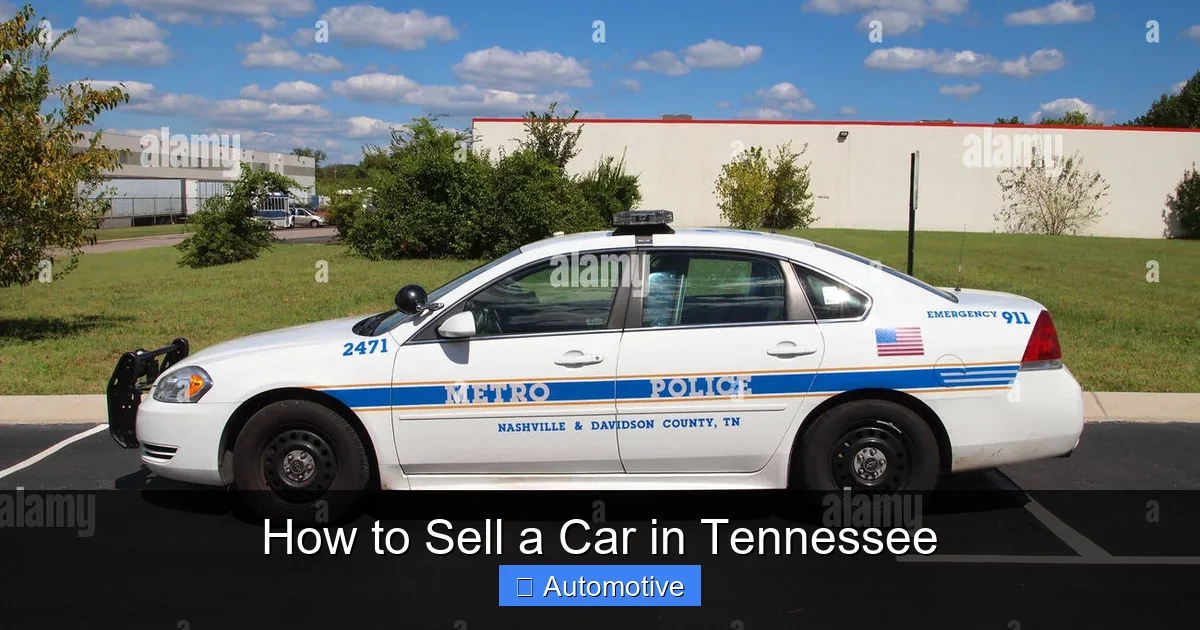
Tip: Always meet in a public place, like a police station parking lot, and bring a friend. Never accept personal checks or wire transfers—cash or cashier’s check is safest.
Trade-In at a Dealership
If you’re buying a new car, trading in your old one is convenient. The dealer handles the paperwork, and you can apply the trade-in value toward your purchase.
Pros:
– Fast and easy
– No need to find a buyer
– Tax savings: In Tennessee, you only pay sales tax on the difference between the new car price and trade-in value
Cons:
– Lower offer than private sale
– Less negotiation power
Example: If your car is worth $15,000 privately but the dealer offers $12,000, you’re leaving $3,000 on the table. But if you’re buying a $30,000 car, the tax savings might offset some of that loss.
Sell to a Dealer or Online Car Buyer
Companies like CarMax, Carvana, and Vroom buy cars directly. You get an instant offer online, schedule an inspection, and get paid quickly—often the same day.
Pros:
– Very fast and convenient
– No advertising or meeting strangers
– Free vehicle inspection and offer
Cons:
– Offers are usually lower than private sale
– Limited negotiation
These services are great if you need to sell fast, but don’t expect top dollar.
Step 4: Complete the Paperwork Correctly
This is where many sellers make mistakes. Tennessee has specific requirements for transferring ownership, and skipping a step can lead to legal trouble or delays.
Bill of Sale
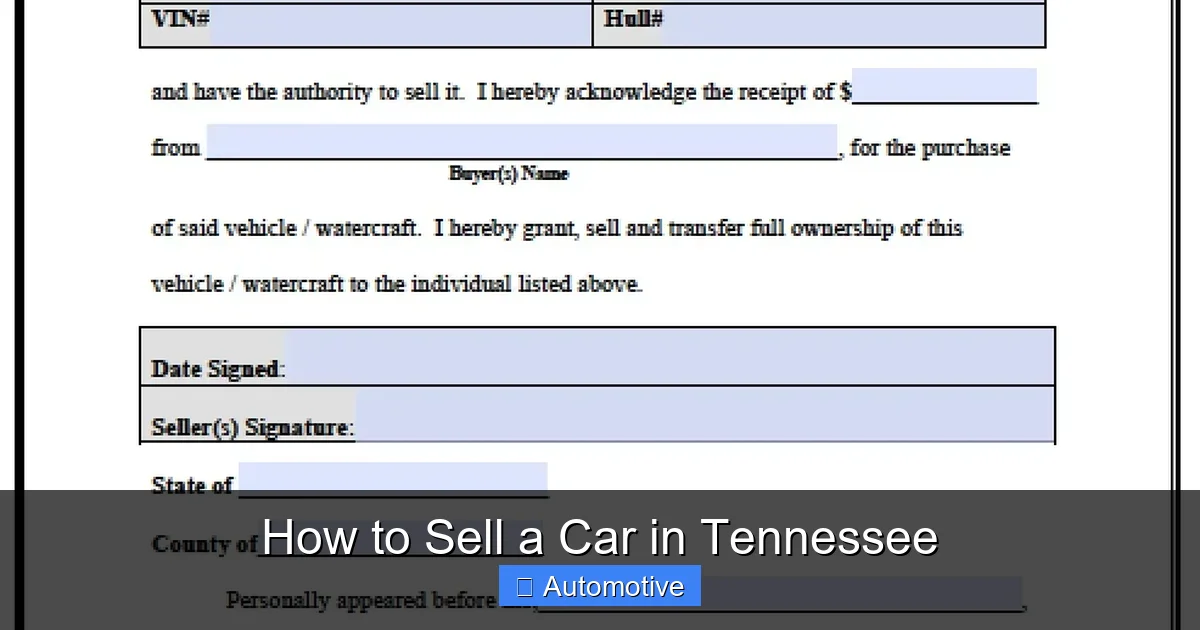
A Bill of Sale is a legal document that records the transaction. While not always required by the DMV, it’s highly recommended. It protects both you and the buyer by proving the sale occurred.
Include:
– Seller and buyer names and addresses
– Vehicle make, model, year, and VIN
– Sale price
– Date of sale
– Odometer reading
– Signatures of both parties
You can download a free Tennessee Bill of Sale template from the Tennessee Department of Revenue website or use a service like Rocket Lawyer.
Title Transfer
The title is the most important document. In Tennessee, you must sign over the title to the buyer. Here’s how:
1. Fill in the buyer’s name and address in the “Assignment of Title” section.
2. Sign the title in the presence of a notary public (required in Tennessee).
3. Complete the odometer disclosure section (required for vehicles under 16,000 lbs and less than 10 years old).
4. Provide the buyer with a copy of the title and keep a copy for your records.
Important: Never leave the “buyer” section blank. If the buyer doesn’t fill it out correctly, you could be held responsible.
Release of Liability
After the sale, you must notify the Tennessee Department of Revenue that you’re no longer responsible for the vehicle. This is done by filing a Notice of Sale (Form RV-102).
You can file it:
– Online at the TN DOR website
– By mail
– In person at a local DMV office
Filing this form protects you if the buyer gets a ticket, causes an accident, or fails to register the car. Without it, you could still be liable.
Remove License Plates
In Tennessee, license plates stay with the seller—not the car. Remove them before handing over the keys. You can transfer them to a new vehicle or return them to the DMV.
Step 5: Advertise Your Car Effectively
Now that your car is ready and priced, it’s time to find a buyer. A great ad can make all the difference.
Write a Clear, Honest Description
Your ad should be easy to read and packed with useful info. Use short paragraphs and bullet points. Include:
– Year, make, model, and trim
– Mileage
– Condition (be honest about flaws)
– Recent repairs or upgrades
– Reason for selling
– Whether it’s been in an accident
Example:
“2019 Toyota Camry LE – 45,000 miles – Excellent condition – Single owner – No accidents – New tires and brakes in 2023 – Clean title – Selling due to relocation.”
Avoid exaggerations like “like new” if the car has wear and tear. Buyers will spot dishonesty and move on.
Choose the Right Platforms
Different platforms attract different buyers:
– Facebook Marketplace: Great for local sales, easy to use, and free.
– Craigslist: Still popular in smaller Tennessee towns.
– Autotrader and Cars.com: Better for higher-end or specialty vehicles.
– OfferUp: Mobile-friendly and growing in popularity.
Post on at least two platforms to maximize visibility.
Respond Quickly and Professionally
When buyers message you, reply within 24 hours. Be polite and answer questions honestly. If someone asks about the transmission, don’t say “it’s fine”—say “it was replaced in 2022 and has been trouble-free since.”
Schedule Test Drives Safely
Always meet in a public place during daylight hours. Bring a friend or family member. Ask for the buyer’s driver’s license and insurance card. Never let someone drive alone—ride along or follow in another car.
Step 6: Finalize the Sale and Protect Yourself
Once you’ve found a serious buyer, it’s time to close the deal. Don’t rush this part—small mistakes can cause big problems later.
Accept Safe Payment
The safest way to get paid is with cash or a cashier’s check from a local bank. Avoid personal checks, money orders, or wire transfers—they can be fake.
If using a cashier’s check, go to the bank with the buyer to verify it’s real. Some scammers use fake checks that clear initially but bounce later.
Complete the Transaction Together
At the time of sale:
– Sign the title in front of a notary
– Fill out the Bill of Sale
– Exchange keys and documents
– Remove license plates
Give the buyer:
– Signed title
– Bill of Sale
– Maintenance records (if available)
– Owner’s manual and spare keys
Keep:
– Copy of the title
– Copy of the Bill of Sale
– Receipt of payment
File the Notice of Sale
Within 5 days of the sale, file Form RV-102 with the Tennessee DOR. This releases you from liability. You can do this online at [https://www.tn.gov/revenue.html](https://www.tn.gov/revenue.html).
Cancel Your Insurance
Once the car is sold, call your insurance company to cancel or transfer coverage. Don’t wait—you’re still paying for a car you no longer own.
Common Mistakes to Avoid When Selling a Car in Tennessee
Even experienced sellers make errors. Here are some pitfalls to watch out for:
– **Not getting the title notarized:** Tennessee requires notarization for title transfers. Skip this, and the DMV won’t accept it.
– **Forgetting the odometer disclosure:** Required for most vehicles under 10 years old. Failure to complete it can delay registration.
– **Selling without a clear title:** If you still owe money on the car, the lienholder must release the title before you can sell. Contact your lender first.
– **Not filing the Notice of Sale:** This is a common oversight that can lead to fines or liability.
– **Accepting risky payment methods:** Stick to cash or verified cashier’s checks.
Final Thoughts: Sell Your Car in Tennessee with Confidence
Selling a car in Tennessee doesn’t have to be complicated. With the right preparation, pricing, and paperwork, you can complete the sale smoothly and legally. Whether you choose a private sale, trade-in, or instant offer, the key is to be informed, honest, and proactive.
Take the time to clean your car, research its value, and protect yourself with proper documentation. And remember—filing that Notice of Sale is just as important as signing the title. It’s your shield against future headaches.
By following this guide, you’ll not only sell your car faster but also get a fair price and peace of mind. So grab your keys, gather your paperwork, and get ready to hand over the keys to a happy new owner.
Frequently Asked Questions
Do I need a notary to sell a car in Tennessee?
Yes, Tennessee law requires that the title transfer be notarized. Both the seller and buyer must sign the title in the presence of a notary public. This ensures the signatures are valid and helps prevent fraud.
Can I sell my car if I still owe money on it?
You can only sell your car if the lienholder (usually a bank or credit union) releases the title. Contact your lender to pay off the loan or arrange for the buyer to pay it directly. The title must be clear before the sale is complete.
How long do I have to file the Notice of Sale in Tennessee?
You must file the Notice of Sale (Form RV-102) within 5 days of the sale. This protects you from liability if the new owner gets a ticket or causes an accident. You can file online, by mail, or in person.
What happens if I don’t transfer the title correctly?
If the title isn’t transferred properly, the buyer may not be able to register the car. Worse, you could remain legally responsible for the vehicle. Always ensure the title is signed, notarized, and submitted correctly.
Can I sell my car without a Bill of Sale in Tennessee?
While not legally required, a Bill of Sale is strongly recommended. It serves as proof of the transaction and protects both parties. The Tennessee DMV suggests using one to avoid disputes.
Do I have to return my license plates after selling a car in Tennessee?
Yes, license plates are not transferred with the vehicle in Tennessee. You must remove them and either transfer them to another vehicle or return them to the DMV. Keep the plates—they’re yours.
