
Signs You Should Sell a Car

Owning a car isn’t forever—sometimes, selling is the smarter move. Whether your vehicle is costing too much to maintain or no longer fits your life, recognizing the signs you should sell a car can save you money and stress. This guide helps you spot those red flags early and make a confident decision.
Key Takeaways
- Frequent and expensive repairs: If your car needs constant fixes and repair bills exceed its value, it’s time to sell.
- Rising maintenance costs: As cars age, parts wear out and servicing becomes pricier—track your annual upkeep to spot trends.
- Declining reliability: Breakdowns, warning lights, and unexpected failures signal your car may no longer be dependable.
- Lifestyle or family changes: A growing family, new job location, or remote work may mean you need a different type of vehicle.
- Fuel inefficiency: Older cars often guzzle gas; switching to a more efficient model can save hundreds annually.
- Safety concerns: If your car lacks modern safety features or has a poor crash rating, upgrading improves protection.
- Emotional detachment: If you dread driving your car or feel relieved when it’s in the shop, it might be time to let it go.
📑 Table of Contents
- Introduction: Is It Time to Say Goodbye to Your Car?
- 1. Frequent and Costly Repairs Are Piling Up
- 2. Rising Maintenance Costs Are Eating Your Budget
- 3. Your Car Is Becoming Unreliable
- 4. Your Lifestyle or Family Needs Have Changed
- 5. Fuel Inefficiency Is Hurting Your Wallet
- 6. Safety Concerns Are Putting You at Risk
- 7. You’ve Lost Emotional Connection to Your Car
- Conclusion: Trust Your Gut and Make the Smart Move
Introduction: Is It Time to Say Goodbye to Your Car?
We’ve all been there—sitting in the driver’s seat, staring at the check engine light, wondering if this is the last straw. Cars are more than just metal and rubber; they’re part of our daily routines, our commutes, our weekend adventures. But even the most beloved vehicles eventually reach a point where holding onto them stops making sense. Recognizing the signs you should sell a car isn’t about giving up—it’s about making a smart, forward-thinking decision that benefits your wallet, your safety, and your peace of mind.
Many people delay selling their car because of emotional attachment, fear of the unknown, or the hassle of shopping for a new one. But clinging to a vehicle that’s costing you more than it’s worth can drain your finances and increase stress. Whether your car is breaking down more often, guzzling gas, or simply no longer matching your lifestyle, there are clear indicators that it’s time to move on. This guide will walk you through the most common and telling signs you should sell a car, helping you evaluate your situation objectively and confidently.
1. Frequent and Costly Repairs Are Piling Up
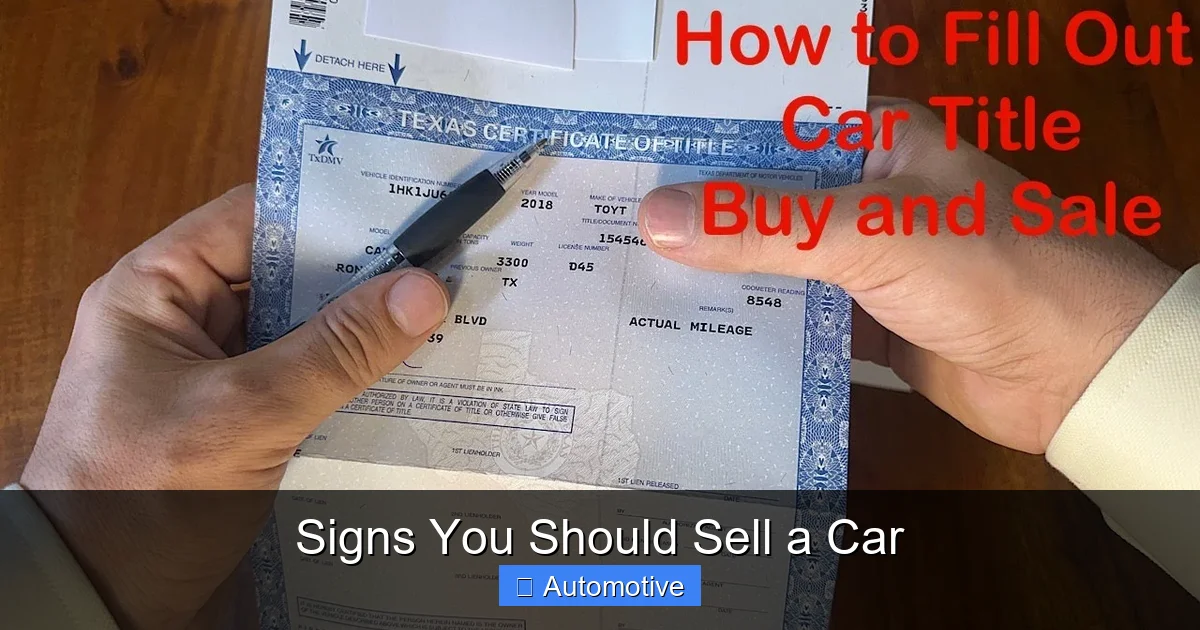
One of the most obvious signs you should sell a car is when repair bills start stacking up faster than you can pay them off. It’s normal for older cars to need occasional fixes, but when your mechanic becomes a regular stop on your weekly itinerary, it’s time to rethink your situation. A single major repair—like a transmission replacement or engine overhaul—can cost thousands, often exceeding the car’s current market value.
Visual guide about Signs You Should Sell a Car
Image source: i.ytimg.com
When Repairs Outweigh the Car’s Worth
Let’s say your 12-year-old sedan needs a new transmission. The repair quote comes in at $3,500. Meanwhile, your car is valued at $4,000 in good condition. Spending nearly the entire value of the car on one fix doesn’t make financial sense. In this case, selling—even for parts or as-is—might net you more than the repair would return in longevity.
Use the “50% rule” as a guideline: if a repair costs more than half the car’s current value, it’s usually better to sell. This rule helps prevent sinking money into a sinking ship. Keep a repair log to track expenses over time. If you’re spending $1,000 or more per year on fixes, that’s a strong signal.
Common High-Cost Repairs to Watch For
- Transmission failure: Often costs $2,000–$4,000 to repair or replace.
- Engine issues: Internal problems can run $3,000–$7,000.
- Electrical system failures: Modern cars have complex wiring; diagnosing and fixing can be expensive.
- Suspension and brake overhauls: While not always catastrophic, these can add up quickly.
Even if you love your car, repeated trips to the shop erode trust and reliability. Ask yourself: “Would I buy this car today, knowing its repair history?” If the answer is no, it’s probably time to sell.
2. Rising Maintenance Costs Are Eating Your Budget
Maintenance is different from repairs. Repairs fix broken things; maintenance keeps things running. But as cars age, even routine upkeep becomes more frequent and expensive. Oil changes, tire rotations, brake pad replacements, and fluid flushes are standard, but older vehicles often need more intensive care.

Visual guide about Signs You Should Sell a Car
Image source: scrapyardindia.com
Tracking Your Annual Maintenance Spend
Start by reviewing your receipts from the past 12–24 months. Add up everything: oil changes, filters, belts, hoses, tires, and any scheduled services. If you’re spending $800–$1,200 or more per year on maintenance alone, that’s a red flag—especially if your car is over 10 years old.
For example, a 2012 Honda Civic might cost $600 annually in maintenance when new. By year 10, that could climb to $1,000 or more due to worn components. Compare that to a newer model with lower mileage and a warranty—your long-term costs could drop significantly.
Why Older Cars Cost More to Maintain
- Wear and tear: Seals, gaskets, and hoses degrade over time.
- Hard-to-find parts: Discontinued models may require specialty or aftermarket components.
- Increased labor time: Mechanics may spend more hours diagnosing issues in older vehicles.
- Fluids and lubricants: Older engines may burn oil or leak fluids, requiring more frequent top-offs.
Consider the “total cost of ownership”—not just the purchase price, but fuel, insurance, maintenance, and repairs. If your car’s annual upkeep is eating into your savings or emergency fund, it’s a sign you should sell a car and upgrade to something more economical.
3. Your Car Is Becoming Unreliable
Reliability is the backbone of car ownership. You need to trust that your vehicle will start in the morning, get you to work, and bring you home safely. When that trust starts to crack, it’s one of the clearest signs you should sell a car.

Visual guide about Signs You Should Sell a Car
Image source: falaya.com
Signs of Declining Reliability
- Frequent breakdowns: Stranded on the side of the road more than once a year?
- Warning lights that won’t go away: Check engine, ABS, or battery lights that come on repeatedly.
- Strange noises: Knocking, grinding, or squealing that wasn’t there before.
- Starting issues: The car hesitates, cranks slowly, or won’t start in cold weather.
- Electrical glitches: Power windows, locks, or infotainment systems acting up.
Imagine you’re rushing to drop your kid at school, and the car won’t start. Again. Or you’re on a road trip, and the engine overheats in the middle of nowhere. These aren’t just inconveniences—they’re safety risks and stress triggers.
How to Test Your Car’s Reliability
Try this simple test: over the next month, note every time your car gives you trouble—big or small. Keep a journal. If you log more than three incidents, it’s time to consider selling. Also, check your car’s reliability rating on sites like Consumer Reports or J.D. Power. If it scores poorly, especially in its age group, that’s a strong indicator.
Even if your car still runs, declining reliability affects your quality of life. You start planning your day around potential breakdowns. You avoid long trips. You feel anxious every time you turn the key. That’s not freedom—that’s a prison on wheels.
4. Your Lifestyle or Family Needs Have Changed
Cars should adapt to your life, not the other way around. If your current vehicle no longer fits your needs, it’s one of the most practical signs you should sell a car. Life changes fast—what worked for you five years ago might not work today.
Common Lifestyle Shifts That Call for a New Car
- Growing family: You had one kid; now you have three. Your compact sedan can’t fit car seats, strollers, and groceries.
- New job or commute: You switched to a job 50 miles away and now spend 2 hours commuting daily. Your gas-guzzling SUV is costing a fortune.
- Remote work: You no longer drive to the office. Your luxury car sits in the garage, depreciating.
- Moving to a city: Parking is tight, and your large truck is hard to maneuver.
- Hobbies or activities: You took up camping, biking, or boating and need a vehicle with cargo space or towing capacity.
For example, Sarah bought a sporty coupe when she was single. Now married with a dog and a baby on the way, she realizes she needs a minivan or SUV. Her coupe is fun but impractical. Selling it now—before it loses more value—makes sense.
Matching Your Car to Your Current Life
Ask yourself these questions:
- How many people do I regularly transport?
- How much cargo do I carry weekly?
- How many miles do I drive per month?
- Do I need all-wheel drive, high ground clearance, or towing?
- Is fuel efficiency a priority?
If your answers don’t align with your current car’s capabilities, it’s time to sell. Upgrading to a vehicle that fits your lifestyle improves convenience, safety, and satisfaction.
5. Fuel Inefficiency Is Hurting Your Wallet
Gas prices fluctuate, but one thing stays constant: older cars are less fuel-efficient. If you’re spending $200 or more per month on gas, and your car gets under 20 MPG, it’s a strong sign you should sell a car and switch to something more efficient.
Calculating Your Fuel Costs
Let’s do the math. Suppose you drive 1,000 miles per month. Your current car gets 18 MPG. At $3.50 per gallon, you’re using about 55.6 gallons per month—costing $194.60. Now imagine switching to a hybrid that gets 45 MPG. You’d use only 22.2 gallons, costing $77.70. That’s a savings of $116.90 per month—over $1,400 per year.
Even if you keep your car for another two years, that’s nearly $3,000 in savings. Plus, you’ll reduce your carbon footprint and enjoy a quieter, smoother ride.
Vehicles with Poor Fuel Economy to Avoid
- Large SUVs and trucks from the 2000s (often under 15 MPG)
- V8 engines in sedans or coupes
- Older diesel models without modern emissions systems
- High-performance cars with turbocharged engines (unless driven conservatively)
If your car falls into one of these categories and you drive frequently, selling it could free up significant cash. Use online calculators like the EPA’s Fuel Economy Guide to compare your current vehicle with newer, more efficient models.
6. Safety Concerns Are Putting You at Risk
Safety technology has advanced dramatically in the last decade. If your car is more than 10 years old, it likely lacks critical safety features that could save your life. This is one of the most important signs you should sell a car—your safety is priceless.
Modern Safety Features Older Cars Lack
- Automatic emergency braking (AEB): Detects collisions and applies brakes if you don’t.
- Blind-spot monitoring: Alerts you to vehicles in your blind spot.
- Lane departure warning: Notifies you if you drift out of your lane.
- Adaptive cruise control: Maintains a safe distance from the car ahead.
- Rearview cameras: Required in all new cars since 2018—makes reversing safer.
- Advanced airbag systems: Side, curtain, and knee airbags offer better protection.
A 2010 sedan might have basic airbags and ABS, but it won’t have AEB or lane assist. In a panic stop or sudden lane change, those features can prevent a crash. The Insurance Institute for Highway Safety (IIHS) consistently shows that newer cars have lower fatality rates.
Crash Test Ratings Matter
Check your car’s crash test ratings on the IIHS or NHTSA websites. If it scores “Poor” or “Marginal” in key areas—especially side impact or roof strength—it’s a safety risk. Even if you drive carefully, you can’t control other drivers. Upgrading to a car with a “Good” or “Top Safety Pick” rating significantly improves your protection.
For families, this is non-negotiable. Parents want the safest possible vehicle for their children. If your car can’t meet modern safety standards, selling it is a responsible choice.
7. You’ve Lost Emotional Connection to Your Car
Sometimes, the signs you should sell a car aren’t mechanical or financial—they’re emotional. If you feel dread, annoyance, or relief when your car breaks down, it’s time to let go.
Emotional Red Flags
- You avoid driving it unless absolutely necessary.
- You feel embarrassed parking it in public.
- You’re constantly worried about it breaking down.
- You feel happier when it’s in the shop because you don’t have to drive it.
- You daydream about a different car every time you sit behind the wheel.
Emotional detachment is a powerful signal. Cars are tools, but they also reflect our identity and lifestyle. If yours no longer feels like “you,” it’s okay to move on. You deserve a vehicle that makes you feel confident, comfortable, and excited to drive.
The Psychology of Car Attachment
We often attach memories to our cars—first road trip, first date, college graduation. But holding onto a car out of nostalgia can prevent you from progressing. Selling it doesn’t erase those memories; it frees you to create new ones with a vehicle that better serves your current life.
Think of it like cleaning out your closet. Just because you wore that jacket in high school doesn’t mean you need to keep it forever. Letting go creates space for something better.
Conclusion: Trust Your Gut and Make the Smart Move
Recognizing the signs you should sell a car isn’t always easy, but it’s essential for your financial health, safety, and happiness. Whether it’s constant repairs, rising costs, or a mismatch with your lifestyle, these indicators are your car’s way of saying, “It’s time.” Ignoring them can lead to stress, unexpected expenses, and even dangerous situations on the road.
The good news? Selling your car doesn’t have to be overwhelming. With today’s online tools, you can get a fair valuation, compare offers, and complete the sale in days—not weeks. And upgrading to a newer, more reliable vehicle can improve your daily life in ways you hadn’t imagined: better fuel economy, advanced safety, smoother rides, and peace of mind.
So take a deep breath, review the signs, and trust your instincts. If multiple red flags are waving, it’s probably time to sell. Your future self—and your wallet—will thank you.
Frequently Asked Questions
How do I know if my car is worth selling?
Check your car’s value on trusted sites like Kelley Blue Book, Edmunds, or NADA Guides. Compare similar models in your area, considering mileage, condition, and features. If the value is still reasonable and repairs are mounting, selling now may be smarter than waiting.
Should I sell my car if it needs one major repair?
Use the 50% rule: if the repair costs more than half your car’s current value, selling is usually the better option. For example, a $3,000 repair on a $5,000 car isn’t cost-effective. Get a second opinion from a mechanic, then weigh your options.
Can I sell my car if it doesn’t run?
Yes! Many buyers purchase non-running cars for parts, restoration, or scrap. You can sell it privately, to a junkyard, or through online platforms like Cash for Cars. Be honest about the condition to avoid disputes.
Is it better to trade in or sell privately?
Selling privately usually gets you more money, but it takes more effort. Trading in is convenient, especially when buying a new car, but dealers often offer less. Compare offers from both options to decide what’s best for you.
What paperwork do I need to sell my car?
You’ll need the title (signed over to the buyer), a bill of sale, vehicle history report (like Carfax), and release of liability form (check your state’s DMV requirements). Remove all personal items and cancel your insurance after the sale.
How can I get the best price when selling my car?
Clean and detail your car, fix minor issues, gather maintenance records, and take high-quality photos. Price it competitively based on market research, and be prepared to negotiate. Listing on multiple platforms increases visibility.
