
What Do I Do with My License Plate When I Sell My Car

Selling your car doesn’t end with handing over the keys—you also need to handle your license plate properly. Depending on your state, you may need to remove, transfer, or return the plate to avoid fines or liability. This guide walks you through every step to ensure a smooth, legal transition.
Selling a car is a big step. Whether you’re upgrading to a newer model, downsizing, or switching to a bike, the process involves more than just signing papers and handing over the keys. One detail that often slips through the cracks—but shouldn’t—is what to do with your license plate.
You might think, “It’s just a piece of metal,” but that small plate carries big responsibility. In most cases, it’s still registered to you, even after the sale. If the new owner gets a ticket, runs a toll booth, or is involved in an accident, law enforcement will trace that plate back to your name. That’s why knowing what to do with your license plate when you sell your car isn’t just smart—it’s essential.
The good news? It’s usually straightforward once you know the rules. But those rules vary from state to state. Some places let you keep the plate and reuse it. Others require you to return it. And a few have special procedures for personalized or specialty plates. This guide will walk you through everything you need to know, so you can sell your car with confidence and avoid any nasty surprises down the road.
Key Takeaways
- Keep your license plate in most states: Most states require you to remove and keep your plate when selling a vehicle to avoid future liability.
- Transfer plates to a new vehicle: Many states allow you to transfer your current plate to a new car you purchase, saving time and money.
- Return plates in some states: A few states, like New York and New Jersey, require you to return plates to the DMV upon selling your vehicle.
- Avoid liability for the new owner’s actions: Failing to remove your plate can result in tickets, tolls, or even legal issues if the new owner misuses the vehicle.
- Document the sale and plate removal: Always complete a bill of sale and note the plate removal to protect yourself legally.
- Check your state’s DMV rules: Plate regulations vary widely—always verify requirements with your local Department of Motor Vehicles.
- Consider personalized or specialty plates: These often have special transfer or retention rules, so handle them carefully to avoid losing custom designs.
📑 Table of Contents
Why Your License Plate Matters After a Sale
When you sell your car, the vehicle itself changes ownership, but the license plate doesn’t automatically transfer with it. In fact, in most states, the plate remains your property—and your responsibility—until you take specific action. That’s why it’s so important to handle it correctly.
Think of your license plate like a digital ID for your car. It’s linked to your name, address, and registration in the state’s database. Even after you sell the vehicle, that connection doesn’t disappear overnight. If the new owner parks illegally, speeds through a toll, or is involved in a hit-and-run, cameras and law enforcement will record the plate number. And since it’s still registered to you, you could be the one getting the ticket or subpoena.
This isn’t just a theoretical risk. There are plenty of real-life cases where sellers faced fines or legal trouble because they didn’t remove their plates. One California man received over $300 in parking tickets months after selling his car—all because the new owner never registered it and kept driving with the old plate. Another seller in Texas was held liable for a toll violation that occurred weeks after the sale.
Beyond legal liability, there’s also the issue of identity and security. Your license plate number can be used to track your movements, especially if it’s personalized or easily recognizable. By removing it and keeping it secure, you protect your privacy and reduce the risk of misuse.
So, while it might seem like a small step, handling your license plate properly is a critical part of the car-selling process. It’s not just about following the rules—it’s about protecting yourself.
State-by-State License Plate Rules

Visual guide about What Do I Do with My License Plate When I Sell My Car
Image source: s7d2.scene7.com
One of the biggest challenges when selling a car is figuring out what your state requires. Unfortunately, there’s no one-size-fits-all answer. Each state has its own rules about whether you should keep, transfer, or return your license plate after a sale. Let’s break it down.
States Where You Keep the Plate
In the majority of states—including California, Texas, Florida, and Illinois—you are required to remove and keep your license plate when you sell your car. This is the most common rule, and it’s designed to protect sellers from future liability.
For example, in California, the Department of Motor Vehicles (DMV) clearly states that the seller must remove the plates before transferring the vehicle. The plates remain the seller’s property and can be reused on a new vehicle or stored for future use. If you don’t remove them, you could be held responsible for any violations committed by the new owner.
Similarly, in Texas, sellers must remove both the license plate and the registration sticker. The plate stays with you, and you can transfer it to another vehicle you own. The new owner must obtain new plates and registration.
States Where You Must Return the Plate
A smaller number of states require you to return the license plate to the DMV when you sell your car. New York and New Jersey are two notable examples.
In New York, sellers must return both the license plate and the registration sticker to the DMV within 10 days of the sale. You can do this by mail or in person. If you fail to return the plate, you may face fines or have your driver’s license suspended. The state does this to ensure that plates aren’t reused without proper registration.
New Jersey has a similar rule. Sellers must return the plate to the Motor Vehicle Commission (MVC) within 10 days. However, if you’re buying a new car right away, you can often transfer the plate instead of returning it.
States That Allow Plate Transfers
Many states allow you to transfer your current license plate to a new vehicle you purchase. This is especially useful if you have a personalized or specialty plate you’d like to keep.
For instance, in Arizona, you can transfer your plate to a new car as long as both vehicles are registered in your name. You’ll need to fill out a plate transfer form and pay a small fee. The same goes for Colorado, where you can keep your plate and move it to your new ride.
Some states even let you transfer plates between family members. In Virginia, for example, you can transfer a plate to a spouse or dependent without paying additional fees.
Special Rules for Personalized and Specialty Plates
If you have a custom plate—like one with your name, a favorite phrase, or a unique design—the rules can get more complex. These plates often have special retention or transfer policies.
In states like Pennsylvania, personalized plates are considered the property of the registrant. That means you can keep them even after selling the car, and transfer them to a new vehicle. However, you may need to pay a reissuance fee.
In contrast, some states treat specialty plates (like those supporting a university or charity) differently. In Ohio, for example, certain specialty plates must be returned if you no longer meet the eligibility criteria—such as graduating from a university.
Always check with your local DMV if you have a custom or specialty plate. The rules can vary, and you don’t want to lose a plate you’ve paid extra for.
Step-by-Step: What to Do with Your Plate When Selling
Visual guide about What Do I Do with My License Plate When I Sell My Car
Image source: content.instructables.com
Now that you know the general rules, let’s walk through the exact steps you should take when selling your car. These steps will help you stay compliant, avoid liability, and make the process as smooth as possible.
1. Check Your State’s DMV Website
Before doing anything, visit your state’s official DMV or motor vehicle agency website. Look for sections on “selling a vehicle,” “license plate requirements,” or “transfer of ownership.” These pages will give you the most accurate and up-to-date information.
For example, the California DMV site has a detailed guide titled “Selling Your Vehicle,” which includes a checklist for plate removal. The New York DMV site clearly states that plates must be returned within 10 days.
Don’t rely on word of mouth or outdated advice. Rules change, and what worked for a friend in another state might not apply to you.
2. Remove the License Plate Before the Sale
In most states, you should remove the license plate before handing over the car. This is a critical step to protect yourself from future liability.
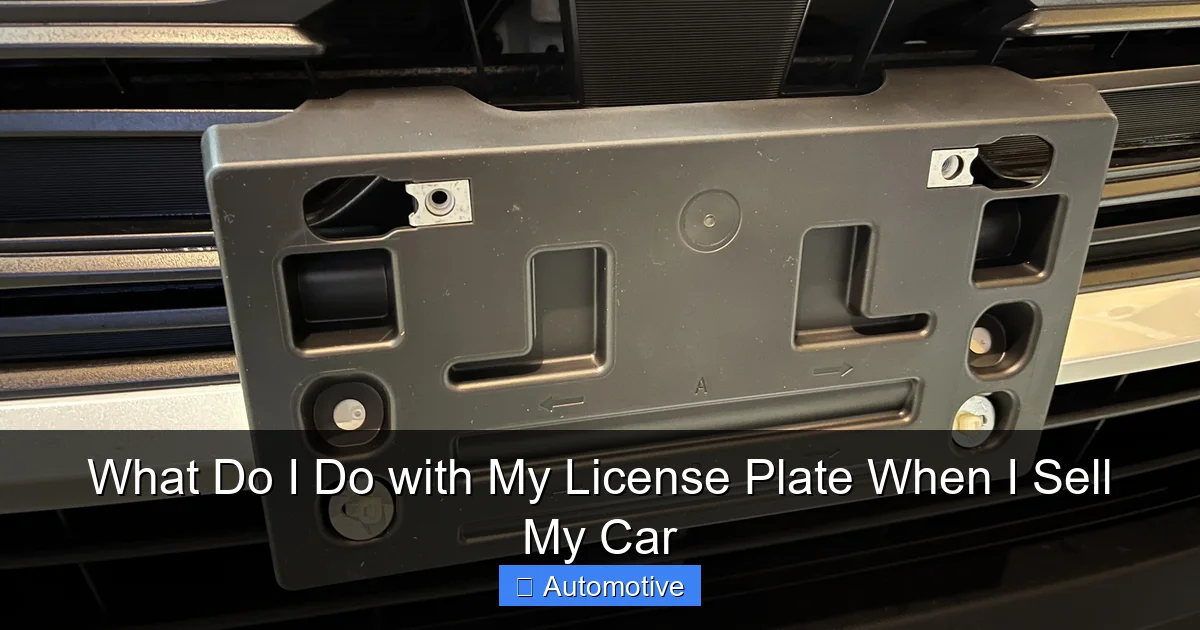
Use the proper tools—usually a screwdriver or socket wrench—to carefully remove the plate and its mounting hardware. Keep the screws and brackets in a safe place, especially if you plan to reuse the plate.
If you’re selling to a private buyer, do this before they drive away. If you’re trading in at a dealership, ask them to confirm that the plate has been removed and that you’re not listed as the registered owner anymore.
3. Complete a Bill of Sale
A bill of sale is a legal document that proves the transfer of ownership. It should include:
– The date of sale
– Vehicle identification number (VIN)
– Sale price
– Names and addresses of both buyer and seller
– A statement that the license plate has been removed (if applicable)
Some states provide official bill of sale forms on their DMV websites. Even if it’s not required, having one protects both parties.
4. Notify the DMV (If Required)
In some states, you must notify the DMV that you’ve sold your vehicle. This is often done by submitting a “Notice of Transfer and Release of Liability” form.
For example, in California, you can file this form online within 5 days of the sale. Once submitted, you’re no longer liable for the vehicle. In Florida, you must notify the DMV within 30 days.
This step is especially important if you’re keeping the plate. It ensures the state knows the vehicle is no longer in your name.
5. Decide What to Do with the Plate
Once the plate is off the car, you have a few options:
– Keep it for future use on another vehicle
– Store it safely in case you want to reuse it later
– Return it to the DMV (if required by your state)
– Destroy it (only if you’re sure you won’t need it)
If you plan to reuse the plate, make sure it’s in good condition and that the registration is still valid. Some states require you to re-register the plate when transferring it to a new vehicle.
6. Keep Records
Save all documentation related to the sale, including:
– The bill of sale
– Plate removal photos (optional but helpful)
– DMV notification confirmation
– Receipts or emails from the transaction
These records can protect you if any issues arise later. For example, if a ticket shows up in the mail, you can prove the car was sold and the plate was removed.
Common Mistakes to Avoid
Visual guide about What Do I Do with My License Plate When I Sell My Car
Image source: limitlessworkshop.com
Even with the best intentions, sellers often make mistakes when handling their license plates. Here are some of the most common—and how to avoid them.
Leaving the Plate on the Car
This is the number one mistake. Many sellers assume the new owner will handle the plate, but that’s not always the case. If you leave it on, you remain legally responsible for any violations.
Always remove the plate yourself, even if the buyer says they’ll take care of it. It only takes a few minutes and can save you hundreds of dollars in fines.
Not Checking State Rules
Assuming all states have the same rules is a big error. What works in Texas won’t work in New York. Always verify your state’s requirements before selling.
Forgetting to Notify the DMV
Even if you remove the plate, you may still be listed as the registered owner until you notify the DMV. This can lead to ongoing liability. Make sure to file the proper forms.
Improper Plate Storage
If you plan to reuse the plate, store it in a dry, secure place. Avoid bending or damaging it. A damaged plate may not be accepted when you try to transfer it.
Ignoring Personalized Plate Fees
If you have a custom plate, there may be annual fees or reissuance costs. Don’t assume you can keep it forever without paying. Check with your DMV to avoid surprises.
What to Do If You’ve Already Sold the Car
Did you sell your car and forget to remove the plate? Don’t panic—there are still steps you can take.
First, contact the buyer and ask them to return the plate. If they’re cooperative, they can mail it to you or drop it off. Be polite but firm—explain that you need it to avoid legal issues.
If the buyer is unresponsive or refuses, contact your local DMV. Explain the situation and provide proof of sale (like a bill of sale or email chain). Some states allow you to report the plate as “lost or stolen” if it’s still registered to you, but this should be a last resort.
In extreme cases, you may need to file a police report or seek legal advice. But in most situations, a quick call to the DMV can resolve the issue.
Conclusion
Selling your car is exciting, but it’s not complete until you’ve handled your license plate correctly. Whether you keep it, transfer it, or return it, taking the right steps protects you from fines, liability, and stress.
Remember: your license plate is more than just a number—it’s a link to your identity and responsibility. By removing it, documenting the sale, and following your state’s rules, you ensure a clean break from your old vehicle.
So before you hand over those keys, take a moment to check your plate. It’s a small step that makes a big difference. And when in doubt, always consult your local DMV. They’re there to help—and peace of mind is worth the effort.
Frequently Asked Questions
Do I have to remove my license plate when I sell my car?
In most states, yes—you are required to remove the license plate before selling your vehicle. This protects you from future liability if the new owner commits a traffic violation or is involved in an accident.
Can I keep my license plate after selling my car?
In most states, you can keep your license plate and reuse it on a new vehicle. However, a few states, like New York and New Jersey, require you to return the plate to the DMV.
What happens if I leave the license plate on the car?
If you leave the plate on, you may still be held responsible for tickets, tolls, or legal issues involving the vehicle. Law enforcement will trace the plate back to your name, even after the sale.
Can I transfer my personalized plate to a new car?
Yes, in most states you can transfer a personalized or specialty plate to a new vehicle. You may need to pay a reissuance fee and complete a transfer form with the DMV.
How long do I have to notify the DMV after selling my car?
This varies by state. In California, you must notify the DMV within 5 days. In Florida, you have 30 days. Check your state’s requirements to avoid penalties.
What should I do if I forgot to remove the plate after selling my car?
Contact the buyer and ask them to return the plate. If they don’t respond, reach out to your local DMV with proof of sale. They can help resolve the issue and update their records.
