
How Much Does Barrett Jackson Charge to Sell a Car

Selling a car through Barrett-Jackson isn’t free—but the exposure and expertise come at a price. From seller commissions to buyer premiums and additional service fees, understanding the full cost structure is essential. This guide breaks down every fee so you can decide if consigning your vehicle is worth it.
If you’ve ever dreamed of watching your classic Mustang, vintage Corvette, or rare muscle car roll across the auction block to thunderous applause, Barrett-Jackson is probably the first name that comes to mind. Known for its high-octane energy, celebrity appearances, and record-breaking sales, Barrett-Jackson has become the gold standard for classic and collector car auctions in the U.S. But while the glamour and excitement are real, so are the costs. If you’re considering selling your prized vehicle through Barrett-Jackson, one of the most important questions you’ll face is: *How much does Barrett Jackson charge to sell a car?*
The short answer? It depends—on the car’s value, the auction location, the consignment package you choose, and whether it actually sells. But the long answer involves a detailed breakdown of seller commissions, buyer premiums, hidden fees, and strategic decisions that can impact your final payout. Unlike private sales or online platforms like eBay Motors, Barrett-Jackson operates as a full-service auction house, offering professional marketing, global reach, and a trusted brand—but these services come at a premium.
In this comprehensive guide, we’ll walk you through every fee, explain how the auction process works, and help you calculate the real cost of selling your car at a Barrett-Jackson event. Whether you’re selling a $20,000 restoration project or a $500,000 vintage Ferrari, understanding the financials upfront can save you from surprises and help you make the smartest decision for your vehicle and your wallet.
Key Takeaways
- Barrett-Jackson charges a seller’s commission of 10% on the final hammer price, with a minimum fee of $1,000. This fee covers auction listing, marketing, and sales support.
- Buyers pay a premium ranging from 10% to 13.5%, depending on the sale price. This is added on top of the winning bid and goes directly to the auction house.
- Additional fees may include photography, transportation, storage, and title processing. These vary by location and consignment package.
- No sale? You may still owe a “no-sale” fee, typically $500–$1,000. This covers administrative costs even if your car doesn’t sell.
- Premium consignment packages offer enhanced visibility for a higher upfront cost. Ideal for rare or high-value vehicles aiming for top dollar.
- Timing matters—auctions in Scottsdale, Monterey, and Las Vegas attract the most bidders. Choose your event strategically to maximize exposure.
- Research comparable sales and set a realistic reserve price. Overpricing can deter bidders and result in a no-sale outcome.
📑 Table of Contents
Understanding Barrett-Jackson’s Fee Structure
When you consign a car to Barrett-Jackson, you’re not just paying for a spot on the auction block—you’re investing in a full-service sales experience. The auction house handles everything from photography and video production to international marketing and bidder registration. But like any premium service, this convenience comes with a price tag. The core of Barrett-Jackson’s revenue model revolves around two main fees: the seller’s commission and the buyer’s premium.
The seller’s commission is a percentage of the final hammer price—the amount the winning bidder agrees to pay before any additional fees. As of 2024, this commission is typically 10% of the sale price, with a minimum fee of $1,000. So, if your car sells for $50,000, you’ll pay $5,000 in commission. But if it sells for $8,000, you’ll still pay the minimum $1,000. This ensures Barrett-Jackson covers its operational costs, even on lower-value vehicles.
On the buyer’s side, a premium is added to the hammer price. This ranges from 10% to 13.5%, depending on the final sale amount. For example, a car that sells for $100,000 would incur a 10% buyer’s premium, adding $10,000 to the total cost for the buyer. If the same car sold for $500,000, the premium might increase to 13.5%, meaning the buyer pays an extra $67,500. This premium is paid by the buyer, not the seller, but it’s important to understand because it affects bidding behavior—some buyers factor the total cost (hammer price + premium) into their maximum bid.
It’s also worth noting that these fees are standard across most Barrett-Jackson auctions, but they can vary slightly depending on the event location and the type of vehicle. High-profile auctions like the Scottsdale event may have slightly different terms, especially for ultra-high-value consignments. Always review your consignment agreement carefully before signing.
How the Seller’s Commission Works
The seller’s commission is the primary way Barrett-Jackson earns money from consignors. It’s calculated as a percentage of the final hammer price, and it covers a wide range of services. These include professional photography, detailed vehicle descriptions, inclusion in the auction catalog, online listings, and marketing campaigns that reach thousands of potential buyers worldwide.
For most vehicles, the commission rate is 10%. However, Barrett-Jackson enforces a minimum fee of $1,000, which means even if your car sells for less than $10,000, you’ll still pay $1,000. This minimum ensures the auction house recoups its costs for processing, listing, and promoting the vehicle. For example, if you sell a restored 1965 Ford Falcon for $9,500, you’ll pay $1,000 in commission, leaving you with $8,500.
On the higher end, the 10% rate applies up to a certain threshold. For vehicles selling above $500,000, Barrett-Jackson may negotiate a reduced commission rate, but this is typically reserved for rare, museum-quality cars or long-term consignors. Most everyday collectors will pay the standard 10%.
It’s also important to understand that the commission is due regardless of whether the car sells—unless it fails to meet the reserve price and is withdrawn. In that case, you may still be responsible for a “no-sale” fee, which we’ll cover in a later section.
Buyer’s Premium: What Buyers Pay (and Why It Matters)
While the seller’s commission comes out of your proceeds, the buyer’s premium is paid by the winning bidder. However, it indirectly affects you as the seller because it influences how much buyers are willing to bid. The buyer’s premium is added to the hammer price and is typically paid at checkout.
The current buyer’s premium structure at Barrett-Jackson is tiered:
– 13.5% on the first $100,000
– 12% on the portion between $100,001 and $500,000
– 10% on amounts above $500,000
For example, if a car sells for $250,000, the buyer pays:
– 13.5% on $100,000 = $13,500
– 12% on $150,000 = $18,000
– Total premium = $31,500
– Total cost to buyer = $281,500
This tiered system encourages higher bids by reducing the percentage on larger amounts, but it still adds significant cost. Savvy bidders often calculate their “all-in” maximum bid by factoring in the premium. If a buyer’s total budget is $300,000, they may only bid up to $265,000 on a car to stay within budget after the premium.
As a seller, this means you need to price your car realistically. Overestimating value can scare off bidders who are working within strict budgets. A car with a $300,000 reserve might not sell if bidders know the total cost will exceed $340,000 with premiums.
Additional Fees and Hidden Costs
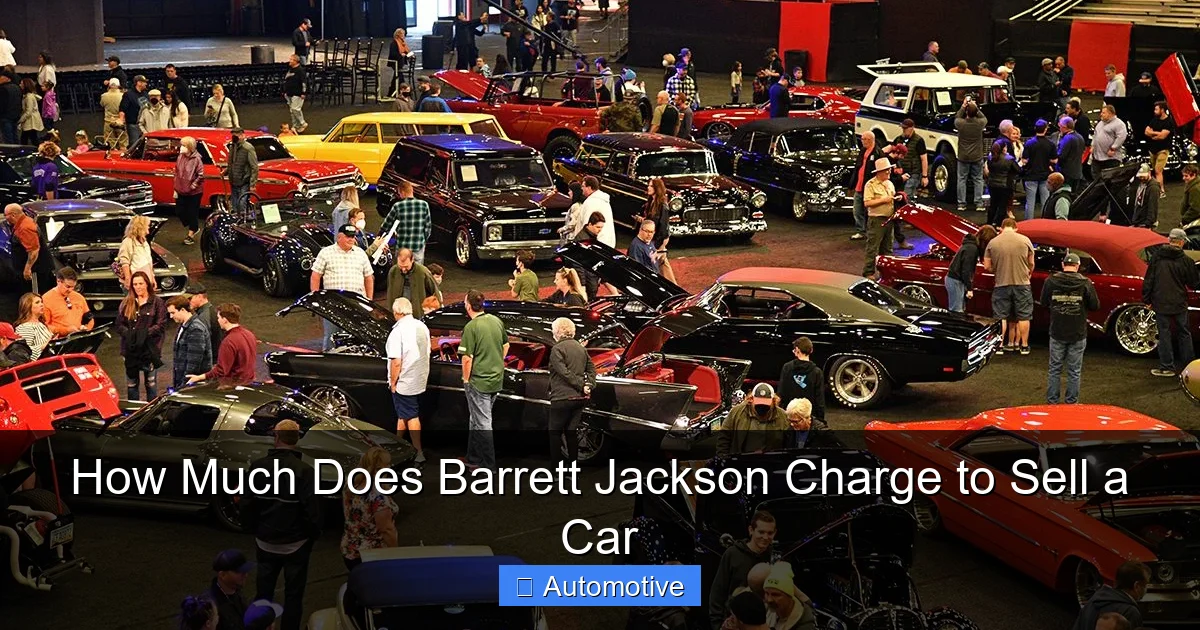
Visual guide about How Much Does Barrett Jackson Charge to Sell a Car
Image source: fuelcurve.com
Beyond the seller’s commission and buyer’s premium, there are several other costs that can add up when selling a car at Barrett-Jackson. These are often overlooked but can significantly impact your net proceeds. Being aware of them upfront can help you budget and avoid surprises.
No-Sale Fees
One of the most frustrating costs for sellers is the “no-sale” fee. If your car doesn’t meet its reserve price and is withdrawn from the auction, you may still be charged a fee ranging from $500 to $1,000. This covers administrative costs like listing, photography, and catalog inclusion.
The no-sale fee applies even if the car receives bids—just not enough to meet your reserve. For example, if your car has a $50,000 reserve but the highest bid is $48,000, it won’t sell, and you’ll likely owe the fee. To avoid this, consider setting a realistic reserve or opting for a “no reserve” auction, where the car sells to the highest bidder regardless of price.
No-reserve auctions can be risky—your car might sell for far less than expected—but they also attract more bidders and often result in competitive bidding. Many sellers choose no-reserve for cars valued under $100,000 to maximize exposure and ensure a sale.
Transportation and Storage Fees
Unless you’re local to the auction site, you’ll need to transport your car to the event. Barrett-Jackson does not provide free shipping, so you’ll need to arrange and pay for transport. Costs vary depending on distance, vehicle size, and whether you use an open or enclosed trailer. For a cross-country move, expect to pay $1,500 to $3,000.
Once your car arrives, storage fees may apply if it’s delivered early or picked up late. Most auctions allow a few days of free storage, but beyond that, daily fees can range from $50 to $100 per day. Plan your logistics carefully to avoid unnecessary charges.
Photography and Video Production
Barrett-Jackson provides professional photography and video for all consigned vehicles, but premium packages may include enhanced media. Standard photos are included in the consignment fee, but if you want cinematic video, drone footage, or 360-degree virtual tours, you may need to upgrade your package.
These enhanced media options can increase your car’s visibility and appeal, especially for online bidders. A high-quality video can make the difference between a $100,000 sale and a $150,000 sale. However, they come at an additional cost—typically $500 to $1,500 depending on the level of production.
Title and Documentation Fees
Barrett-Jackson handles title transfers and documentation as part of the sale process, but there may be administrative fees involved. These are usually minimal—around $100 to $200—but they’re worth noting. The auction house ensures all paperwork is in order, which is a huge relief for sellers, especially when dealing with out-of-state or international buyers.
Consignment Packages: Choosing the Right Level of Service
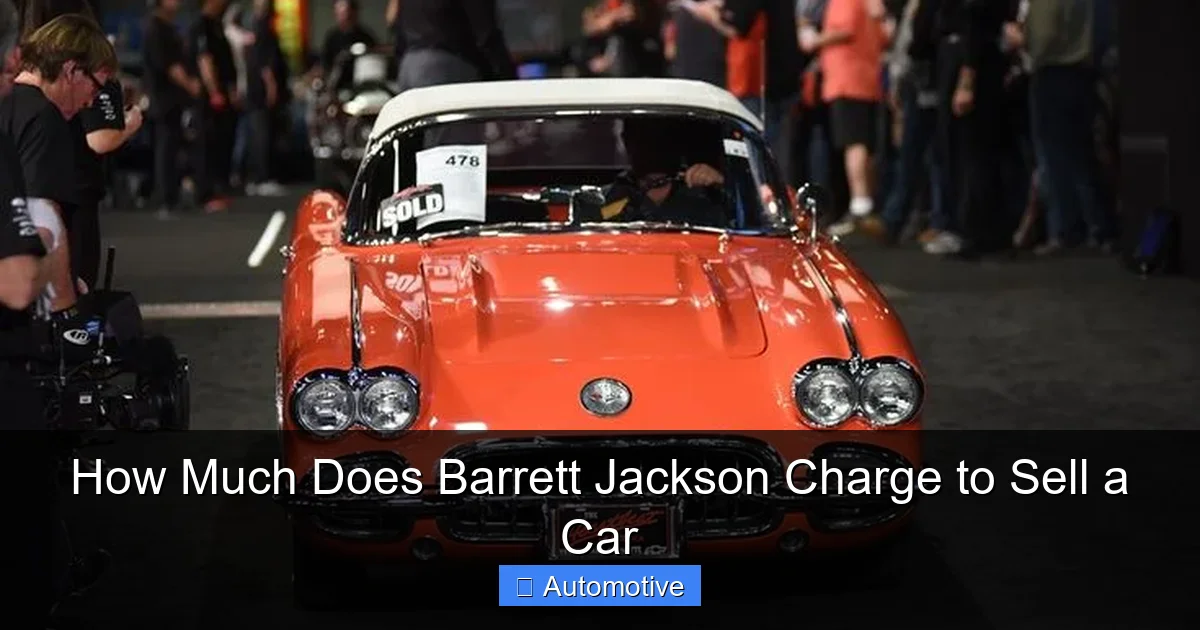
Visual guide about How Much Does Barrett Jackson Charge to Sell a Car
Image source: i.pinimg.com
Barrett-Jackson offers different consignment tiers, each with varying levels of service and cost. Choosing the right package can impact both your expenses and your car’s chances of selling at a premium price.
Standard Consignment
The standard package includes basic listing, photography, and inclusion in the auction catalog. This is the most cost-effective option and is ideal for vehicles valued under $100,000. The seller’s commission remains at 10%, and there are no upfront fees—just the commission and any applicable no-sale fee.
This package is great for first-time consignors or those selling well-documented, popular models. However, your car may not receive the same level of promotion as higher-tier packages.
Premium Consignment
For vehicles valued at $100,000 or more, Barrett-Jackson offers premium consignment. This includes enhanced marketing, priority placement in the catalog, dedicated account management, and sometimes even featured video content.
The cost is higher—often an additional $1,000 to $2,500 upfront—but the increased exposure can lead to higher bids. Premium consignment is recommended for rare, high-value, or historically significant vehicles.
Elite and Signature Consignment
At the top tier are elite and signature packages, designed for million-dollar cars and celebrity-owned vehicles. These include private previews, international marketing campaigns, and VIP treatment for consignors.
Fees for these packages can exceed $10,000, but they come with the highest level of service and exposure. If you’re selling a Shelby Cobra, a Ferrari 250 GTO, or a car with provenance, this level of investment may be justified.
Real-World Examples: Calculating Your Net Proceeds
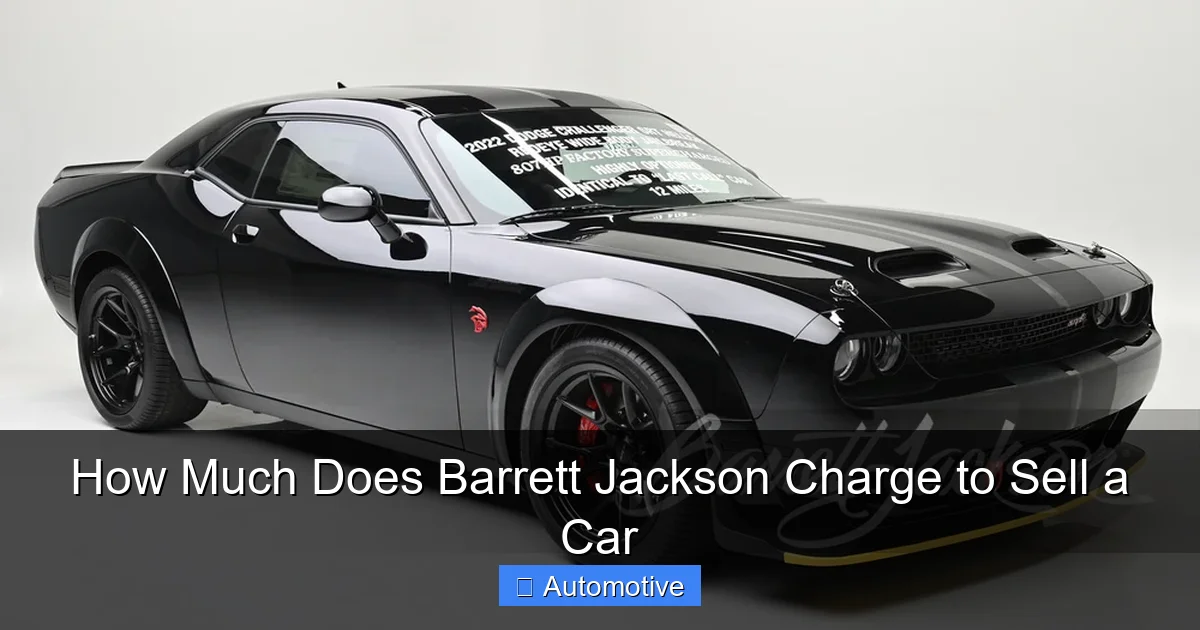
Visual guide about How Much Does Barrett Jackson Charge to Sell a Car
Image source: barrettjacksoncdn.azureedge.net
Let’s look at a few real-world scenarios to see how the fees add up.
Example 1: Classic Muscle Car ($75,000 Sale)
– Hammer price: $75,000
– Seller’s commission (10%): $7,500
– Buyer’s premium (13.5% on first $100k): $10,125 (paid by buyer)
– Transportation: $1,200
– Storage: $200 (2 extra days)
– **Net to seller: $66,100**
Example 2: Vintage Corvette ($250,000 Sale)
– Hammer price: $250,000
– Seller’s commission: $25,000
– Buyer’s premium: $31,500 (tiered)
– Premium consignment fee: $2,000
– Transport: $2,500
– **Net to seller: $220,500**
Example 3: No-Sale Scenario ($40,000 Reserve, Highest Bid $38,000)
– No sale fee: $750
– Photography: included
– Transport: $1,000
– **Total cost to seller: $1,750 (no proceeds)**
These examples show how quickly fees can add up—and how important it is to set realistic expectations.
Tips to Maximize Your Return at Barrett-Jackson
Selling at Barrett-Jackson isn’t just about paying fees—it’s about strategy. Here are some tips to get the most out of your consignment:
– **Set a realistic reserve price.** Overpricing deters bidders. Research recent sales of similar models on the Barrett-Jackson website.
– **Choose the right auction.** Scottsdale in January is the biggest event, but Monterey and Las Vegas also draw serious buyers.
– **Invest in presentation.** Clean, detailed photos and a compelling description can boost bids.
– **Consider no-reserve.** For mid-range cars, no-reserve auctions often result in competitive bidding.
– **Promote your car.** Share the listing on social media and car forums to drive traffic.
Is Selling at Barrett-Jackson Worth It?
For the right car and the right seller, yes—Barrett-Jackson can deliver unmatched exposure and competitive bidding. But it’s not the cheapest option. If you’re selling a common classic or a project car, private sale or online platforms might net you more after fees. However, for rare, high-value, or historically significant vehicles, the brand recognition and global audience of Barrett-Jackson can justify the cost.
Ultimately, how much Barrett Jackson charges to sell a car depends on your vehicle, your goals, and your willingness to invest in the process. By understanding the fee structure and planning accordingly, you can make an informed decision that puts the most money in your pocket.
Frequently Asked Questions
How much does Barrett-Jackson charge to sell a car?
Barrett-Jackson charges a seller’s commission of 10% of the final hammer price, with a minimum fee of $1,000. Additional costs may include transportation, storage, and no-sale fees if the car doesn’t meet its reserve.
Do I have to pay if my car doesn’t sell?
Yes, if your car doesn’t meet the reserve price, you may be charged a no-sale fee ranging from $500 to $1,000 to cover administrative and listing costs.
What is the buyer’s premium at Barrett-Jackson?
The buyer’s premium ranges from 10% to 13.5%, depending on the sale price. It’s paid by the winning bidder and added to the hammer price.
Can I sell my car with no reserve at Barrett-Jackson?
Yes, you can choose a no-reserve auction, which means your car will sell to the highest bidder regardless of price. This often attracts more bidders.
Are there upfront fees to consign a car?
Standard consignment has no upfront fees—only the seller’s commission and potential no-sale fee. Premium packages may require an upfront payment of $1,000 to $2,500.
How far in advance should I consign my car?
It’s best to consign your car at least 60 to 90 days before the auction to allow time for marketing, photography, and catalog inclusion.