
How to Sell a Car in Arizona Private

Selling a car in Arizona private doesn’t have to be stressful. With the right preparation, clear communication, and knowledge of state requirements, you can sell your vehicle quickly and safely. This guide walks you through every step—from pricing to paperwork—so you can get the best deal with confidence.
Thinking about selling your car in Arizona? Whether you’re upgrading to a newer model, downsizing, or just ready for a change, selling a vehicle privately can be a smart financial move. Unlike trading in at a dealership—where you might get less than market value—selling directly to another person often means more money in your pocket. But it also means taking on more responsibility: pricing, advertising, meeting buyers, and handling the paperwork.
The good news? Selling a car in Arizona private is totally doable—even if you’ve never done it before. Arizona has straightforward rules for private vehicle sales, and with a little preparation, you can complete the process smoothly and safely. From understanding what documents you need to knowing where to list your car, this guide covers everything you need to know. We’ll walk you through each step, share practical tips, and help you avoid common mistakes so you can sell your car with confidence.
Key Takeaways
- Know Arizona’s legal requirements: You’ll need a completed title, emissions test (if applicable), and a bill of sale to transfer ownership legally.
- Price your car fairly: Use tools like Kelley Blue Book or Edmunds to research market value based on year, mileage, condition, and location.
- Prepare your vehicle for sale: Clean it inside and out, fix minor issues, and gather maintenance records to boost buyer trust.
- Advertise effectively: Use high-quality photos, write a detailed description, and list on popular platforms like Craigslist, Facebook Marketplace, or Autotrader.
- Ensure safe transactions: Meet in public places, verify buyer identity, and avoid cashier’s checks or wire transfers from strangers.
- Complete the transfer correctly: Sign over the title, submit a Notice of Sale online, and keep copies of all documents for your records.
- Avoid common pitfalls: Don’t skip inspections, ignore red flags from buyers, or rush the paperwork—take your time to do it right.
📑 Table of Contents
Understand Arizona’s Legal Requirements for Private Car Sales
Before you even think about listing your car, it’s crucial to understand the legal side of selling a vehicle in Arizona. The state has specific rules designed to protect both buyers and sellers, and skipping any of these steps could lead to headaches—or even legal trouble—down the road.
First and foremost, you must have a clean title in your name. This means the vehicle must be registered to you, and there should be no liens (loans) against it. If you still owe money on the car, you’ll need to pay off the loan before you can sell it. Most lenders will require the payoff amount to be sent directly to them, and once the loan is cleared, they’ll release the title to you—usually by mailing it or providing a lien release document.
Next, you’ll need a completed Arizona Title and Registration Application (Form 96-0243). This form is used to transfer ownership from you to the buyer. Both you and the buyer must sign it in front of a notary if the title doesn’t already have a notarized signature section. However, Arizona allows electronic notarization in some cases, so check with your local MVD or a certified notary for options.
Emissions Testing: Do You Need It?
One question many sellers ask is whether an emissions test is required. In Arizona, vehicles registered in certain counties—including Maricopa (Phoenix area) and Pima (Tucson area)—must pass an emissions test every two years. If your car is due for an inspection, you’ll need to complete it before selling. The buyer may also request a recent emissions certificate as proof the vehicle meets environmental standards.
To find out if your vehicle needs testing, visit the Arizona Department of Environmental Quality (ADEQ) website and use their vehicle lookup tool. If testing is required, you can schedule an appointment at an authorized inspection station. The cost is usually around $25–$35, and results are often available immediately. Keep the inspection report with your paperwork—it adds credibility and can speed up the sale.
The Bill of Sale: A Must-Have Document
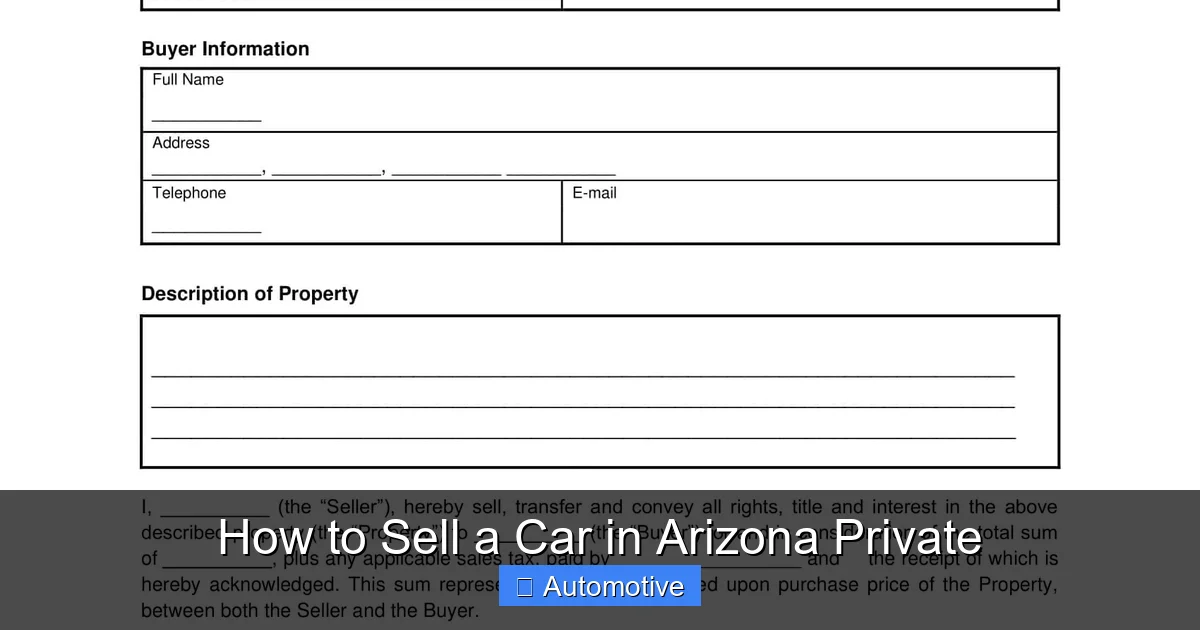
While not always required by law, a bill of sale is highly recommended—and often expected—by buyers. This document acts as a receipt and proof of transaction. It should include:
– The date of sale
– Seller and buyer names and addresses
– Vehicle identification number (VIN)
– Make, model, year, and mileage
– Sale price
– Signatures of both parties
You can find free bill of sale templates online or use Arizona’s official form (Form 40-1013). Having this document protects both you and the buyer in case of disputes later. For example, if the buyer claims they paid more than agreed, the bill of sale serves as evidence.
Price Your Car Right to Attract Buyers
Visual guide about How to Sell a Car in Arizona Private
Image source: legaltemplates.net
Pricing your car correctly is one of the most important steps in the selling process. Overprice it, and you’ll scare off potential buyers. Underprice it, and you’ll lose money. The goal is to find that sweet spot where your car is competitively priced but still reflects its true value.
Start by researching similar vehicles in your area. Use trusted pricing tools like Kelley Blue Book (KBB), Edmunds, or NADA Guides. These platforms let you input your car’s year, make, model, mileage, condition, and zip code to get a fair market value range. Pay attention to the “private party” value—not the trade-in or dealer retail price—since you’re selling directly to a consumer.
Consider Your Car’s Condition
Not all cars are created equal. A 2018 Honda Civic with 40,000 miles and a clean service history will sell for more than one with 80,000 miles and visible wear. Be honest about your vehicle’s condition. If it has dents, scratches, or mechanical issues, adjust your price accordingly. Buyers appreciate transparency, and it builds trust.
For example, if KBB says your car is worth $15,000 in “good” condition, but yours has a cracked windshield and worn tires, you might price it at $13,500–$14,000. On the flip side, if your car has low mileage, new tires, and a full service record, you could justify pricing it at the higher end—or even slightly above—market value.
Factor in Market Demand
Timing and location also affect pricing. In Arizona, SUVs and trucks tend to sell faster in rural areas, while compact cars and hybrids are popular in cities like Phoenix and Tucson. Seasonal trends matter too—convertibles may fetch higher prices in spring and summer, while 4WD vehicles are in demand during monsoon season or winter months.
Check local listings on Craigslist, Facebook Marketplace, and Autotrader to see what similar cars are going for. If you notice most 2019 Toyota RAV4s in Phoenix are listed around $22,000, pricing yours at $24,000 without a strong reason (like low mileage or premium features) will make it sit on the market longer.
Prepare Your Vehicle for Sale

Visual guide about How to Sell a Car in Arizona Private
Image source: bondinvestigations.com
First impressions matter—especially when selling a car. A clean, well-maintained vehicle not only looks more appealing but also signals to buyers that it’s been cared for. Taking the time to prep your car can significantly increase your chances of a quick sale and a better price.
Clean It Inside and Out
Start with a thorough wash and wax. Remove dirt, bugs, and grime from the exterior. Don’t forget the wheels and tires—use a tire shine product to make them pop. For the interior, vacuum every corner, wipe down surfaces, and clean the windows. Remove personal items like old receipts, air fresheners, and loose clutter. A tidy interior makes the car feel newer and more inviting.
Consider investing in a professional detailing service if your budget allows. A deep clean can cost $100–$200 but can pay off in a higher sale price. At the very least, use a carpet cleaner for stains and an upholstery cleaner for fabric seats. For leather, use a conditioner to restore shine and prevent cracking.
Address Minor Repairs and Maintenance
You don’t need to rebuild the engine, but fixing small issues can make a big difference. Replace burnt-out bulbs, fix cracked windshields (or at least get a quote), and top off fluids. If the check engine light is on, get it diagnosed—even if it’s a minor sensor issue. Buyers will appreciate knowing the car is in good working order.
Gather all maintenance records and create a folder or binder to show potential buyers. Include receipts for oil changes, tire replacements, brake work, and any major repairs. This builds confidence and proves the car has been well-maintained. For example, if you replaced the timing belt at 60,000 miles, include that receipt—it’s a selling point for a used vehicle.
Take High-Quality Photos
Photos are your car’s first impression online. Use natural light and avoid shadows or glare. Take pictures from multiple angles: front, back, sides, interior (dashboard, seats, trunk), and close-ups of any unique features or flaws. Show the engine bay if it’s clean—it reassures buyers the car has been maintained.
Avoid using filters or editing photos to hide damage. Honesty builds trust, and buyers will appreciate seeing the real condition. If there’s a dent or scratch, include a photo of it—but also highlight the positives. For instance, “Minor door ding on passenger side, but otherwise excellent condition.”
Advertise Your Car Effectively
Visual guide about How to Sell a Car in Arizona Private
Image source: m.media-amazon.com
Once your car is clean, priced, and ready to go, it’s time to get the word out. The goal is to reach as many potential buyers as possible while presenting your vehicle in the best light.
Choose the Right Platforms
Start with popular online marketplaces:
– **Craigslist**: Free to list, widely used in Arizona, but requires caution due to scams.
– **Facebook Marketplace**: Easy to use, integrates with your profile, and allows messaging. Great for local buyers.
– **Autotrader**: More professional, but may charge a fee. Attracts serious buyers.
– **OfferUp**: Mobile-friendly and popular in urban areas like Phoenix and Scottsdale.
Each platform has its pros and cons. Craigslist reaches a broad audience but attracts more lowball offers and scammers. Facebook Marketplace is convenient but may require more filtering. Autotrader attracts serious buyers but costs money. Consider listing on 2–3 platforms to maximize exposure.
Write a Compelling Ad
Your ad should be clear, honest, and informative. Start with a strong headline that includes key details: “2017 Honda Accord EX-L – Low Miles, Clean Title, Excellent Condition.” Then, write a detailed description that covers:
– Year, make, model, trim
– Mileage
– Condition (exterior, interior, mechanical)
– Features (sunroof, backup camera, heated seats, etc.)
– Recent maintenance or upgrades
– Reason for selling
– Asking price
Use short paragraphs and bullet points for readability. Avoid jargon or overly technical terms. For example:
> “Selling my well-maintained 2017 Honda Accord EX-L with only 48,000 miles. Clean title, no accidents, regularly serviced at Honda dealership. Features include leather seats, sunroof, Apple CarPlay, and blind-spot monitoring. Just passed emissions in Maricopa County. Asking $16,500 OBO. Serious buyers only, please.”
Include your contact info (phone or email) and respond promptly to inquiries. A quick response shows you’re serious and helps build trust.
Handle Buyer Inquiries and Test Drives Safely
Once your ad goes live, you’ll start getting messages and calls. Some will be serious buyers; others may be scammers or tire-kickers. Knowing how to screen inquiries and conduct safe test drives is essential.
Screen Potential Buyers
Ask basic questions to gauge seriousness:
– “Have you seen the car in person?”
– “Do you have financing arranged?”
– “Are you ready to buy this week?”
Red flags include:
– Buyers who refuse to meet in person
– Requests to ship the car or use a third-party escrow service
– Offers to pay with a cashier’s check or wire transfer
– Pressure to act quickly
Trust your instincts. If something feels off, it probably is.
Conduct Safe Test Drives
Always meet in a public, well-lit place—like a police station parking lot or busy shopping center. Bring a friend or family member with you. Never let a buyer drive alone with your car unless they have a valid license and proof of insurance.
During the test drive, stay calm and answer questions honestly. Point out any quirks or issues upfront. For example, “The AC takes a minute to cool down in summer,” or “The tire pressure light comes on occasionally, but it’s just a sensor.”
After the drive, ask for feedback. If the buyer seems interested, discuss next steps: paperwork, payment, and transfer.
Complete the Sale and Transfer Ownership
Congratulations—you’ve found a buyer! Now it’s time to finalize the sale and transfer ownership legally.
Finalize Payment Securely
Cash is the safest and most straightforward option. Count it in front of the buyer and keep a receipt. Avoid personal checks—they can bounce. If the buyer wants to use a cashier’s check, verify it at a bank before handing over the car.
Wire transfers are risky unless you’re certain of the buyer’s identity. Never accept payment from a third party or overseas account.
Sign Over the Title and Complete Paperwork
Both you and the buyer must sign the title. Make sure the buyer fills in their name, address, and the sale price. Do not leave any fields blank.
Complete the Bill of Sale (Form 40-1013) and have both parties sign it. Provide the buyer with:
– Signed title
– Bill of sale
– Emissions test certificate (if applicable)
– Maintenance records
– Owner’s manual (if available)
Submit a Notice of Sale
Within 10 days of the sale, you must submit a Notice of Sale to the Arizona MVD. This protects you from liability if the buyer gets a ticket or causes an accident before registering the car. You can do this online at the Arizona MVD website using your license plate number and VIN.
Keep copies of all documents for your records. The buyer will need to register the car in their name and pay sales tax, registration fees, and any applicable use tax.
Avoid Common Mistakes When Selling Privately
Even with the best preparation, mistakes can happen. Here are a few to watch out for:
– **Not checking for liens**: Always verify the title is clear before selling.
– **Skipping the emissions test**: If required, don’t ignore it—buyers will ask.
– **Accepting unsafe payment methods**: Stick to cash or verified funds.
– **Failing to submit the Notice of Sale**: This leaves you legally exposed.
– **Overlooking small repairs**: A $50 fix can lead to a $500 higher sale price.
By staying informed and cautious, you can sell your car in Arizona private with confidence and peace of mind.
Frequently Asked Questions
Do I need a smog check to sell a car in Arizona?
Only if your vehicle is registered in Maricopa or Pima counties and is due for an emissions test. Check the ADEQ website to confirm if your car needs testing before sale.
Can I sell my car if I still owe money on it?
No, you must pay off the loan first. Contact your lender to get the payoff amount and arrange for the title to be released before selling.
What documents do I need to sell a car in Arizona?
You’ll need a signed title, a completed bill of sale, an emissions test certificate (if applicable), and a Notice of Sale submitted to the MVD within 10 days.
Is it safe to sell a car privately in Arizona?
Yes, as long as you take precautions: meet in public, verify buyer identity, use secure payment methods, and complete all paperwork correctly.
How long does it take to sell a car in Arizona private?
It varies, but most cars sell within 2–6 weeks if priced right and advertised well. Clean, well-maintained vehicles with low mileage tend to sell faster.
Do I have to pay taxes when I sell my car in Arizona?
No, sellers don’t pay sales tax. The buyer pays use tax when they register the vehicle with the MVD.