
Where Do I Sign the Title to Sell My Car

where do i sign the title to sell my car is an essential topic that provides valuable insights and practical knowledge for anyone interested in learning more about this subject.
Key Takeaways
- Sign the seller’s section: Locate and complete the designated seller signature line on the title.
- Print your name clearly: Match your printed name exactly to your government-issued ID.
- Include the sale date: Fill in the date of sale to finalize the transfer legally.
- Enter the odometer reading: Accurately record mileage to comply with federal requirements.
- Get the title notarized if required: Check state rules—some mandate notarization for validity.
- Keep a bill of sale: Document the transaction for your records and legal protection.
📑 Table of Contents
- Where Do I Sign the Title to Sell My Car
- Understanding the Car Title: What It Is and Why It Matters
- Where to Sign the Title: A Step-by-Step Guide
- Common Mistakes to Avoid When Signing the Title
- State-Specific Requirements: What You Need to Know
- Tips for a Smooth and Legal Car Sale
- What to Do After the Sale: Protecting Yourself
- Final Thoughts: Getting It Right the First Time
Where Do I Sign the Title to Sell My Car
So, you’ve decided it’s time to sell your car. Maybe it’s been sitting in the driveway for months, or perhaps you’re upgrading to something newer, shinier, and with better gas mileage. Whatever the reason, selling a car can feel overwhelming—especially when it comes to the paperwork. One of the most common questions people ask is: Where do I sign the title to sell my car?
It’s a fair question. The title is the legal document that proves ownership, and signing it correctly is crucial to transferring that ownership to the buyer. If you mess it up, you could face delays, legal issues, or even financial liability down the road. I remember the first time I sold a car—my trusty old Honda Civic that had seen me through college and countless road trips. I was so excited to get it off my hands, but when I pulled out the title, I froze. Where exactly was I supposed to sign? Was there a specific section? Did I need to fill in the buyer’s name first? I didn’t want to make a mistake that would come back to haunt me.
That’s why I’m here to help. In this guide, I’ll walk you through everything you need to know about signing your car title when selling your vehicle. We’ll cover where to sign, what information to include, common mistakes to avoid, and tips to make the process smooth and stress-free. Whether you’re selling privately, trading in, or using a dealer, understanding the title transfer process is essential. Let’s dive in and make sure you get it right the first time.
Understanding the Car Title: What It Is and Why It Matters
Before we get into the nitty-gritty of where to sign, let’s take a step back and talk about what a car title actually is. Think of the title as the birth certificate of your vehicle. It’s a legal document issued by your state’s Department of Motor Vehicles (DMV) that proves you own the car. It includes important details like the vehicle identification number (VIN), make, model, year, and the owner’s name and address.

Visual guide about Where Do I Sign the Title to Sell My Car
Image source: cashforcars.com
When you sell your car, the title must be transferred to the new owner. This is where signing comes in. The seller (that’s you) must sign the title in the designated area to authorize the transfer. Without a properly signed title, the buyer can’t register the car in their name, and you remain legally responsible for it—even if it’s no longer in your possession. That means if the new owner gets a ticket, causes an accident, or fails to pay registration fees, you could still be on the hook.
Types of Car Titles
Not all titles are created equal. Depending on your state and the condition of your vehicle, you might have one of several types of titles:
- Clean Title: This is the standard title for a car that hasn’t been significantly damaged or declared a total loss by an insurance company. It’s the most common type and the easiest to transfer.
- Salvage Title: Issued when a car has been damaged to the point where repair costs exceed a certain percentage of its value (usually 70–75%). Salvage titles require extra steps to transfer and may limit where you can sell the car.
- Rebuilt Title: If a salvage-titled car has been repaired and inspected, it may be issued a rebuilt title. Buyers may be hesitant to purchase these vehicles, so disclosure is key.
- Junk or Parts-Only Title: For vehicles that are no longer roadworthy and can only be sold for parts or scrap.
Knowing your title type is important because it affects how you sell the car and what information you need to disclose to the buyer. For example, if you have a salvage title, you’ll need to explain the damage history and possibly provide repair documentation.
Why the Title Transfer Process Is Critical
Skipping or botching the title transfer can lead to serious consequences. I once heard a story about a guy who sold his truck but forgot to sign the title. The buyer drove off, registered the truck in another state, and then abandoned it. When the authorities traced it back, the original owner was still listed as the legal owner—and he ended up paying hundreds in back registration fees and fines.
Another common issue is signing the wrong section or leaving fields blank. Some buyers try to fill in their own information after the sale, which can lead to disputes or even fraud. That’s why it’s so important to complete the title correctly and keep a copy for your records.
Bottom line: The title transfer isn’t just a formality—it’s a legal necessity. Taking the time to do it right protects both you and the buyer.
Where to Sign the Title: A Step-by-Step Guide
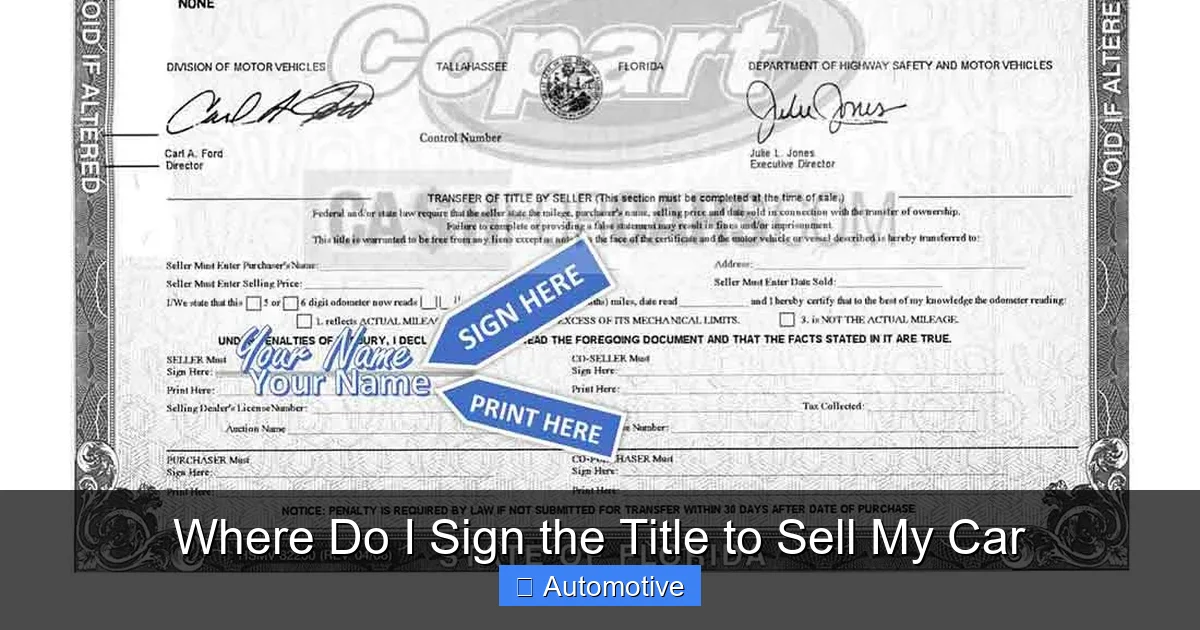
Now for the main event: Where do I sign the title to sell my car? The answer depends on your state, but the general process is similar across the country. Most titles have a designated “Seller’s Signature” section, usually on the back of the document. Let’s break it down step by step.

Visual guide about Where Do I Sign the Title to Sell My Car
Image source: cashforcars.com
Locating the Seller’s Signature Section
Flip your title over. You’ll typically see a form with several fields, including:
- Odometer reading
- Purchase price
- Date of sale
- Buyer’s name and address
- Seller’s signature
The seller’s signature line is usually clearly labeled and may include a space for your printed name and the date. In some states, like California and Texas, the signature section is on the front of the title. Others, like Florida and New York, place it on the back. If you’re unsure, check your state’s DMV website or look for a sample title online.
What to Fill Out Before Signing
Don’t just grab a pen and sign—there’s more to it. Here’s what you need to complete before signing:
- Odometer Disclosure: Federal law requires you to record the mileage at the time of sale. This helps prevent odometer fraud. Be honest—even if the odometer is broken, you must state that.
- Purchase Price: Enter the actual sale price. Even if you’re giving the car away, you must list a value (some states allow “gift” as a reason).
- Date of Sale: Write the date you’re transferring the car. This is usually the day you hand over the keys.
- Buyer’s Information: Include the buyer’s full name and address. Double-check the spelling—mistakes here can delay registration.
Once these fields are filled out, you’re ready to sign. Use blue or black ink (pencil is a no-go), and sign exactly as your name appears on the front of the title. If your name has changed (due to marriage, for example), you may need to provide legal documentation.
Special Cases: Joint Ownership and Liens
Things get a bit more complicated if the car is jointly owned or has a lien (loan) on it.
If two people are listed as owners (e.g., “John Smith and Jane Doe”), both parties must sign the title. If one owner is unavailable, you may need a notarized power of attorney. Never sign for someone else without legal authorization—it’s fraud.
If there’s a lienholder (like a bank), the title will say “Lienholder” followed by the lender’s name. In this case, you can’t sell the car until the loan is paid off and the lien is released. The lender will provide a lien release document, which you must submit to the DMV along with the signed title. Some states allow electronic lien releases, so check with your lender.
Pro tip: If you’re paying off the loan just before the sale, coordinate with the buyer and lender to ensure the title is released promptly. Some buyers will pay the lender directly to avoid delays.
Common Mistakes to Avoid When Signing the Title
Even with the best intentions, it’s easy to make mistakes when signing a car title. I’ve seen it happen—friends, family, even seasoned sellers. Here are the most common errors and how to avoid them.
Visual guide about Where Do I Sign the Title to Sell My Car
Image source: cashforcars.com
Signing in the Wrong Spot
One of the biggest mistakes is signing in the wrong section. Some titles have multiple signature lines—for the seller, buyer, and notary. Signing in the buyer’s section or leaving the seller’s line blank can invalidate the transfer.
Example: A seller in Ohio signed the “Buyer’s Signature” line by mistake. The buyer couldn’t register the car until the DMV issued a corrected title, which took six weeks and a $50 fee.
Solution: Read the title carefully. If you’re unsure, ask the buyer to wait while you double-check. When in doubt, call your local DMV.
Leaving Fields Blank
Never leave the odometer, purchase price, or buyer’s information blank. Some sellers think they can fill it in later, but that’s a red flag for fraud. Buyers may also refuse to complete the purchase if the title isn’t fully filled out.
Tip: If you’re unsure about the purchase price (e.g., trading in), write “See Attached Agreement” and include a bill of sale.
Using the Wrong Ink or Signature
Pencil, red ink, or signatures that don’t match your legal name can cause problems. DMVs often reject titles with these issues.
Stick to blue or black ink. Sign exactly as your name appears on the front of the title. If you go by a nickname, use your legal name.
Not Keeping a Copy
After signing, make a photocopy or take a clear photo of the completed title. You’ll need it for your records and in case of disputes.
Also, keep a bill of sale that includes the VIN, sale price, date, and both parties’ information. This serves as backup proof of the transaction.
Selling Without a Lien Release
If your car has a loan, don’t sell it until the lien is released. The buyer won’t be able to register the car, and you could be liable for any issues.
Work with your lender to get the lien release before the sale. Some lenders will send it directly to the buyer or DMV.
State-Specific Requirements: What You Need to Know
While the basics of title signing are similar nationwide, each state has its own rules. What works in Texas might not fly in Maine. Here’s a quick overview of key differences.
Notarization Requirements
Some states require the seller’s signature to be notarized. This means you’ll need to visit a notary public (often available at banks, UPS stores, or courthouses) to have your signature verified.
States that commonly require notarization include:
- Arizona
- Colorado
- Louisiana
- Montana
- North Dakota
If your state requires notarization, don’t skip it. The DMV won’t process the transfer without it.
Odometer Disclosure Laws
Federal law requires odometer disclosure for vehicles under 10 years old. However, some states have additional rules. For example, California requires odometer disclosure for all vehicles, regardless of age.
Always check your state’s DMV website for the latest requirements.
Title Transfer Fees and Taxes
Most states charge a fee to transfer a title, typically between $10 and $50. Some also collect sales tax based on the purchase price.
Buyers usually pay these fees, but it’s good to be aware of them so you can discuss them upfront.
Sample State Comparison Table
| State | Seller Signature Location | Notarization Required? | Odometer Disclosure Required? | Title Transfer Fee |
|---|---|---|---|---|
| California | Back of title | No | Yes (all vehicles) | $20 |
| Texas | Back of title | No | Yes (under 10 years) | $28 |
| Florida | Back of title | No | Yes (under 10 years) | $75.75 |
| New York | Back of title | No | Yes (under 10 years) | $10 |
| Arizona | Back of title | Yes | Yes (under 10 years) | $4 |
Always verify with your local DMV, as rules can change.
Tips for a Smooth and Legal Car Sale
Signing the title is just one part of selling your car. To make the entire process smooth and legally sound, follow these practical tips.
Prepare All Documents in Advance
Gather everything you’ll need before meeting the buyer:
- Signed title
- Bill of sale
- Odometer disclosure statement (if separate)
- Release of liability form (available on your state’s DMV website)
- Maintenance records (optional but helpful)
Having these ready shows you’re serious and organized.
Meet in a Safe, Public Place
Always meet the buyer in a well-lit, public location—like a DMV office, police station parking lot, or busy shopping center. Avoid private homes or secluded areas.
Bring a friend if possible, and never hand over the keys until the payment is secure.
Accept Secure Payment Methods
Cash is king, but cashier’s checks or bank transfers are also safe. Avoid personal checks—they can bounce.
If using a cashier’s check, verify it with the issuing bank before completing the sale.
Submit a Release of Liability
After the sale, file a release of liability form with your state’s DMV. This protects you from future tickets, tolls, or accidents involving the car.
In most states, you can do this online. Keep the confirmation for your records.
Remove License Plates and Registration
In many states, you must remove your license plates before handing over the car. The buyer will need to register the vehicle and get new plates.
Also, destroy or return the old registration sticker.
Be Honest About the Car’s Condition
Disclose any known issues—mechanical problems, accidents, or title brands. Honesty builds trust and reduces the risk of post-sale disputes.
If the car has a salvage title, say so upfront. Buyers appreciate transparency.
What to Do After the Sale: Protecting Yourself
The sale isn’t over when you hand over the keys. There are a few final steps to protect yourself legally and financially.
Keep Records for at Least Three Years
Store copies of the signed title, bill of sale, and release of liability for at least three years. If the buyer claims you didn’t transfer the title properly, you’ll have proof.
Monitor for Unpaid Fees or Violations
Even after filing a release of liability, keep an eye on your mail for the first few months. If you receive a ticket or registration notice for the sold car, contact the DMV immediately with your documentation.
Cancel Your Insurance
Once the car is sold, cancel or transfer your insurance policy. Don’t wait—you’re still paying for coverage on a vehicle you no longer own.
Some insurers offer a prorated refund if you cancel early.
Follow Up with the Buyer (Optional)
If you’re selling to a friend or family member, a quick follow-up call can ensure the title was transferred successfully. It’s a small gesture that goes a long way.
Final Thoughts: Getting It Right the First Time
Selling a car doesn’t have to be stressful—especially when it comes to signing the title. By understanding where to sign, what information to include, and how to avoid common mistakes, you can complete the transfer quickly and legally.
Remember, the title is more than just a piece of paper. It’s your legal responsibility until it’s properly transferred. Take the time to fill it out correctly, keep copies, and follow your state’s rules. Whether you’re selling a beater or a luxury sedan, doing it right protects you from future headaches.
So the next time someone asks, “Where do I sign the title to sell my car?” you’ll know exactly what to say: “On the back, in the seller’s section—after filling out the odometer, price, and buyer’s info.” And now, so do you.
Happy selling!
Frequently Asked Questions
Where do I sign the title to sell my car?
You typically sign the title on the back of the document in the section labeled “Seller’s Signature” or “Transfer of Ownership.” Make sure to sign exactly as your name appears on the front of the title to avoid processing delays.
Do I need to fill out any other sections when selling my car?
Yes, in addition to signing, you’ll usually need to complete the odometer reading, sale date, and sale price. Some states also require a notarized signature or release of liability form, so check your local DMV requirements.
Can I sign the car title over to someone online?
No, most states require the physical title to be signed in ink by the seller and buyer. While some paperwork can be submitted online, the actual title transfer usually requires a wet signature and in-person or mailed submission.
What if my name is misspelled on the title when I sell my car?
If there’s a name error, you should correct it before selling by visiting your local DMV to request a corrected title. Signing with a misspelled name can complicate the transfer and may cause the buyer’s registration to be rejected.
Do both owners need to sign the title when selling a car?
If the car is jointly owned, yes—both names listed on the title must sign unless the title specifies “and/or” between the names. Check your state’s rules, as requirements vary for joint ownership transfers.
Where do I sign the title if there’s a lienholder listed?
If a lienholder is listed, the lien must be released before you can sell the car. Once the lien is paid off and released, you’ll sign the title in the seller section, and the lienholder may need to sign off as well, depending on your state.