
How to Sell a Car for Junk

Selling a car for junk doesn’t have to be stressful or confusing. With the right steps, you can turn a non-running or damaged vehicle into fast cash while avoiding common pitfalls. This guide walks you through the entire process—from evaluating your car’s value to choosing the best buyer and completing the sale legally and safely.
Key Takeaways
- Know when it’s time to junk your car: If repair costs exceed the car’s value or it won’t start, selling for junk is often the smartest choice.
- Get multiple quotes from junk car buyers: Prices can vary widely, so comparing offers ensures you get fair market value.
- Remove personal items and license plates: Always clear out belongings and return plates to avoid liability and fees.
- Transfer the title properly: A signed title is usually required—check your state’s rules to avoid legal issues.
- Choose reputable buyers only: Avoid scams by working with licensed, reviewed junk car companies or scrap yards.
- Understand how payment works: Most buyers pay on pickup, but confirm payment method and timing upfront.
- Consider donating for a tax break: If the car has minimal value, donating it may yield a better return than selling.
📑 Table of Contents
Is It Time to Sell Your Car for Junk?
Let’s face it—cars don’t last forever. Even with regular maintenance, eventually your vehicle reaches a point where it’s more trouble than it’s worth. Maybe it won’t start anymore. Maybe the transmission is shot, the engine is seized, or the frame is rusted beyond repair. Or perhaps you’ve been quoted a repair bill that’s more than the car is worth. When that happens, selling your car for junk isn’t just an option—it’s often the smartest financial move.
But how do you know when it’s really time? A good rule of thumb is the “50% rule.” If the cost to fix your car exceeds 50% of its current market value, it’s usually better to cut your losses and sell it for parts or scrap. For example, if your 2008 Honda Civic is worth $2,000 in working condition but needs $1,500 in repairs, you’re better off selling it as-is. You’ll likely get $800–$1,200 from a junk buyer, which is better than sinking more money into a dying vehicle.
Another sign? Your car has been sitting in the driveway for months—maybe even years. It’s collecting dust, becoming an eyesore, and possibly attracting pests. Not only is it taking up space, but in some neighborhoods, abandoned vehicles can lead to fines or towing fees. Selling it for junk clears the space and puts a little cash in your pocket.
And don’t forget about safety. Older cars with major mechanical issues can be dangerous to drive—even for short trips. If your brakes are failing or your steering feels loose, it’s not just risky for you; it could endanger others on the road. At that point, the responsible choice is to remove the vehicle from service and sell it for junk.
Signs Your Car Is Beyond Repair
So how can you tell if your car is truly beyond saving? Here are some clear indicators:
- Engine won’t turn over: If you turn the key and hear nothing—or just a clicking sound—your battery, starter, or engine may be dead. Replacing these parts can cost $1,000 or more.
- Severe rust or frame damage: Rust eats away at a car’s structure. If the floor pans, wheel wells, or frame are compromised, the car may not be safe to drive—even if it runs.
- Transmission failure: Automatic transmissions are expensive to rebuild. If your car won’t shift gears or slips when accelerating, repairs can run $2,000–$4,000.
- Flood or fire damage: Water can ruin electrical systems, while fire can destroy interiors and wiring. These issues are often irreversible.
- High mileage with chronic problems: If your car has over 200,000 miles and needs constant repairs, it’s likely nearing the end of its life.
If you’re still unsure, consider getting a second opinion from a trusted mechanic. But remember: even if the car could be fixed, the cost might not be worth it. Sometimes, the best move is to let go and move on.
How Much Can You Get for a Junk Car?
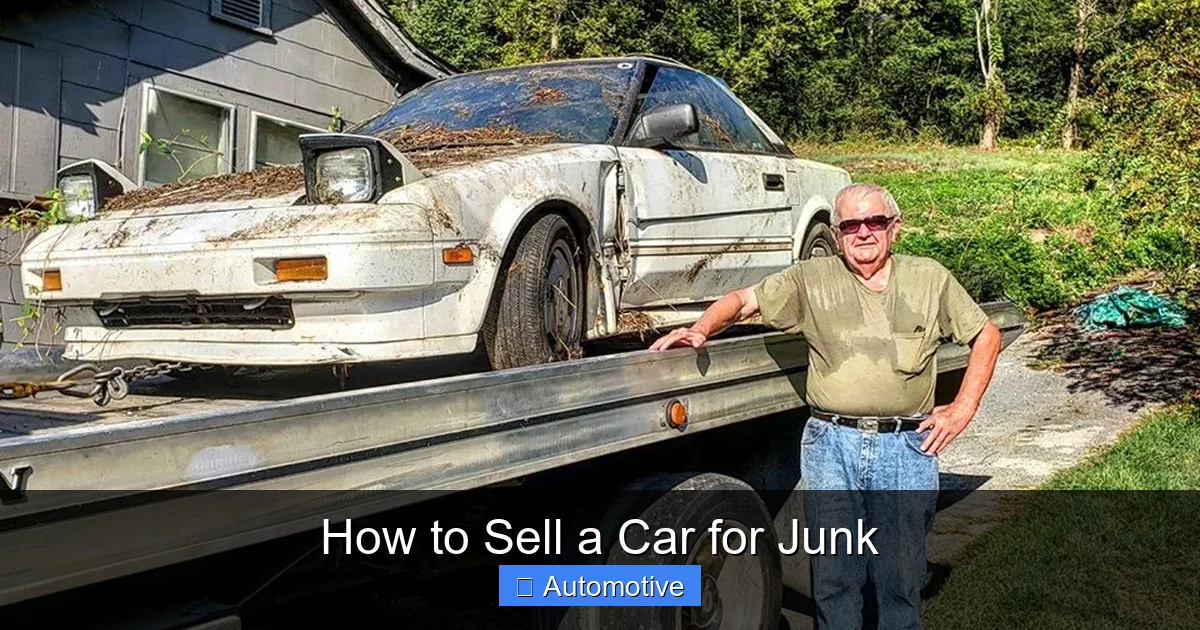
Visual guide about How to Sell a Car for Junk
Image source: irp-cdn.multiscreensite.com
One of the first questions people ask when considering how to sell a car for junk is: “How much will I get?” The answer depends on several factors, including the car’s make, model, year, weight, condition, and current scrap metal prices.
In general, junk cars are valued based on two things: the weight of the metal and the value of any reusable parts. Steel, aluminum, and copper inside the vehicle can be recycled, and that’s where most of the value comes from. For example, a typical sedan might weigh around 3,000 pounds. At current scrap rates (which fluctuate but average $150–$250 per ton), that translates to roughly $225–$375 in raw metal value.
But that’s just the base. If your car has valuable parts—like a working engine, transmission, catalytic converter, or alloy wheels—you might get more. A catalytic converter alone can be worth $100–$500, depending on the metals inside (like platinum, palladium, or rhodium). Luxury or high-demand vehicles may also fetch higher prices due to part resale potential.
Let’s look at a real-world example. Say you have a 2005 Ford F-150 that doesn’t run. It weighs about 4,500 pounds, so the scrap value is around $337–$562. But if it has a good transmission and catalytic converter, a junk buyer might offer $600–$900. On the other hand, a small, older economy car with no usable parts might only bring $300–$500.
Factors That Affect Junk Car Value
Several key factors influence how much you’ll get when you sell your car for junk:
- Weight: Heavier cars = more metal = higher payout. Trucks and SUVs usually bring more than compact cars.
- Condition of parts: Functional engines, transmissions, and electronics increase value.
- Location: Scrap prices vary by region. Urban areas with more recyclers may offer better rates.
- Time of year: Metal prices fluctuate. Spring and summer often see higher demand for scrap.
- Demand for parts: Popular models (like Toyota Camrys or Honda Accords) have higher part resale value.
- Buyer type: Some companies specialize in parts recycling and pay more than basic scrap yards.
It’s also worth noting that some buyers offer “cash for cars” services that include free towing. This can save you $100–$200 in towing fees, effectively increasing your net return.
Where to Sell Your Junk Car
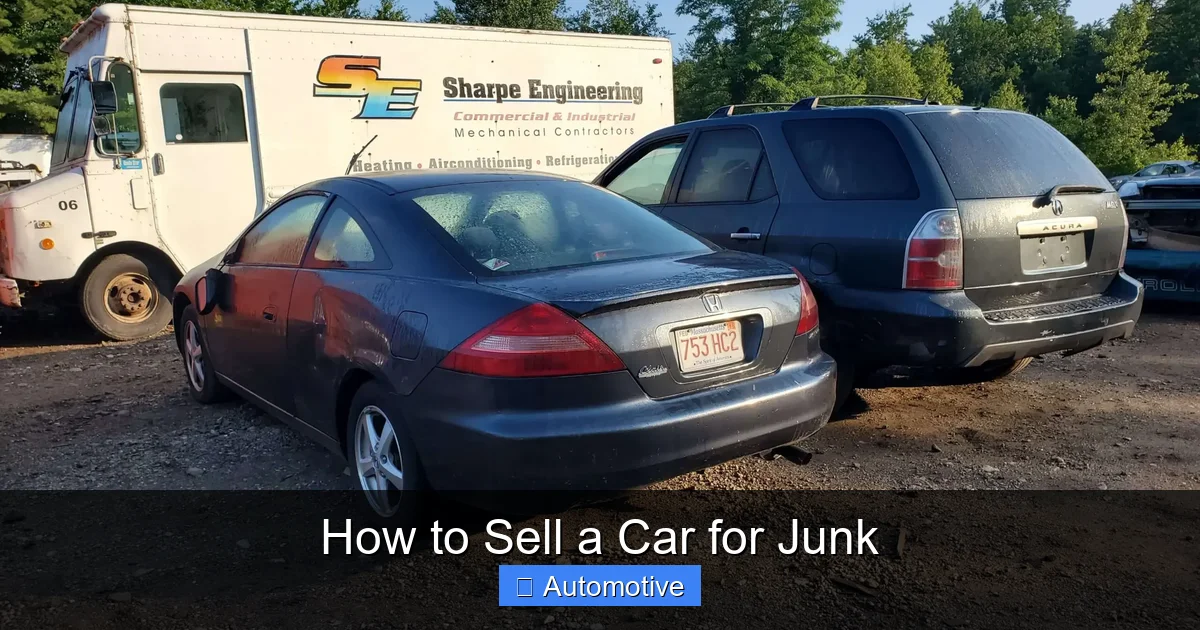
Visual guide about How to Sell a Car for Junk
Image source: 114autosalvage.com
Once you’ve decided to sell your car for junk, the next step is choosing where to sell it. You have several options, each with pros and cons. The key is to pick a reputable buyer who offers fair pricing and a hassle-free process.
Local Junkyards and Scrap Yards
Traditional scrap yards are one of the most common places to sell a junk car. These facilities buy vehicles for their metal content and often pay on the spot. Many offer free towing, especially if your car isn’t drivable.
Pros:
- Fast, in-person transactions
- No need to drive the car—towing is usually included
- Immediate cash payment
Cons:
- Prices may be lower than online buyers
- Less transparency in pricing
- May require you to bring the car in (if not towed)
To find a local scrap yard, search online for “junk car buyers near me” or check directories like Yellow Pages. Always call ahead to confirm they accept non-running vehicles and ask about their payment process.
Online Junk Car Buyers
In recent years, online junk car buyers have become increasingly popular. Companies like Cash Auto Salvage, Peddle, and CarBrain allow you to get an instant quote online, schedule free towing, and receive payment within days.
Pros:
- Convenient—get a quote from your phone or computer
- Often higher offers due to national pricing models
- Free towing and paperwork assistance
Cons:
- May take 1–3 days for pickup
- Payment might be via check or bank transfer (not always cash)
- Risk of scams if you use an unverified site
When using an online buyer, always check reviews on Google, BBB, or Trustpilot. Look for companies with physical addresses, clear terms, and responsive customer service.
Private Buyers
You might also consider selling your junk car privately—perhaps to a mechanic, car enthusiast, or someone looking for parts. Platforms like Craigslist, Facebook Marketplace, or OfferUp can connect you with local buyers.
Pros:
- Potentially higher sale price
- You control the negotiation
- No middleman fees
Cons:
- More effort required (photos, ads, meetings)
- Risk of no-shows or scams
- You may need to tow the car yourself
If you go this route, be cautious. Meet in public places, accept cash only, and avoid sharing personal information. Also, make sure the buyer understands the car is sold “as-is” with no warranty.
Donating Your Car
If your car has minimal value—say, under $500—donating it to a charity might be a better option. Many nonprofits accept junk cars and offer free towing. In return, you get a tax deduction.
Pros:
- Support a good cause
- Potential tax benefit
- Free removal
Cons:
To donate, look for reputable organizations like Goodwill, Habitat for Humanity, or local shelters. Get a receipt and keep records for your taxes.
The Step-by-Step Process to Sell a Car for Junk
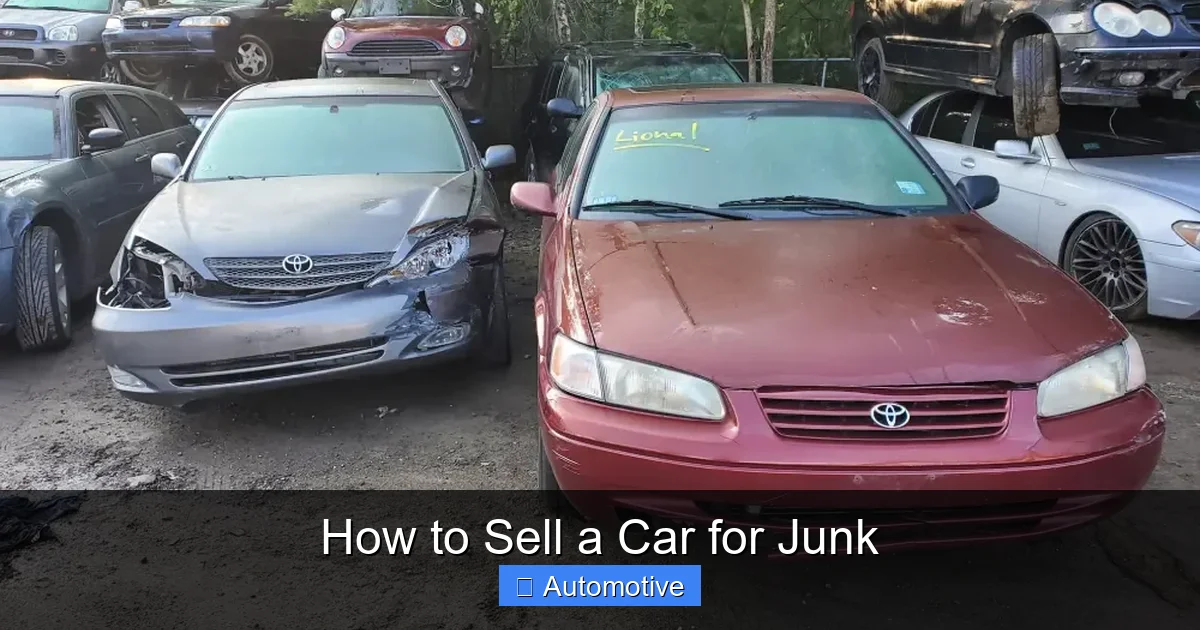
Visual guide about How to Sell a Car for Junk
Image source: 114autosalvage.com
Now that you know your options, let’s walk through the actual process of selling your car for junk. It’s simpler than you might think—especially if you follow these steps.
Step 1: Gather Your Documents
Before contacting buyers, make sure you have the necessary paperwork. Most junk car buyers require:
- Vehicle title: This proves you own the car. If you’ve lost it, contact your state’s DMV to get a replacement.
- Registration: Helpful but not always required.
- ID: To verify your identity.
If you don’t have the title, some states allow you to sell with a “lien release” or “affidavit of ownership,” but rules vary. Check your local DMV website for details.
Step 2: Remove Personal Items
Go through the car thoroughly. Check the glove box, trunk, under seats, and door pockets. Remove:
- Registration cards
- Insurance documents
- Personal belongings (clothes, tools, sunglasses)
- License plates (return to DMV or destroy)
Leaving items behind can lead to liability issues or delays. Plus, you don’t want your old gym clothes ending up in a scrap yard!
Step 3: Get Multiple Quotes
Don’t settle for the first offer. Call or submit online forms to at least 3–5 buyers. Provide the same details each time:
- Year, make, model
- Mileage (if known)
- Condition (running, non-running, damaged)
- Location
Compare the quotes. If one seems too good to be true, it might be. Watch out for hidden fees or lowball offers.
Step 4: Choose a Buyer and Schedule Pickup
Once you’ve picked the best offer, confirm the details:
- Final price
- Payment method (cash, check, transfer)
- Towing schedule
- Required documents
Most reputable buyers will send a tow truck within 24–48 hours. Make sure the driver has proper identification and a work order.
Step 5: Complete the Sale
When the tow truck arrives:
- Hand over the title (signed over to the buyer)
- Provide your ID
- Remove license plates
- Get a receipt or bill of sale
The buyer should pay you immediately—usually in cash or certified check. Keep the receipt for your records.
Step 6: Notify the DMV
After the sale, contact your state’s DMV to report the vehicle as sold or junked. This removes your liability in case the car is later involved in an accident or crime. Some states require you to submit a “Notice of Vehicle Sale” form online or by mail.
Failure to notify the DMV can result in fines or continued registration fees—even after the car is gone.
Avoiding Scams and Pitfalls
While most junk car buyers are legitimate, scams do exist. Protect yourself by staying alert and following these tips.
Red Flags to Watch For
- Buyers who ask for upfront fees: Legitimate junk car companies don’t charge you to take your car.
- Vague or inconsistent quotes: If the price changes drastically from the initial quote, walk away.
- No physical address or customer service: Avoid companies that only list a P.O. box or have no contact info.
- Pressure to sell immediately: Scammers often create urgency to prevent you from shopping around.
- Payment via gift cards or wire transfer: These are almost always scams. Legitimate buyers pay in cash, check, or bank transfer.
If something feels off, trust your gut. It’s better to lose a sale than lose money to a fraudster.
How to Verify a Buyer
Before committing, do a quick background check:
- Search the company name + “reviews” or “scam”
- Check the Better Business Bureau (BBB) rating
- Look for a physical address and phone number
- Ask for references or testimonials
Reputable companies will be transparent and happy to answer your questions.
Final Thoughts: Making the Most of Your Junk Car Sale
Selling a car for junk might not be the most glamorous task, but it’s a practical and often necessary step when your vehicle has reached the end of the road. By understanding your options, knowing your car’s value, and choosing a trustworthy buyer, you can turn a problem into a solution.
Remember, the goal isn’t just to get rid of the car—it’s to do it safely, legally, and profitably. Take the time to compare offers, protect your personal information, and complete the paperwork correctly. A little effort upfront can save you headaches down the line.
And if you’re feeling generous, consider donating. Even if the car isn’t worth much, it could help a charity fix a vehicle for someone in need. Either way, you’re making space, reducing clutter, and doing the right thing.
So don’t let that old clunker sit and rot. Whether it’s a rusted-out hatchback or a flood-damaged SUV, there’s someone out there who’ll take it off your hands—and pay you for the privilege. With this guide, you’re ready to sell your car for junk the smart way.
Frequently Asked Questions
Can I sell a car for junk without a title?
In most states, you need a title to sell a car for junk. However, some allow you to sell with a lien release or affidavit of ownership. Check your local DMV rules before proceeding.
Do I have to remove the license plates?
Yes, always remove your license plates before selling. Return them to the DMV or destroy them to avoid liability. Some states require you to surrender plates when transferring ownership.
How long does it take to sell a junk car?
Most junk car buyers can pick up your vehicle within 24–48 hours of accepting an offer. The entire process—from quote to payment—usually takes 2–5 days.
Will a junk car buyer take a car that doesn’t run?
Absolutely. Most junk car companies specialize in non-running, damaged, or wrecked vehicles. They’ll tow it away for free and pay you based on weight and parts.
Can I sell a car for junk if it’s still financed?
Only if the loan is paid off. If you still owe money, you’ll need to pay off the loan first or get permission from the lender to sell. The lender may require the proceeds to go directly to them.
Is it better to sell for junk or donate?
It depends on the car’s value and your goals. If it’s worth under $500, donating may give you a tax break. If it’s worth more, selling for cash is usually better.
