
How to Make a Car Key

Making a car key isn’t just for locksmiths—DIYers can do it too, but it requires the right tools, knowledge, and legal awareness. Whether you’ve lost your keys or need a spare, this guide walks you through the process for both traditional and modern transponder keys.
Key Takeaways
- Understand your key type: Traditional metal keys, transponder keys, and smart keys each require different methods and tools.
- Check local laws: In many areas, duplicating or programming a car key without ownership proof is illegal.
- Use the right tools: Key cutting machines, code cutters, and OBD2 programmers are essential for accurate duplication.
- Start with a working key: If you have a spare, duplicating it is faster and cheaper than creating one from scratch.
- Consider professional help: Complex keys like laser-cut or proximity keys are best handled by certified locksmiths or dealerships.
- Practice safety and legality: Never attempt to make a key for a vehicle you don’t own—this can lead to legal trouble.
- Keep records: Save your vehicle’s VIN and key code for future reference when making replacements.
📑 Table of Contents
- How to Make a Car Key: A Complete Guide for DIYers and Car Owners
- Understanding the Different Types of Car Keys
- Tools and Equipment Needed to Make a Car Key
- Step-by-Step Guide to Making a Car Key
- Legal and Safety Considerations
- When to Call a Professional
- Tips for Maintaining and Storing Your Keys
- Conclusion
How to Make a Car Key: A Complete Guide for DIYers and Car Owners
Losing your car keys can feel like a mini emergency—especially when you’re running late or stuck in an unfamiliar area. Whether you’ve misplaced them, they’ve worn out, or you simply want a spare, knowing how to make a car key can save you time, money, and stress. The good news? You don’t always need to call a locksmith or visit the dealership. With the right tools, a bit of patience, and some know-how, you can make a car key yourself—safely and legally.
But before you grab your toolbox, it’s important to understand that not all car keys are created equal. Modern vehicles use advanced security systems, including transponders and encrypted chips, while older models rely on simple metal keys. The method you use to make a car key will depend entirely on your vehicle’s make, model, and year. This guide will walk you through the entire process—from identifying your key type to cutting and programming it—so you can get back on the road with confidence.
Understanding the Different Types of Car Keys
Visual guide about How to Make a Car Key
Image source: car–key.com
Before you can make a car key, you need to know what kind of key your vehicle uses. Car keys have evolved significantly over the past few decades, and each type requires a different approach. Let’s break down the most common types you’ll encounter.
Traditional Metal Keys
These are the simplest and oldest type of car keys. Made entirely of metal, they have a series of ridges and grooves along the blade that match the tumblers inside the car’s ignition and door locks. If your car was made before the mid-1990s, it likely uses a traditional metal key. These keys are easy to duplicate using a key cutting machine or even by hand with a file, provided you have a working original.
One advantage of traditional keys is that they don’t require programming—once cut, they’ll work immediately. However, they offer minimal security. A skilled thief could potentially pick the lock or hot-wire the ignition, which is why newer vehicles have moved to more advanced systems.
Transponder Keys
Introduced in the 1990s, transponder keys include a small electronic chip embedded in the plastic head of the key. This chip communicates with your car’s immobilizer system. When you insert the key into the ignition, the car sends a radio signal to the chip. If the chip responds with the correct code, the engine will start. If not, the car won’t start—even if the key turns the lock.
To make a car key with a transponder, you’ll need to both cut the blade and program the chip. This requires specialized equipment, such as an OBD2 programmer or a key cloning device. Some transponder keys can be cloned from an existing working key, while others require programming via the vehicle’s onboard diagnostics port.
Remote Key Fobs and Smart Keys
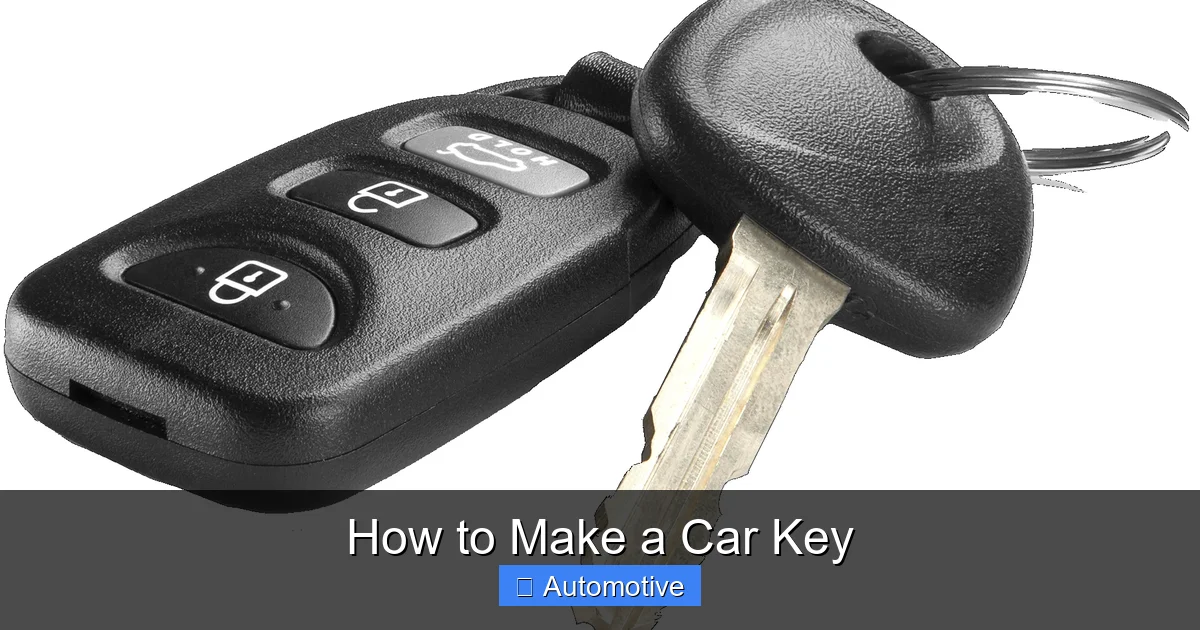
Remote key fobs, also known as keyless entry remotes, allow you to lock, unlock, and sometimes start your car from a distance. These keys often have buttons for trunk release, panic alarms, and remote start. While they may look similar to transponder keys, they use radio frequency (RF) signals to communicate with the car.
Smart keys, or proximity keys, take this a step further. You don’t even need to insert the key into the ignition—just having it in your pocket or purse allows the car to detect it and start with the push of a button. These keys are the most complex and typically require professional programming.
Laser-Cut and Sidewinder Keys
Laser-cut keys, also called sidewinder keys, have a more intricate blade design with cuts on both sides. They’re often used in luxury vehicles and high-security systems. Because of their precision, they require a specialized key cutting machine that can handle the dual-sided grooves.
These keys are harder to duplicate without the right equipment, and many come with a transponder chip as well. If your car uses a laser-cut key, you’ll likely need professional assistance unless you have access to advanced key cutting tools.
Tools and Equipment Needed to Make a Car Key
Visual guide about How to Make a Car Key
Image source: alloverlocknkey.com
Now that you know what type of key you’re dealing with, let’s talk about the tools you’ll need to make a car key. The equipment varies depending on the key type, but here’s a breakdown of the essentials.
Key Cutting Machines
For traditional and transponder keys, a key cutting machine is the most important tool. These devices use a template or code to guide the cutting process, ensuring the new key matches the original. There are two main types:
– **Manual key cutters:** These are handheld tools that require you to trace the original key with a file or blade. They’re affordable and great for basic duplication but require skill and patience.
– **Electric key cutters:** These machines use a motor to spin a cutting wheel, making the process faster and more precise. Some models can even read the original key and automatically cut a duplicate.
If you’re serious about making car keys at home, investing in a quality electric key cutter is worth it. Look for models that support multiple key types, including laser-cut and high-security keys.
OBD2 Programmers and Key Cloning Devices
For transponder and smart keys, you’ll need a device that can communicate with your car’s computer. OBD2 programmers plug into the onboard diagnostics port (usually under the dashboard) and allow you to program new keys, erase old ones, or reset the immobilizer system.
Key cloning devices are another option. These tools can read the data from an existing transponder key and copy it to a blank key. This is useful if you have a working spare and want to make an identical copy without programming.
Popular brands include Autel, Launch, and Advanced Diagnostics. Prices range from $100 to over $1,000, depending on features and compatibility.
Blank Keys
You’ll also need blank keys that match your vehicle. These are uncut keys with the correct shape and chip (if applicable). You can buy blanks online or at auto parts stores. Make sure to get the exact model for your car—using the wrong blank can result in a key that doesn’t fit or work.
Other Helpful Tools
– **Key code:** If you have the original key code (often found in your owner’s manual or on a sticker in the glove box), you can use it to cut a new key without the original.
– **VIN decoder:** Your Vehicle Identification Number (VIN) can help you identify the correct key type and programming requirements.
– **Multimeter:** Useful for testing electrical connections in key fobs or diagnosing issues with the immobilizer system.
– **Screwdrivers and pliers:** For disassembling key fobs or accessing the OBD2 port.
Step-by-Step Guide to Making a Car Key
Visual guide about How to Make a Car Key
Image source: pngmart.com
Now that you have the tools, let’s walk through the process of how to make a car key. We’ll cover both traditional and modern methods.
Making a Traditional Metal Key
If your car uses a simple metal key, the process is straightforward:
1. **Find a working original key.** This is essential for duplication.
2. **Purchase a blank key** that matches your vehicle’s make and model.
3. **Use a key cutting machine** to trace the original key and cut the blank. If you don’t have a machine, some hardware stores offer key cutting services.
4. **Test the new key** in the door and ignition to ensure it works smoothly.
Tip: If the key feels stiff or doesn’t turn easily, it may be over-cut. Use a fine file to gently adjust the grooves.
Making a Transponder Key
Transponder keys require both cutting and programming:
1. **Cut the key blade** using a key cutting machine, following the steps above.
2. **Program the transponder chip.** This can be done in several ways:
– **Self-programming:** Some cars allow you to program a new key by turning the ignition on and off in a specific sequence. Check your owner’s manual for instructions.
– **OBD2 programmer:** Use a diagnostic tool to program the key via the car’s computer.
– **Key cloning:** If you have a working key, use a cloning device to copy its data to the new key.
3. **Test the key** by starting the car. If the engine doesn’t start, the chip may not be programmed correctly.
Note: Not all transponder keys can be self-programmed. Some require a dealership or locksmith with specialized software.
Making a Remote Key Fob or Smart Key
These keys are more complex and often require professional help. However, here’s a general approach:
1. **Purchase a compatible blank fob.** Make sure it matches your car’s frequency and model.
2. **Program the remote functions.** Some fobs can be programmed using a sequence of button presses (e.g., lock, unlock, panic). Others require an OBD2 tool.
3. **Program the transponder or smart chip.** This step is similar to transponder key programming and may require a diagnostic tool.
4. **Sync the key with the car.** For smart keys, you may need to place the key in a specific location (like the cup holder) and press the start button.
Tip: If you’re unsure, consult your vehicle’s service manual or contact the manufacturer.
Legal and Safety Considerations
Making a car key isn’t just a technical process—it’s also a legal one. In many jurisdictions, duplicating or programming a car key without proof of ownership is considered illegal. This is to prevent theft and unauthorized access.
Ownership Verification
Always ensure you own the vehicle or have explicit permission from the owner before making a key. Keep your registration, title, and ID handy in case a locksmith or dealership asks for proof.
Avoiding Fraud
Never attempt to make a key for a car you don’t own. Even if you have the VIN or key code, doing so could be considered fraud or theft. If you’re helping a friend or family member, make sure they provide documentation.
Safety Tips
– Work in a well-lit, clean area to avoid mistakes.
– Wear safety glasses when cutting keys to protect your eyes from metal shavings.
– Disconnect the car’s battery before working on electrical components to prevent short circuits.
When to Call a Professional
While DIY key making is possible, there are times when it’s best to leave it to the experts.
Complex Key Systems
If your car uses a laser-cut key, smart key, or encrypted transponder, professional programming is often required. Dealerships and certified locksmiths have the tools and software to handle these systems.
No Working Key
If you’ve lost all your keys, making a new one from scratch is much harder. A locksmith can create a key using your VIN or by decoding the lock, but this service can be expensive.
Warranty and Insurance Concerns
Some car warranties or insurance policies require that keys be made by authorized dealers. Using a third-party locksmith or DIY method could void coverage.
Tips for Maintaining and Storing Your Keys
Once you’ve made a car key, take steps to keep it in good condition:
– **Avoid dropping or exposing keys to water.** Moisture can damage electronic components.
– **Use a keychain with a protective cover** to prevent wear on the plastic head.
– **Keep spare keys in a secure location,** like a locked drawer or with a trusted friend.
– **Replace worn keys promptly.** A damaged key can damage the ignition or lock.
Conclusion
Learning how to make a car key is a valuable skill that can save you time and money. Whether you’re duplicating a traditional key or programming a high-tech smart fob, the process starts with understanding your vehicle’s key type and using the right tools. While DIY methods work for many situations, don’t hesitate to call a professional for complex or high-security keys.
Always prioritize legality and safety—never make a key for a vehicle you don’t own, and keep your documentation handy. With the right approach, you can ensure you’re never stuck without a way to start your car.
Frequently Asked Questions
Can I make a car key without the original?
It depends on the key type and your vehicle. For traditional keys, a locksmith can often create one using the VIN or by decoding the lock. For transponder or smart keys, you’ll usually need a working key or professional programming tools.
How much does it cost to make a car key?
Costs vary widely. A basic metal key can cost $5–$20, while transponder keys range from $50–$200. Smart keys and laser-cut keys can cost $200–$500 or more, especially if programming is required.
Is it legal to make my own car key?
Yes, as long as you own the vehicle or have permission from the owner. Making a key for a car you don’t own is illegal in most places and can result in fines or criminal charges.
Can I program a car key myself?
Some cars allow self-programming using a specific ignition sequence. Others require an OBD2 programmer or dealership software. Check your owner’s manual or consult a professional if unsure.
What if I lose all my car keys?
Contact a licensed locksmith or your dealership. They can create a new key using your VIN or by decoding the lock, though this service can be expensive.
Do I need special tools to make a car key?
For basic keys, a simple key cutter may suffice. For transponder or smart keys, you’ll need an OBD2 programmer, key cloning device, or access to professional equipment.
