
How to Start a Keyless Car with a Key

Even keyless cars often come with a physical backup key for emergencies. If your key fob battery dies or the signal fails, knowing how to start a keyless car with a key can save you time, stress, and a tow truck call. This guide walks you through every step, from locating the hidden key to safely starting your engine the old-fashioned way.
So, you’ve got a shiny modern car with a sleek push-button start, wireless charging, and a key fob that seems to work like magic—until it doesn’t. One morning, you press the start button and… nothing. No response. No engine turnover. Just silence. Panic sets in. Did your car break down? Is there a major electrical issue?
Not necessarily.
Here’s the truth: even the most advanced keyless entry systems have a backup plan. Most modern vehicles—yes, even those with “keyless” ignition—come equipped with a physical key hidden inside the key fob. This little piece of metal might seem outdated, but it’s your lifeline when technology fails. Whether your fob battery dies, the signal gets blocked, or the car’s electronics glitch, knowing how to start a keyless car with a key can get you back on the road in minutes.
This guide is for every driver who’s ever stared at their silent dashboard wondering, “Now what?” We’ll walk you through the entire process step by step, from cracking open your fob to turning that hidden key in the ignition. No mechanics degree required—just common sense, a little patience, and this handy walkthrough.
Key Takeaways
- Most keyless cars include a physical backup key: Even if your car uses push-button start, it likely has a hidden mechanical key inside the fob for emergencies.
- Know your car’s key release method: Some fobs have a sliding button, others a pull-out tab—check your owner’s manual to avoid breaking the fob.
- Locate the hidden key slot: Many vehicles have a concealed ignition slot behind a cover near the steering column or door handle.
- Use the key to unlock the door first: You’ll need physical access before you can start the car, so always start by unlocking the driver’s door.
- Insert the key into the ignition slot: Once inside, find the hidden slot (often marked with a key symbol) and turn the key to start the engine.
- Replace the fob battery promptly: After using the backup key, replace the dead battery to restore full keyless functionality.
- Practice before an emergency: Familiarize yourself with the process now so you’re prepared when you really need it.
📑 Table of Contents
Why Keyless Cars Still Have Physical Keys
You might be wondering: if cars are so high-tech now, why do they still include old-school keys? After all, keyless entry and push-button start have been standard on most new vehicles for over a decade. The answer lies in reliability, safety, and practicality.
First, **backup systems exist for a reason**. Electronics fail. Batteries die. Signals get jammed. A dead key fob battery is one of the most common reasons drivers can’t start their cars—even in brand-new models. According to AAA, dead fob batteries account for thousands of roadside assistance calls every year. Instead of leaving drivers stranded, manufacturers include a mechanical override: the physical key.
Second, **physical keys provide security**. While keyless systems use encryption and rolling codes to prevent theft, a physical key adds another layer of protection. It’s harder to hot-wire a car when the ignition requires a specific metal key to turn. Plus, in the event of a total electronic failure—like a flooded control module—the mechanical key can still unlock the door and start the engine.
Third, **regulations and design standards** often require redundancy. Automotive safety standards in the U.S., Europe, and other regions encourage or mandate fail-safes for critical systems like ignition and door locks. Including a physical key ensures compliance and gives manufacturers peace of mind.
Finally, **not all drivers trust full automation**. Some people simply prefer having a tangible backup. Whether it’s a matter of habit, skepticism, or past experience, the physical key offers reassurance. It’s the automotive equivalent of a spare tire—you hope you never need it, but you’re glad it’s there.
The Evolution of Car Keys
To appreciate why physical keys still matter, it helps to understand how we got here. Car keys have evolved dramatically over the past 50 years.
In the 1970s and 80s, most cars used simple metal keys with basic tumbler locks. These were easy to duplicate but offered minimal security. By the 1990s, manufacturers began adding transponders—tiny chips embedded in the key that communicated with the car’s immobilizer system. Without the correct chip, the engine wouldn’t start, even if the key physically turned.
The 2000s brought keyless entry. Drivers could lock and unlock their cars with the press of a button on a remote fob. Then came push-button start, where the fob just needed to be inside the car—no insertion required. Today, some luxury models even use smartphone apps or biometric sensors to start the engine.
But through all this innovation, the physical key never disappeared. It just got smaller, smarter, and better hidden. Many modern fobs are designed to look like sleek remotes, but inside, they house a compact metal key that can be deployed when needed.
How the Backup Key Works
The backup key in your keyless car isn’t just a spare—it’s a fully functional mechanical key designed to interact with your vehicle’s locking and ignition systems. Here’s how it works:
When you remove the physical key from the fob, it’s identical to the one used in older cars. It has cuts and grooves that match the tumblers in your door lock and ignition cylinder. Once inserted, it can turn the lock mechanism just like a traditional key.
But here’s the catch: most modern cars don’t have a visible ignition slot. Instead, the slot is hidden behind a cover or integrated into the steering column. You’ll need to locate it and insert the key to start the car manually.
This system ensures that even if the electronic systems fail, the mechanical ones can still function. It’s a brilliant example of hybrid design—blending old-school reliability with modern convenience.
Step-by-Step: How to Start a Keyless Car with a Key
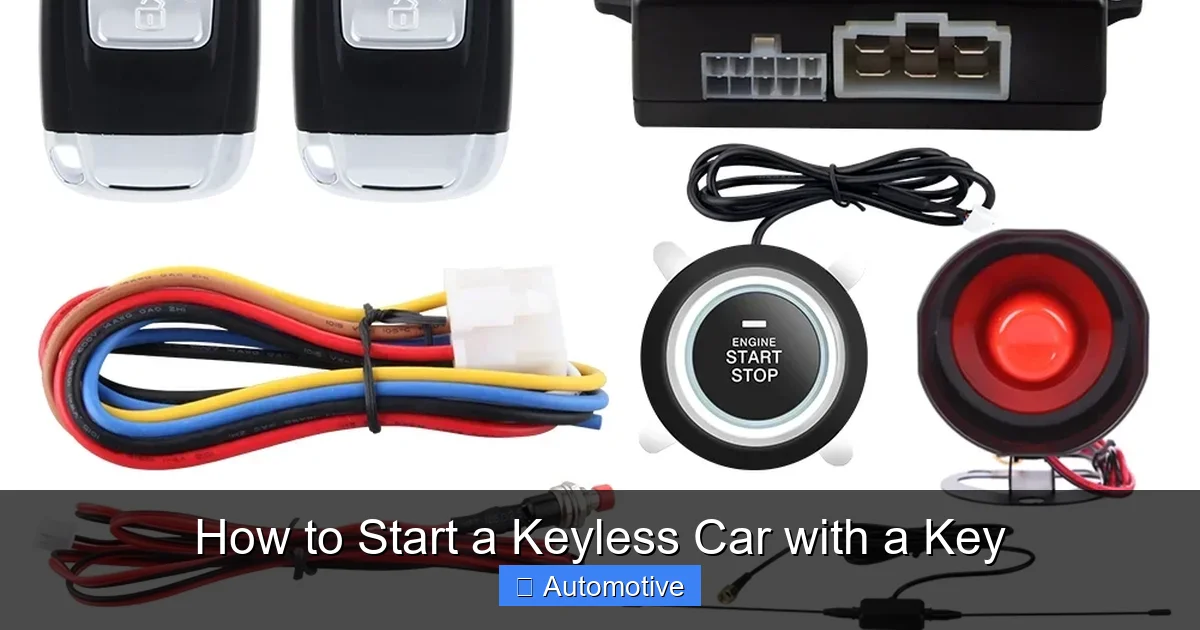
Visual guide about How to Start a Keyless Car with a Key
Image source: i5.walmartimages.com
Now that you understand why the backup key exists, let’s get practical. Here’s exactly how to start a keyless car with a key, step by step. Follow these instructions carefully, and you’ll be back on the road in no time.
Step 1: Locate and Remove the Physical Key from the Fob
The first step is getting the key out of your fob. This isn’t always obvious—manufacturers hide the release mechanism to maintain the fob’s sleek design.
Look for a small button, slider, or release tab on the side or back of the fob. Common designs include:
– A **push-button release**: Press a small button near the key ring loop, and the key slides out.
– A **slide-out mechanism**: Slide a small lever or tab to eject the key.
– A **twist or pull design**: Some fobs require you to twist the key ring or pull a hidden tab.
If you’re unsure, check your owner’s manual. It will show exactly how to access the key. Never force it—using too much pressure can break the fob.
Once the key is out, you’ll see a small, flat metal key with a unique cut pattern. This is your backup key.
Step 2: Unlock the Driver’s Door
With the physical key in hand, walk to the driver’s side door. Look for a small keyhole—usually near the door handle or integrated into the handle itself. On some cars, the keyhole is hidden behind a removable cover.
If there’s a cover, gently pry it off with your fingernail or a small flat tool. Be careful not to scratch the paint.
Insert the key into the lock and turn it clockwise to unlock the door. You should hear a click, and the door will open.
Note: Some cars only allow you to unlock the driver’s door with the key. The passenger doors may remain locked until you use the interior controls or the fob (if it has power).
Step 3: Locate the Hidden Ignition Slot
Now that you’re inside, it’s time to start the car. But where’s the ignition?
In keyless cars, the ignition slot is typically hidden. Look around the steering column—especially near the dashboard or the area where the key would normally go. Common locations include:
– Behind a small plastic cover marked with a key symbol (🔑)
– Inside a recessed slot near the steering wheel
– Under a flip-up panel on the side of the steering column
Some vehicles have the slot integrated into the dashboard, often near the center console. If you can’t find it, consult your owner’s manual—it will have a diagram showing the exact location.
Step 4: Insert the Key and Turn to Start
Once you’ve found the ignition slot, insert the physical key. It should fit snugly—don’t force it.
Turn the key to the “on” position (usually the second click). You’ll see the dashboard lights up, but the engine won’t start yet.
Then, turn the key further to the “start” position. Hold it there for a second or two until the engine cranks and starts. Release the key, and it should return to the “on” position.
If the engine doesn’t start, try turning the key again. Sometimes it takes a few tries, especially if the battery is weak.
Step 5: Drive Safely and Replace the Fob Battery
Congratulations—you’ve started your keyless car with a key! But don’t stop here.
Once the engine is running, drive to the nearest auto parts store or dealership to replace the fob battery. Most fob batteries last 2–4 years, but extreme temperatures, frequent use, or manufacturing defects can shorten their life.
Replacing the battery is usually simple: open the fob (using the same method as before), remove the old coin-cell battery (often a CR2032), and insert a new one with the correct polarity. Snap the fob back together, and test it to make sure it works.
Troubleshooting Common Issues
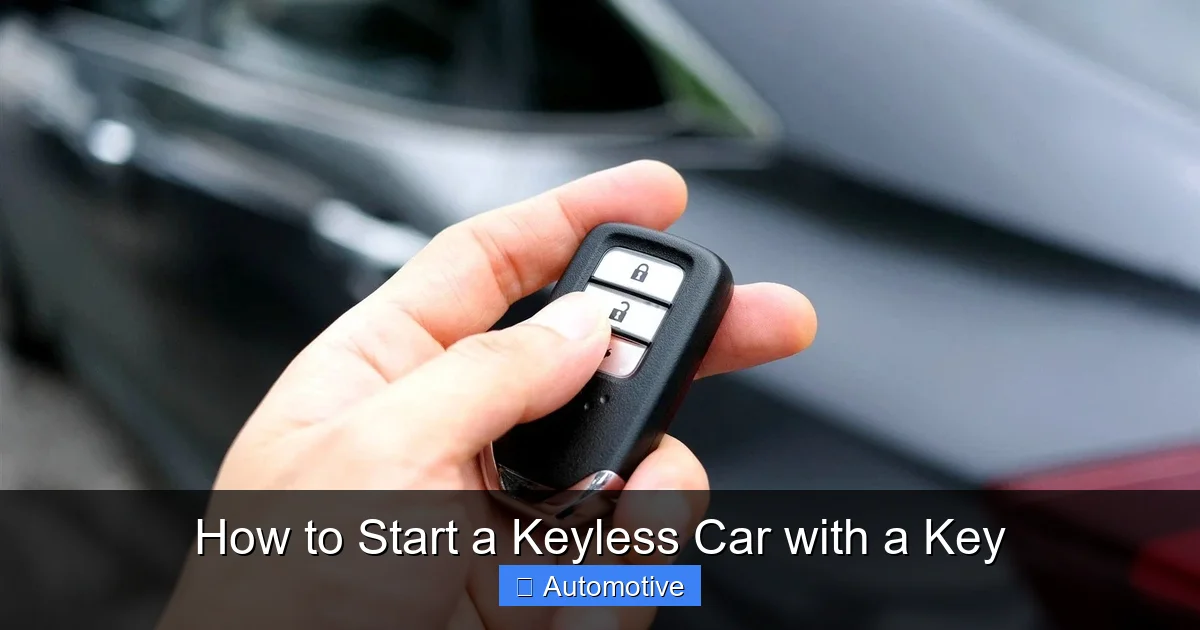
Visual guide about How to Start a Keyless Car with a Key
Image source: ua.ml-vehicle.com
Even with the right steps, things don’t always go smoothly. Here are some common problems and how to fix them.
The Key Won’t Turn in the Ignition
If the key won’t turn, it might be because the steering wheel is locked. This happens when the wheels are turned while the car is off.
To fix it, gently wiggle the steering wheel left and right while turning the key. The lock should release, and the key will turn.
The Fob Won’t Open
If you can’t get the key out of the fob, don’t panic. Try these tips:
– Make sure you’re pressing the correct button or sliding the right tab.
– Use a small flathead screwdriver to gently pry open stubborn fobs.
– Check for dirt or debris blocking the mechanism—clean it with compressed air.
If the fob is damaged, you may need a replacement from the dealership.
The Car Starts, But the Dashboard Shows a Warning
After starting the car with the key, you might see a message like “Key Not Detected” or “Service Keyless System.” This is normal.
The car knows the fob isn’t present, but it allows you to drive using the mechanical key. Once you replace the fob battery and place the fob inside the car, the warning should disappear.
The Key Broke in the Lock
This is rare but possible. If the key snaps, don’t try to remove it with pliers—you could damage the lock.
Call a locksmith or your dealership. They have tools to extract broken keys safely.
Which Cars Have Hidden Keys? (Make and Model Examples)
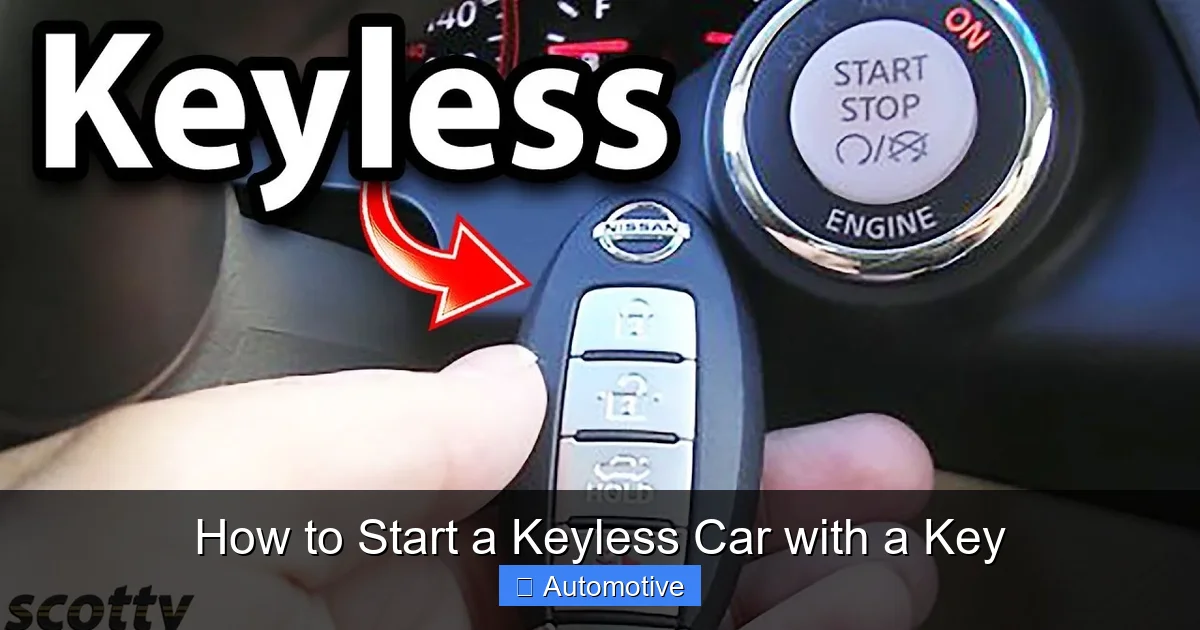
Visual guide about How to Start a Keyless Car with a Key
Image source: i.ytimg.com
Not all keyless cars are the same. Some make it easy to find the backup key, while others hide it well. Here are a few examples:
Toyota and Lexus
Most Toyota and Lexus models with push-button start include a physical key inside the fob. The release button is usually on the side. The ignition slot is often behind a cover near the steering column.
Honda and Acura
Honda fobs typically have a sliding release. The keyhole is often hidden behind a small cap on the driver’s door handle. The ignition slot is usually near the steering wheel.
Ford and Lincoln
Ford’s keyless fobs often have a push-button release. The ignition slot is commonly located under a flip-up panel on the side of the steering column.
BMW and Mercedes-Benz
Luxury brands like BMW and Mercedes hide their keys well. The release mechanism may require a small tool. The ignition slot is often integrated into the dashboard or center console.
Always check your owner’s manual for model-specific instructions.
Prevention Tips: Avoid Getting Stranded
The best way to handle a dead fob is to prevent it from happening in the first place. Here are some proactive tips:
– **Check the fob battery regularly.** Many modern fobs have a low-battery warning light or reduced range when the battery is dying.
– **Keep a spare battery in your glove box.** A CR2032 battery takes up little space and can save you in a pinch.
– **Test the fob monthly.** Press the lock button from a distance to ensure it’s working.
– **Avoid extreme temperatures.** Leaving your fob in a hot car or cold garage can drain the battery faster.
– **Use a keychain with a built-in battery tester.** Some keychains have a small LED that lights up when the fob has power.
By staying prepared, you’ll rarely need to use the backup key—but when you do, you’ll be glad you know how.
Conclusion
Starting a keyless car with a key might seem like a throwback to the past, but it’s a vital skill for any modern driver. Technology is great—until it fails. And when it does, that little metal key tucked inside your fob can be a real lifesaver.
From unlocking the door to turning the hidden ignition, the process is simpler than most people think. With a little practice and the right knowledge, you’ll never be left stranded again.
So take a few minutes today to locate your backup key, find the ignition slot, and test the process. It’s a small effort that could save you hours of stress—and maybe even a tow truck bill.
Remember: your car’s designers included that physical key for a reason. Respect it, use it when needed, and keep your fob battery fresh. Because when it comes to getting home, sometimes the oldest trick in the book is still the best.
Frequently Asked Questions
Can I start a keyless car without the fob?
Yes, most keyless cars can be started with the physical key hidden inside the fob. You’ll need to unlock the door manually and insert the key into a hidden ignition slot to start the engine.
Where is the hidden key in a key fob?
The physical key is usually stored inside the fob and released by pressing a button, sliding a tab, or twisting a mechanism. Check your owner’s manual for the exact method for your vehicle.
What if my key fob is completely dead?
Even with a dead fob, you can still start the car using the backup key. Remove the key from the fob, unlock the door, and use it in the hidden ignition slot to start the engine.
Do all keyless cars have a physical key?
Most do, but not all. Some high-end or newer models may rely entirely on electronic systems. Always check your owner’s manual to confirm if your car has a backup key.
Can I drive long distances after starting with the key?
Yes, you can drive normally after starting the car with the physical key. However, you should replace the fob battery as soon as possible to restore full keyless functionality.
What if I can’t find the ignition slot?
If you can’t locate the hidden ignition slot, consult your owner’s manual or visit the manufacturer’s website. Many provide diagrams or videos showing the exact location for your model.
