
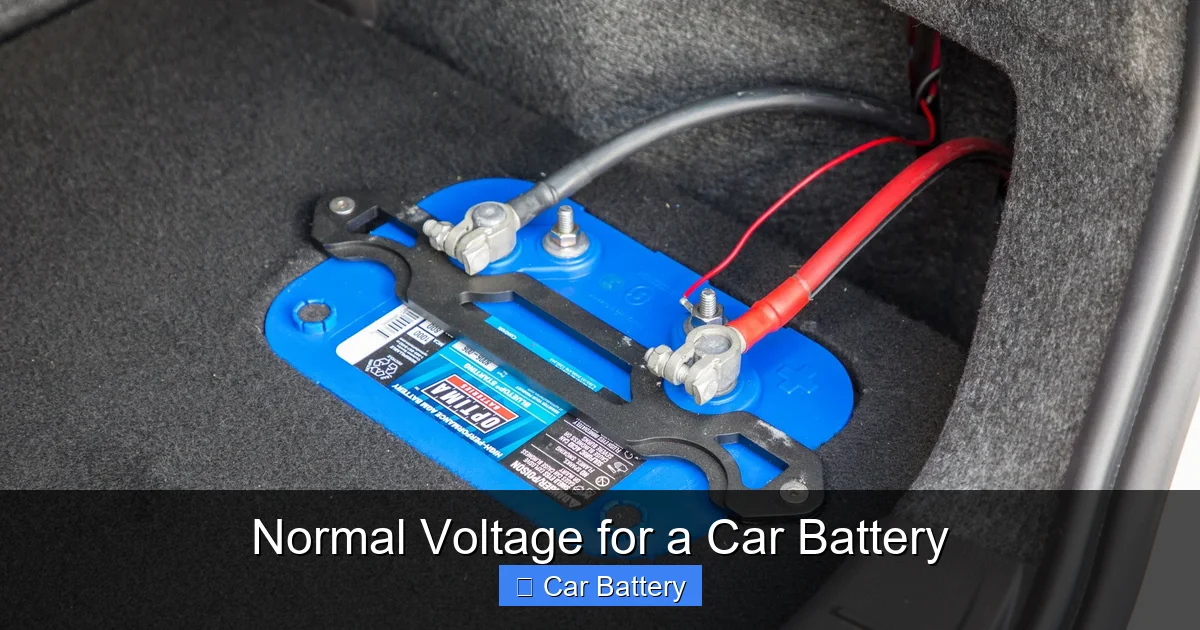
Normal Voltage for a Car Battery

Understanding the normal voltage for a car battery is essential for maintaining your vehicle’s reliability. A healthy 12-volt car battery typically reads between 12.4 and 12.7 volts when the engine is off, and around 13.7 to 14.7 volts when running. Knowing these numbers helps you spot problems early and avoid unexpected breakdowns.
Key Takeaways
- Normal resting voltage: A fully charged car battery should read between 12.4 and 12.7 volts when the engine is off.
- Charging system voltage: When the engine is running, the alternator should produce 13.7 to 14.7 volts to recharge the battery.
- Below 12.4 volts: Indicates a partially discharged battery that may struggle to start the car, especially in cold weather.
- Voltage under 12 volts: Suggests a deeply discharged or failing battery that likely needs recharging or replacement.
- Testing is simple: Use a multimeter or voltmeter to check voltage—no mechanic required.
- Temperature matters: Cold weather can reduce battery performance, so voltage checks are especially important in winter.
- Regular checks prevent failure: Testing your battery every few months helps catch issues before they leave you stranded.
📑 Table of Contents
What Is the Normal Voltage for a Car Battery?
When it comes to car maintenance, few things are as important—and as often misunderstood—as your vehicle’s battery. Most drivers know that a dead battery means a car that won’t start, but few understand the role voltage plays in keeping everything running smoothly. So, what is the normal voltage for a car battery? Simply put, it’s the electrical potential your battery holds, measured in volts, and it’s a key indicator of your battery’s health.
Most modern cars use a 12-volt lead-acid battery, which is actually made up of six individual cells, each producing about 2.1 volts. When fully charged and at rest (meaning the engine has been off for at least an hour), a healthy car battery should read between 12.4 and 12.7 volts. This range tells you the battery has enough charge to reliably start your engine and power your vehicle’s electrical systems. If the voltage drops below this range, it’s a red flag that your battery may be losing its ability to hold a charge.
But voltage isn’t just about the battery itself—it’s also about how well your car’s charging system is working. When the engine is running, the alternator takes over, generating electricity to recharge the battery and power the car’s lights, radio, air conditioning, and other electronics. During this time, the voltage should rise to between 13.7 and 14.7 volts. This higher voltage ensures the battery gets replenished after starting the car and supports all the electrical demands while driving.
Understanding these two key voltage ranges—resting and running—gives you a powerful tool for diagnosing battery and charging system issues. Whether you’re trying to figure out why your car won’t start or just want to stay ahead of potential problems, knowing the normal voltage for a car battery is the first step toward smarter, more confident car care.
Why Voltage Matters for Your Car Battery
Voltage is like the heartbeat of your car’s electrical system. Just as a doctor checks your pulse to assess your health, checking your battery’s voltage gives you a quick snapshot of its condition. But why does it matter so much? Because every electrical component in your vehicle—from the starter motor to the dashboard lights—relies on a steady supply of power, and that power starts with the battery.

Visual guide about Normal Voltage for a Car Battery
Image source: batteryglobe.com
When your battery’s voltage is within the normal range, it means the chemical reactions inside the battery are working efficiently. The lead plates and sulfuric acid electrolyte are doing their job, storing and releasing energy as needed. But when voltage drops, it’s often a sign that those reactions are slowing down. This could be due to age, extreme temperatures, or a parasitic drain—something in your car is using power even when the engine is off.
Low voltage can lead to a cascade of problems. For example, if your battery reads 12.2 volts, it’s only about 50% charged. That might be enough to start your car on a warm day, but in cold weather, when engine oil thickens and the starter motor needs more power, that same battery could fail. Even if it starts, a weak battery may not provide enough voltage to keep your alternator and other systems running smoothly, leading to dim lights, sluggish performance, or even a stalled engine.
On the flip side, voltage that’s too high—consistently above 15 volts—can be just as dangerous. This usually indicates a problem with the voltage regulator, which is part of the alternator. Overcharging can cause the battery to overheat, boil off electrolyte, and eventually fail prematurely. It can also damage sensitive electronics like your car’s computer, sensors, and infotainment system.
So, monitoring voltage isn’t just about avoiding a dead battery—it’s about protecting your entire vehicle. By keeping an eye on these numbers, you can catch issues early, extend the life of your battery, and avoid costly repairs down the road.
How to Test Your Car Battery Voltage
Testing your car battery’s voltage is one of the easiest and most effective ways to check its health—and you don’t need to be a mechanic to do it. All you need is a basic multimeter or voltmeter, which you can find at any auto parts store for under $20. The process takes just a few minutes and can save you from being stranded with a dead battery.
Visual guide about Normal Voltage for a Car Battery
Image source: aa1car.com
Gather Your Tools
Before you begin, make sure you have a digital multimeter. Analog meters work too, but digital ones are more accurate and easier to read. Set the multimeter to DC voltage (usually marked as “V” with a straight line or “V–”). Most car batteries are 12-volt systems, so set the range to 20 volts if your meter has adjustable settings. This ensures you get a precise reading without overloading the meter.
Prepare the Battery
For the most accurate resting voltage reading, the engine should be off for at least one hour. This allows the surface charge—a temporary voltage boost that fades quickly—to dissipate. If you’ve just driven the car, wait a bit before testing. Also, turn off all electrical loads: headlights, radio, air conditioning, and interior lights. Even small drains can affect the reading.
Connect the Multimeter
Open the hood and locate the battery. You’ll see two terminals: positive (usually red, marked with a “+”) and negative (black, marked with a “–”). Attach the red probe of the multimeter to the positive terminal and the black probe to the negative terminal. Make sure the probes make solid contact—don’t just rest them on top. If the terminals are corroded, clean them with a wire brush first to ensure a good connection.
Read the Results
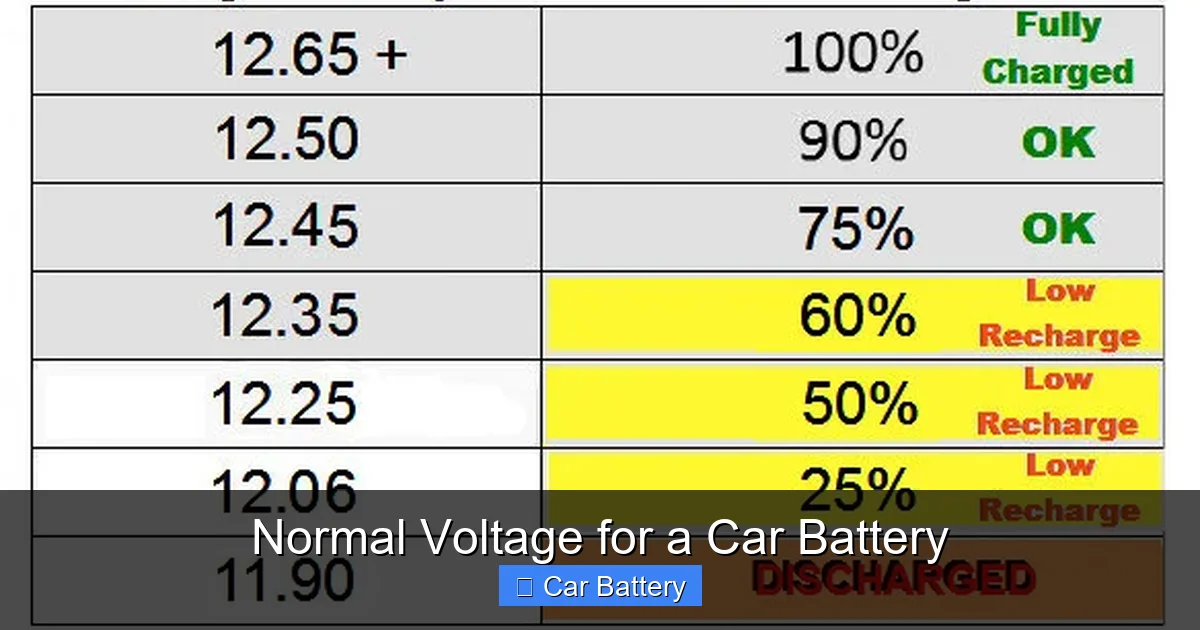
Once connected, the multimeter will display the voltage. Here’s what the numbers mean:
- 12.6–12.7 volts: Fully charged and in excellent condition.
- 12.4–12.5 volts: About 75% charged—still good, but may need monitoring.
- 12.2–12.3 volts: Around 50% charged—time to consider recharging.
- 12.0–12.1 volts: Less than 25% charged—likely won’t start the car.
- Below 12.0 volts: Deeply discharged or failing—needs immediate attention.
Test While Running
To check the charging system, start the engine and repeat the test. With the engine running, the voltage should rise to 13.7 to 14.7 volts. This shows the alternator is working properly and recharging the battery. If the voltage stays near 12 volts, the alternator may not be charging. If it goes above 15 volts, the voltage regulator could be faulty.
Testing your battery voltage regularly—say, every three months or before a long trip—is a smart habit. It’s quick, easy, and gives you peace of mind knowing your car is ready to go when you are.
What Affects Car Battery Voltage?
While the normal voltage for a car battery is relatively consistent, several factors can cause fluctuations. Understanding these influences helps you interpret your voltage readings more accurately and take steps to protect your battery.

Visual guide about Normal Voltage for a Car Battery
Image source: cdn.freshdesk.com
Temperature
Extreme temperatures—both hot and cold—can significantly impact battery performance. In cold weather, the chemical reactions inside the battery slow down, reducing its ability to deliver power. This is why cars are more likely to fail to start in winter. A battery that reads 12.4 volts at 70°F might drop to 12.0 volts or lower at 30°F, even if it’s fully charged.
Conversely, high temperatures can accelerate chemical reactions, which might seem beneficial—but they also increase the rate of self-discharge and can cause the electrolyte to evaporate. Over time, this leads to internal damage and reduced battery life. In hot climates, batteries often fail sooner than in moderate ones.
Battery Age
Like any component, car batteries wear out over time. Most last between three and five years, depending on usage and conditions. As a battery ages, its internal plates degrade, reducing its capacity to hold a charge. An older battery might still show 12.6 volts when fully charged, but it won’t sustain that voltage under load—like when starting the engine.
If your battery is more than three years old and you’re seeing voltage readings on the lower end of normal, it’s wise to have it tested more thoroughly or consider replacement before it fails unexpectedly.
Parasitic Drain
Even when your car is off, small amounts of power are used by systems like the clock, alarm, and onboard computer. This is normal. But if something is drawing too much power—like a faulty relay, stuck glove box light, or aftermarket device—it can create a parasitic drain. Over time, this can slowly discharge the battery, leading to low voltage readings even if the battery is otherwise healthy.
Signs of parasitic drain include a battery that dies overnight or a voltage reading that drops significantly after the car sits for a few days. A mechanic can perform a parasitic draw test to identify the source.
Charging System Issues
The alternator and voltage regulator work together to maintain proper voltage while the engine runs. If either component fails, the battery won’t recharge properly. For example, a worn alternator belt or faulty diode can reduce output, leading to low running voltage. Similarly, a bad voltage regulator can cause overcharging, damaging the battery and electronics.
Regular maintenance, such as checking belt tension and inspecting wiring, can help prevent these issues. If you notice dimming lights or electrical glitches while driving, have your charging system checked.
Driving Habits
Short trips—like driving to the store and back—don’t give the alternator enough time to fully recharge the battery after starting the engine. Over time, this can lead to a gradual loss of charge, especially if you use a lot of electronics (like heated seats or GPS) during these trips. If your daily driving consists mostly of short distances, consider using a battery maintainer or taking longer drives occasionally to help keep the battery charged.
When to Replace Your Car Battery
Even with proper care, car batteries don’t last forever. Knowing when to replace yours can save you from unexpected breakdowns and costly towing fees. Voltage testing is a great first step, but it’s not the only factor to consider.
Voltage Below 12.4 Volts
If your battery consistently reads below 12.4 volts when the engine is off, it’s a strong sign it’s losing its ability to hold a charge. While you might be able to jump-start the car and recharge it with a battery charger, repeated low voltage readings suggest the battery is nearing the end of its life.
Slow Engine Crank
When you turn the key, does the engine crank slowly or hesitate before starting? This is a classic symptom of a weak battery. Even if the voltage reads okay at rest, the battery may not deliver enough current under load. This is especially noticeable in cold weather.
Swollen or Leaking Battery Case
Physical damage is a clear warning sign. If the battery case is bulging, cracked, or leaking fluid, it’s unsafe and should be replaced immediately. Swelling often results from overcharging or extreme heat, which can cause internal pressure to build up.
Old Age
Most batteries last 3–5 years. If yours is approaching or exceeding this range, it’s smart to replace it proactively—even if it seems to be working fine. Batteries often fail without warning, and replacing one before it dies is far more convenient than dealing with a dead car on a cold morning.
Frequent Jump-Starts
If you’ve needed jump-starts more than once in the past year, your battery is likely failing. While other issues (like a bad alternator) can cause repeated dead batteries, the battery itself is often the culprit.
Warning Lights
Modern cars have a battery or charging system warning light on the dashboard. If it comes on while driving, it usually means the alternator isn’t charging properly. But if the light appears intermittently or after starting, it could indicate a weak battery that’s struggling to maintain voltage.
When replacing your battery, choose one with the correct group size, cold cranking amps (CCA), and reserve capacity (RC) for your vehicle. These specs ensure it can handle your car’s electrical demands and start reliably in your climate.
Tips for Maintaining Healthy Battery Voltage
Prevention is always better than repair when it comes to car batteries. With a few simple habits, you can keep your battery voltage in the healthy range and extend its lifespan.
Test Regularly
Make voltage testing part of your routine maintenance. Check it every three months, or before long trips and seasonal changes. Keep a log of your readings to spot trends over time.
Keep Terminals Clean
Corrosion on the battery terminals can interfere with electrical connections, leading to poor performance. Clean the terminals with a mixture of baking soda and water, then rinse and dry. Apply a thin layer of petroleum jelly or terminal protector to prevent future corrosion.
Secure the Battery
A loose battery can vibrate excessively, damaging internal components. Make sure it’s securely mounted in the tray and the hold-down clamp is tight.
Limit Short Trips
As mentioned earlier, short trips don’t allow the alternator to fully recharge the battery. If possible, combine errands into longer drives or use a battery maintainer if the car will sit for extended periods.
Use a Battery Maintainer
If you don’t drive often—like with a classic car or seasonal vehicle—a battery maintainer (also called a trickle charger) can keep the battery at full charge without overcharging. These devices are affordable and easy to use.
Protect from Extreme Temperatures
Park in a garage when possible, especially in winter. In hot climates, consider a battery insulation wrap to reduce heat exposure. While you can’t control the weather, minimizing extreme temperature exposure helps preserve battery life.
Turn Off Accessories
Before turning off the engine, turn off lights, radio, and other electronics. This reduces the load on the battery and helps maintain voltage.
By following these tips, you’ll not only maintain normal voltage for your car battery but also enjoy more reliable starts, fewer surprises, and a longer-lasting battery.
Conclusion
Knowing the normal voltage for a car battery is more than just a technical detail—it’s a practical skill that can save you time, money, and frustration. A healthy battery should read between 12.4 and 12.7 volts when the engine is off and 13.7 to 14.7 volts when running. These numbers are your first line of defense against unexpected breakdowns and costly repairs.
Regular voltage testing, combined with good maintenance habits, helps you catch problems early and keep your car running smoothly. Whether you’re dealing with cold weather, aging components, or electrical drains, understanding voltage gives you the insight you need to make smart decisions. So grab a multimeter, check your battery, and drive with confidence—your car will thank you.
Frequently Asked Questions
What voltage is too low for a car battery?
A car battery reading below 12.0 volts is considered too low and indicates a deeply discharged or failing battery. At this level, the battery likely won’t have enough power to start the engine, especially in cold weather.
Can a car battery be bad even if voltage is normal?
Yes. A battery can show normal voltage at rest but fail under load—like when starting the engine. This is why load testing by a professional is often needed to confirm battery health.
How often should I check my car battery voltage?
It’s a good idea to check your battery voltage every three months, before long trips, and during seasonal changes, especially in winter when cold weather stresses the battery.
What causes a car battery to lose voltage?
Common causes include aging, extreme temperatures, parasitic drain, short driving trips, and charging system problems like a faulty alternator or voltage regulator.
Is 12.2 volts OK for a car battery?
12.2 volts indicates the battery is about 50% charged. While it might start the car in warm weather, it’s below the ideal range and should be recharged soon to avoid failure.
Can I drive with a low battery voltage?
You might be able to drive short distances if the alternator is working, but a low-voltage battery can lead to stalling, electrical issues, or complete failure. It’s best to recharge or replace it as soon as possible.
