
How Long Should I Jump a Car Battery

Jump-starting a car battery is a common fix, but timing matters. Most experts recommend letting the jumper cables run for 3 to 5 minutes before attempting to start the dead vehicle. Leaving them connected too long or too short can risk damage or failure.
Key Takeaways
- Jump for 3 to 5 minutes: This gives the dead battery enough charge to restart the engine without overloading the system.
- Don’t exceed 10 minutes: Extended jump times can overheat cables or damage the alternator and electronics.
- Start the donor car first: Always run the working vehicle for a few minutes before connecting cables to boost voltage.
- Use proper cable connection order: Connect red to positive, black to negative (or a grounded metal part) to avoid sparks or shorts.
- Let the jumped car run after starting: Drive or idle for at least 20–30 minutes to recharge the battery fully.
- Avoid jump-starting in extreme cold: Cold weather reduces battery efficiency—consider a portable jump starter instead.
- Know when to replace, not jump: If a battery dies repeatedly, it may be time for a replacement, not just a jump.
📑 Table of Contents
- How Long Should I Jump a Car Battery? A Complete Guide
- Understanding How Car Batteries Work
- The Ideal Jump Time: 3 to 5 Minutes
- Step-by-Step Guide to Jump-Starting Safely
- Common Mistakes to Avoid
- When Jump-Starting Won’t Work
- Alternative Solutions: Portable Jump Starters
- Tips for Preventing Dead Batteries
- Conclusion
How Long Should I Jump a Car Battery? A Complete Guide
We’ve all been there—you turn the key, and instead of that familiar engine roar, you hear nothing but a sad, clicking sound. Your car battery is dead. It’s frustrating, especially when you’re running late or stuck in a parking lot far from home. But don’t panic. Jump-starting your car is one of the most common and effective ways to get back on the road quickly.
However, while jump-starting seems simple, doing it wrong—or for the wrong amount of time—can lead to bigger problems. You might wonder: *How long should I jump a car battery?* The answer isn’t just about flipping a switch and hoping for the best. It’s about understanding how batteries work, how electrical systems transfer power, and how to do it safely without frying your car’s electronics or risking injury.
In this guide, we’ll walk you through everything you need to know about jump-starting a car battery—from the ideal jump time to step-by-step instructions, safety tips, and what to do after your engine roars back to life. Whether you’re a first-time driver or a seasoned road warrior, this information will help you handle a dead battery like a pro.
Understanding How Car Batteries Work
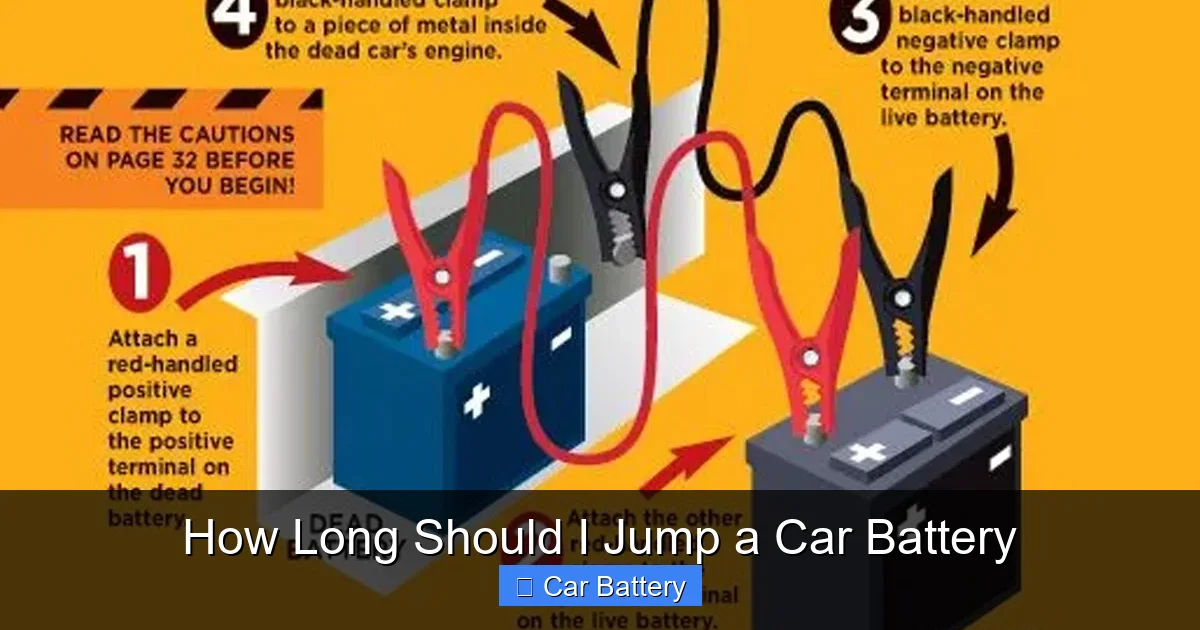
Visual guide about How Long Should I Jump a Car Battery
Image source: extantpower.com
Before we dive into jump times, it helps to understand what’s happening under the hood. Your car battery is more than just a box that stores electricity—it’s the heart of your vehicle’s electrical system. When you turn the key, the battery sends a burst of power to the starter motor, which cranks the engine. Once the engine is running, the alternator takes over, recharging the battery and powering the car’s electronics.
But batteries don’t last forever. Over time, they lose their ability to hold a charge due to age, extreme temperatures, or parasitic drains (like leaving lights on). When the battery voltage drops too low—usually below 12 volts—it can’t deliver enough power to start the engine. That’s when you need a jump.
Jump-starting works by using another vehicle’s battery (or a portable jump starter) to send a surge of electricity to the dead battery. This temporary boost gives the dead battery just enough energy to turn over the engine. Once the engine starts, the alternator begins recharging the battery, restoring it to full strength—assuming the battery is still in good condition.
Why Timing Matters in Jump-Starting
So, why does *how long* you jump a car battery matter? It’s not just about getting the engine to start—it’s about doing it safely and efficiently. Jump too briefly, and the dead battery won’t get enough charge. Jump too long, and you risk overheating the cables, damaging the alternator, or even causing a battery explosion.
The goal is to transfer enough energy to the dead battery so it can deliver the high current needed to crank the engine. Most car batteries require at least 12.4 volts to start reliably. A completely dead battery might be at 10 volts or lower. The jumper cables act like a bridge, allowing current to flow from the healthy battery to the weak one.
But here’s the catch: batteries don’t charge instantly. It takes time for electrons to move and for the chemical reactions inside the battery to begin restoring charge. That’s why you can’t just connect the cables, try to start the car immediately, and expect it to work. You need to give the system a few minutes to transfer energy.
The Ideal Jump Time: 3 to 5 Minutes
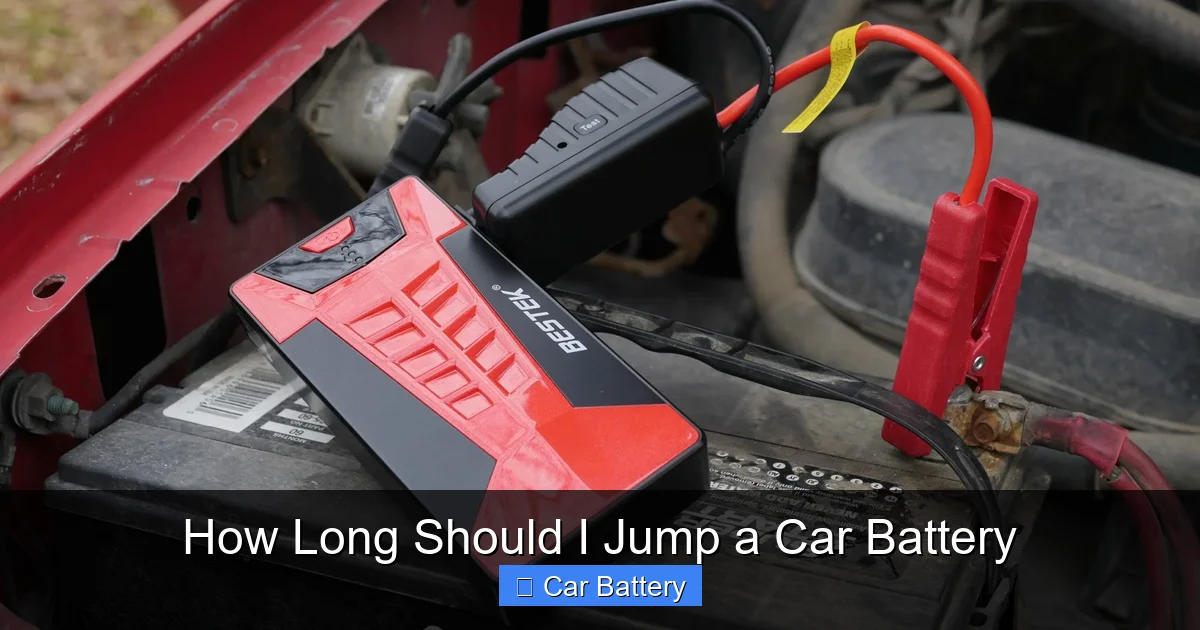
Visual guide about How Long Should I Jump a Car Battery
Image source: unlike.net
So, how long should you jump a car battery? The widely accepted answer is **3 to 5 minutes**. This timeframe strikes the perfect balance between giving the dead battery enough time to absorb charge and avoiding unnecessary risks.
During these few minutes, the healthy battery (from the donor car or jump starter) sends a steady flow of electricity to the dead one. The voltage gradually rises, and the battery begins to “wake up.” After about 3 minutes, most batteries will have enough charge to attempt a start. If the engine doesn’t turn over after 5 minutes, there may be a deeper issue—like a faulty starter, bad cables, or a completely dead battery that can’t hold a charge.
Why 3 to 5 Minutes Works Best
Let’s break down why this window is ideal:
– **3 minutes** is typically enough time for a moderately drained battery to regain sufficient voltage. If the battery was only slightly discharged (e.g., from leaving lights on overnight), it may start even sooner.
– **5 minutes** gives a buffer for colder conditions or older batteries, which charge more slowly. In winter, chemical reactions in batteries slow down, so a little extra time helps.
– Going beyond 5 minutes increases the risk of overheating the jumper cables or overloading the donor battery. Most modern alternators are designed to handle short bursts of high current, but prolonged jumping can strain them.
Think of it like giving someone a boost to stand up. You don’t need to lift them for an hour—just a few seconds of support is enough to get them moving. Similarly, the jumper cables provide a temporary lift, not a full recharge.
What Happens If You Jump Too Long?
Leaving jumper cables connected for too long—say, 10 minutes or more—can cause several problems:
– **Overheating cables:** Jumper cables, especially cheap or thin ones, can get hot when carrying high current for extended periods. This can melt insulation or even start a fire.
– **Alternator stress:** The donor car’s alternator works hard during a jump. Prolonged use can overheat it, leading to failure.
– **Battery damage:** Flooded lead-acid batteries (the most common type) can release hydrogen gas when overcharged. In rare cases, this can lead to swelling or explosion.
– **Electrical system damage:** Modern cars have sensitive electronics. Excessive voltage spikes from prolonged jumping can fry ECUs, sensors, or infotainment systems.
In short, more time isn’t better. Stick to 3–5 minutes, and if the car doesn’t start by then, investigate further.
Step-by-Step Guide to Jump-Starting Safely
Visual guide about How Long Should I Jump a Car Battery
Image source: m.media-amazon.com
Now that you know the ideal jump time, let’s walk through the process step by step. Safety is crucial—jumping a battery involves high voltage and potential hazards like sparks, acid, and moving parts.
What You’ll Need
– A working vehicle (or a portable jump starter)
– Jumper cables (preferably 4-gauge or thicker)
– Safety gloves and glasses (optional but recommended)
– A well-ventilated area (avoid enclosed spaces)
Step 1: Position the Vehicles
Park the working car close to the dead one—close enough for the cables to reach, but not so close that the bumpers touch. Turn off both engines and engage the parking brakes. If you’re on a slope, use wheel chocks.
Step 2: Identify the Battery Terminals
Open both hoods and locate the batteries. You’ll see two terminals:
– **Positive (+):** Usually red, marked with a “+” sign.
– **Negative (–):** Usually black, marked with a “–” sign.
Never assume—check the labels or color coding. Touching the wrong terminals can cause sparks or short circuits.
Step 3: Connect the Jumper Cables
Follow this order to minimize risk:
1. **Red clamp to dead battery’s positive terminal.**
2. **Red clamp to donor battery’s positive terminal.**
3. **Black clamp to donor battery’s negative terminal.**
4. **Black clamp to an unpainted metal surface on the dead car** (like a bolt or bracket)—*not* the negative terminal. This grounds the circuit and reduces sparking near the battery, which can release flammable gas.
Step 4: Start the Donor Car
Turn on the working vehicle and let it run for 2–3 minutes. This builds up voltage in the alternator, giving a stronger charge to the dead battery.
Step 5: Attempt to Start the Dead Car
After 3–5 minutes of connection, try starting the dead car. If it doesn’t start on the first try, wait 30 seconds and try again. Don’t crank for more than 10 seconds at a time—this prevents starter motor damage.
Step 6: Disconnect the Cables
Once the dead car starts, disconnect the cables in *reverse order*:
1. Black clamp from the grounded metal (dead car)
2. Black clamp from donor battery’s negative
3. Red clamp from donor battery’s positive
4. Red clamp from dead battery’s positive
Avoid letting the clamps touch each other or any metal while disconnecting.
Step 7: Let the Jumped Car Run
Keep the jumped car running for at least 20–30 minutes. This allows the alternator to recharge the battery fully. If you turn it off too soon, the battery may not have enough charge to start again.
Common Mistakes to Avoid
Even experienced drivers make mistakes when jump-starting. Here are some common pitfalls and how to avoid them.
Connecting Cables in the Wrong Order
Reversing the positive and negative connections can cause a short circuit, sparks, or even battery explosion. Always double-check before clamping.
Connecting the Final Clamp to the Dead Battery’s Negative Terminal
This is a big one. Connecting the black clamp directly to the dead battery’s negative terminal can create a spark near the battery, which may ignite hydrogen gas. Always ground it to a metal part on the engine block or chassis.
Using Damaged or Thin Cables
Cheap or frayed cables can’t handle the current and may overheat. Invest in quality 4-gauge cables with strong clamps.
Jumping a Frozen or Swollen Battery
If the battery case is cracked, swollen, or frozen, do not jump it. A frozen battery can explode when current is applied. Replace it instead.
Leaving the Jumped Car Off Too Soon
Turning off the engine immediately after jumping risks another dead battery. Drive or idle for at least 20 minutes to recharge.
When Jump-Starting Won’t Work
Sometimes, no amount of jumping will bring a car back to life. Here’s why:
The Battery Is Completely Dead or Damaged
If a battery is more than 4–5 years old or has been deeply discharged multiple times, it may no longer hold a charge. Jump-starting won’t fix a failed battery—you’ll need a replacement.
Faulty Alternator
If the alternator isn’t working, the battery won’t recharge even after a jump. You might start the car, but it will die again soon. Listen for unusual noises or check the battery light on the dashboard.
Bad Starter Motor
If you hear a clicking sound but the engine doesn’t turn over, the starter might be faulty. Jumping won’t help—this requires mechanical repair.
Corroded or Loose Connections
Dirty or loose battery terminals can prevent proper current flow. Clean them with a wire brush and tighten the connections before jumping.
Alternative Solutions: Portable Jump Starters
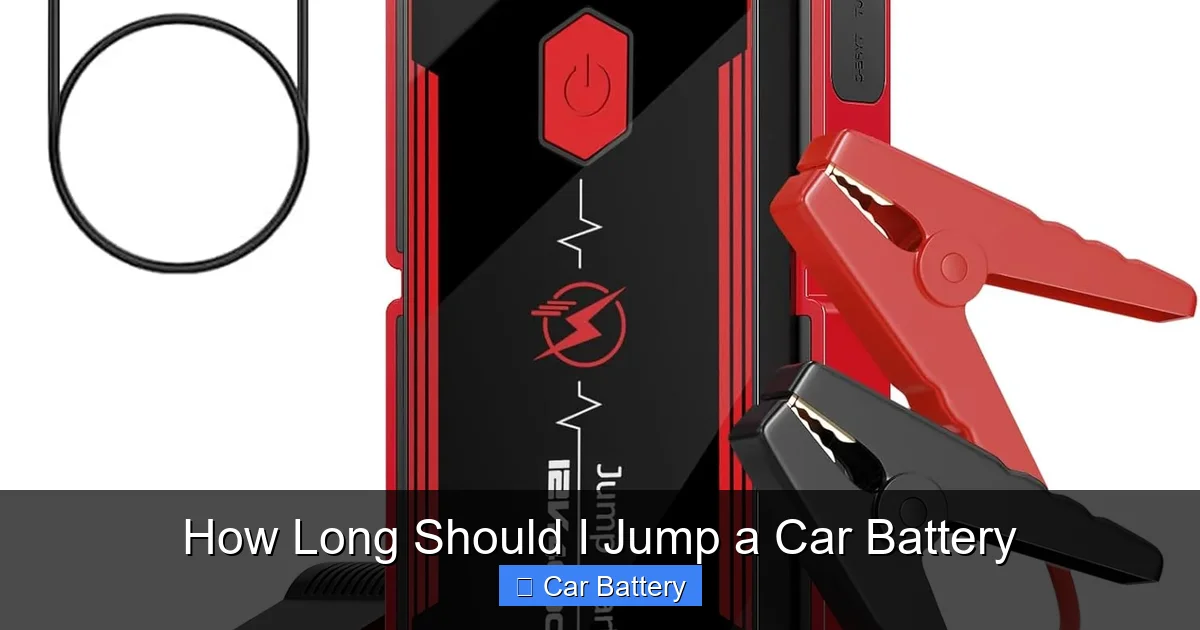
If you don’t have another vehicle nearby, a portable jump starter is a great alternative. These compact devices contain a built-in battery and can jump-start your car without help.
How They Work
Portable jump starters connect directly to your battery terminals (or via clamps) and deliver a burst of power. Most can jump a car 10–20 times on a single charge and double as phone chargers.
Jump Time with Portable Starters
The same 3–5 minute rule applies. Connect the device, wait a few minutes, then try starting the car. Many models have built-in safety features like reverse polarity protection and overload shutoff.
Pros and Cons
Pros:
– No need for another vehicle
– Safe and easy to use
– Often include USB ports and flashlights
Cons:
– Need to be recharged regularly
– May not work in extreme cold
– Can be expensive (but worth it for frequent drivers)
Tips for Preventing Dead Batteries
The best way to deal with a dead battery is to avoid it altogether. Here are some preventive tips:
– **Turn off lights and accessories** when the engine is off.
– **Use a battery maintainer** if the car sits for long periods.
– **Check battery health** annually—most auto shops test for free.
– **Replace old batteries** before they fail (typically every 3–5 years).
– **Keep terminals clean** to ensure good connections.
Conclusion
So, how long should you jump a car battery? The sweet spot is **3 to 5 minutes**—enough time to transfer charge without risking damage. Always follow safe connection procedures, avoid common mistakes, and let the jumped car run long enough to recharge.
Jump-starting is a valuable skill, but it’s not a permanent fix. If your battery dies frequently, it’s time to inspect or replace it. With the right knowledge and tools, you’ll never be stranded for long.
Remember: safety first, timing matters, and a little prevention goes a long way. Keep those jumper cables in your trunk, and you’ll be ready for whatever the road throws at you.
Frequently Asked Questions
How long should I leave jumper cables connected?
You should leave jumper cables connected for 3 to 5 minutes before attempting to start the dead car. This gives the battery enough time to absorb charge without overheating the system.
Can I jump a car battery for 10 minutes?
It’s not recommended. Jumping for more than 5–10 minutes can overheat cables, stress the alternator, and risk damaging electronics. If the car doesn’t start in 5 minutes, there may be another issue.
What if my car still won’t start after jumping?
If the engine doesn’t turn over after 3–5 minutes of jumping, check for faulty cables, a bad starter, alternator issues, or a completely dead battery that needs replacement.
Can I jump a car in the rain?
Yes, but be extra cautious. Water increases the risk of electrical shock. Keep connections dry, avoid standing in puddles, and use insulated gloves if possible.
Is it safe to jump a modern car with electronics?
Yes, as long as you follow proper procedures. Modern cars are designed to handle jump-starts, but avoid touching electronics and use quality cables to prevent voltage spikes.
Should I replace my battery after a jump?
Not necessarily. A jump is fine for occasional use. But if your battery dies often, won’t hold a charge, or is over 4 years old, it’s time to replace it.
