
Car Battery Dies After Not Driving for a Few Days

If your car battery dies after not driving for a few days, it’s often due to parasitic drain, extreme temperatures, or an aging battery. Even when parked, small electrical loads and environmental factors can slowly drain power. Regular maintenance and smart habits can keep your battery charged and reliable.
You hop into your car after a long weekend away, turn the key—and nothing happens. The dashboard lights flicker weakly, the engine won’t turn over, and you’re left wondering: “Why does my car battery die after not driving for a few days?” It’s a frustrating experience, but surprisingly common. Even if your car seemed fine just a few days ago, batteries can lose charge quickly when the vehicle sits idle.
Modern cars are packed with electronics—infotainment systems, security alarms, keyless entry, and onboard computers—that continue to draw small amounts of power even when the engine is off. This is known as parasitic drain. While each component uses only a tiny bit of energy, together they can slowly deplete your battery over time. Add in extreme temperatures, an aging battery, or infrequent driving, and you’ve got a recipe for a dead battery.
The good news? Most of these issues are preventable with a little knowledge and routine care. In this guide, we’ll explore why your car battery dies after not driving, how to diagnose the problem, and what you can do to keep your battery healthy—even when your car sits for days or weeks at a time.
Key Takeaways
- Parasitic drain is a common cause: Modern cars have electronics that draw small amounts of power even when off, which can drain the battery over time.
- Extreme temperatures hurt battery life: Cold weather slows chemical reactions in the battery, while heat accelerates internal corrosion and fluid loss.
- Older batteries lose charge faster: Most car batteries last 3–5 years; older units may not hold a charge well, especially when unused.
- Short trips don’t fully recharge the battery: Frequent short drives prevent the alternator from fully restoring charge, leading to gradual depletion.
- Use a battery maintainer for long storage: A trickle charger or smart maintainer keeps the battery topped up without overcharging during extended inactivity.
- Check for warning signs early: Slow engine cranking, dim lights, or dashboard warnings can signal a weak battery before it dies completely.
- Parking habits matter: Avoid leaving accessories on (like interior lights or chargers) and consider disconnecting the battery if storing the car for weeks.
📑 Table of Contents
Why Car Batteries Lose Charge When Not Driven
Car batteries don’t just power your engine—they supply electricity to everything in your vehicle, from headlights to the radio. When you drive, the alternator recharges the battery, replacing the energy used during startup and operation. But when your car sits, that recharge cycle stops, and the battery begins to slowly lose charge.
Even when the car is off, many systems remain active. For example, your car’s security system constantly monitors for unauthorized access. The onboard computer may stay in a low-power “sleep” mode, and some vehicles keep the clock, radio presets, and key fob communication running. These small, continuous draws add up over time.
Additionally, batteries naturally self-discharge. A healthy battery can lose about 1% of its charge per day when sitting idle. That might not sound like much, but over a week, that’s nearly 10% gone. If your battery was already weak or partially discharged, a few days of inactivity could be enough to drop it below the threshold needed to start the engine.
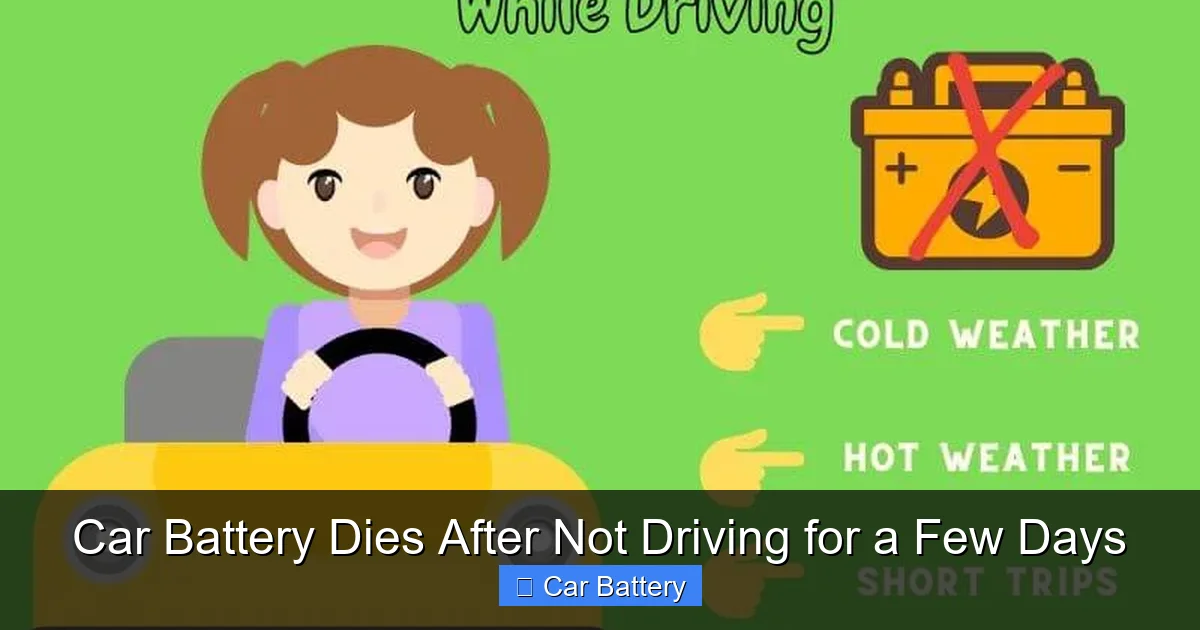
Environmental factors also play a big role. Cold weather slows down the chemical reactions inside the battery, reducing its ability to deliver power. In freezing temperatures, a battery can lose up to 35% of its cranking power. Conversely, hot weather accelerates internal corrosion and causes the electrolyte fluid to evaporate, shortening the battery’s lifespan.
The Role of Parasitic Drain
Parasitic drain refers to the small electrical loads that remain active when your car is off. Think of it like a slow leak in a tire—it might not be noticeable at first, but over time, it can leave you stranded.
Common sources of parasitic drain include:
– The clock and radio memory
– Security and anti-theft systems
– Keyless entry receivers
– Onboard diagnostic (OBD) systems
– Aftermarket accessories like dash cams or phone chargers
Most vehicles are designed so that these systems draw only a few milliamps—typically less than 50mA—when the car is off. However, if something goes wrong—like a faulty module or a stuck relay—the drain can increase dramatically. A parasitic draw of 200mA or more can kill a battery in just a few days.
For example, a malfunctioning glove box light that stays on can drain a battery in under a week. Similarly, a defective alternator diode can allow current to flow backward, slowly draining the battery even when the engine is off.
How Temperature Affects Battery Performance
Temperature has a profound impact on battery health. In cold weather, the chemical reactions inside the battery slow down, making it harder for the battery to deliver the high current needed to start the engine. This is why cars are more likely to fail to start on frigid winter mornings.
Conversely, heat is a battery’s silent killer. High temperatures—especially above 90°F (32°C)—accelerate the rate of internal corrosion and cause the water in the electrolyte to evaporate. This leads to sulfation, a buildup of lead sulfate crystals on the plates, which reduces the battery’s capacity and lifespan.
A battery stored in a hot garage or parked in direct sunlight can degrade much faster than one kept in a cool, shaded area. In fact, for every 15°F (8°C) increase in temperature, a battery’s lifespan can be cut in half.
Signs Your Battery Is Struggling
Visual guide about Car Battery Dies After Not Driving for a Few Days
Image source: automotiveearth.com
Catching battery issues early can save you from being stranded. Here are some common warning signs that your battery may be losing its charge:
– Slow engine cranking: If the engine turns over more slowly than usual, especially when cold, it could mean the battery doesn’t have enough power.
– Dim headlights or interior lights: Lights that appear noticeably dimmer than normal, particularly when the engine is off, suggest low voltage.
– Dashboard warning lights: Many modern cars have a battery or charging system warning light that illuminates if voltage drops too low.
– Electrical issues: Problems like erratic radio behavior, power window delays, or unresponsive infotainment systems can indicate a weak battery.
– Swollen battery case: A bloated or warped battery case is a sign of overheating or overcharging, both of which can damage the battery.
If you notice any of these signs, it’s a good idea to have your battery tested. Most auto parts stores offer free battery and charging system checks, which can help you determine whether the battery, alternator, or another component is at fault.
Testing Your Battery at Home
You don’t need to be a mechanic to check your battery’s health. With a few simple tools, you can get a good sense of its condition.
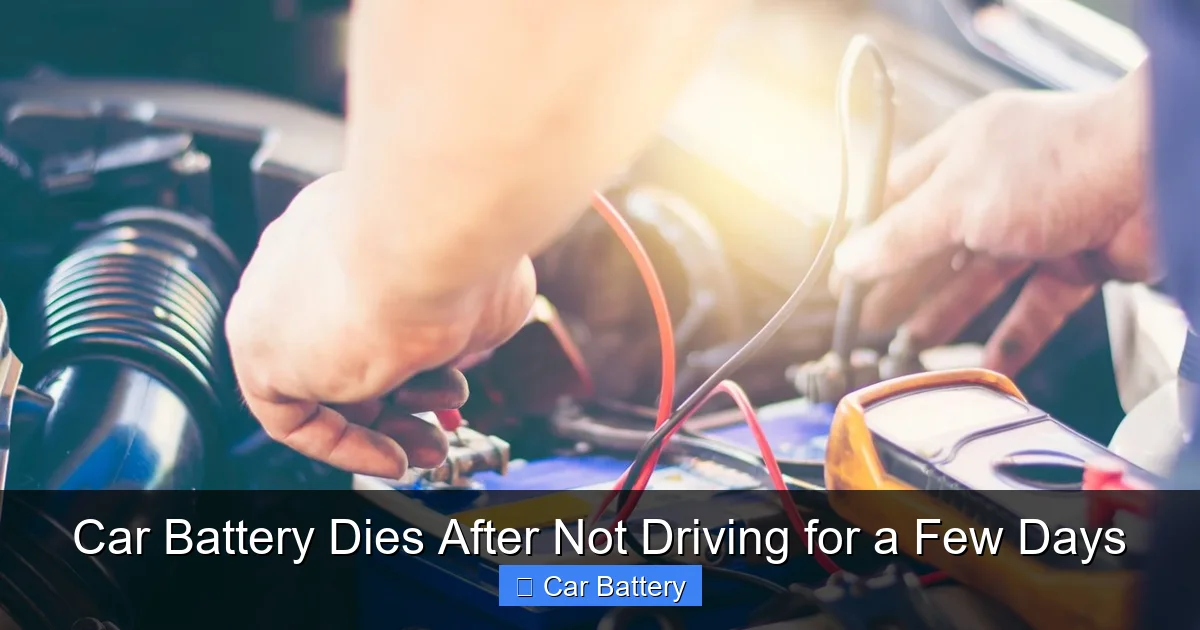
A multimeter is the most useful tool for this job. Set it to DC voltage and connect the red probe to the positive terminal and the black probe to the negative terminal. With the engine off, a healthy battery should read between 12.4 and 12.7 volts. Anything below 12.2 volts suggests the battery is partially discharged, and below 12.0 volts means it’s likely too weak to start the car.
You can also perform a load test using a battery load tester, which simulates the high current draw of starting the engine. This test is more accurate but usually requires a visit to a professional or an auto parts store.
Another simple check is the “headlight test.” Turn on the headlights with the engine off. If they dim significantly after a minute or two, the battery may not be holding a charge well.
How to Prevent Your Battery from Dying
Visual guide about Car Battery Dies After Not Driving for a Few Days
Image source: poweringsolution.com
Prevention is always better than a jump start. Here are practical steps you can take to keep your battery charged and reliable, even when your car sits for days.
Drive Your Car Regularly
The simplest way to maintain battery health is to drive your car regularly. Even short drives help, but longer trips (15–30 minutes or more) allow the alternator to fully recharge the battery. If you only make short trips—like driving to the store and back—the alternator may not have enough time to restore the charge used during startup.
If you know your car will sit for more than a few days, try to take it for a longer drive once a week. This gives the battery a chance to recharge and helps prevent sulfation, which occurs when lead sulfate crystals build up on the plates and reduce capacity.
Use a Battery Maintainer or Trickle Charger
For cars that sit for extended periods—like classic cars, RVs, or seasonal vehicles—a battery maintainer (also called a trickle charger or smart charger) is a smart investment.
Unlike old-style trickle chargers that deliver a constant low current, modern smart maintainers monitor the battery’s voltage and adjust the charge accordingly. They can keep the battery at an optimal level without overcharging, which can damage the battery.
Simply plug the maintainer into a wall outlet and connect it to the battery terminals. Many models come with alligator clips or ring terminals for easy attachment. Some even have solar options for outdoor storage.
For example, if you have a second car that you only drive on weekends, plugging in a maintainer during the week can keep the battery fully charged and ready to go.
Disconnect the Battery (If Necessary)
If you’re storing your car for weeks or months, disconnecting the negative terminal can help prevent parasitic drain. This cuts off power to all systems, effectively putting the battery into “sleep mode.”
To disconnect the battery:
1. Turn off the engine and remove the key.
2. Use a wrench to loosen the nut on the negative terminal (marked with a “-” or black cover).
3. Carefully remove the cable and secure it away from the terminal to prevent accidental contact.
When you’re ready to use the car again, simply reconnect the cable and tighten the nut. Note that disconnecting the battery may reset some electronic settings, like radio presets or the clock, so be prepared to reprogram them.
Avoid Leaving Accessories On
It’s easy to accidentally leave something on—like interior lights, phone chargers, or a dash cam. Even a small light left on overnight can drain a weak battery.
Make it a habit to check that all lights are off before leaving the car. If you use a dash cam with parking mode, ensure it’s not drawing too much power. Some models allow you to set a low-voltage cutoff to prevent battery drain.
Also, avoid using accessories like the radio or air conditioning with the engine off. These draw significant power and can quickly deplete the battery.
When to Replace Your Car Battery
Visual guide about Car Battery Dies After Not Driving for a Few Days
Image source: i.ytimg.com
Even with the best care, car batteries don’t last forever. Most last between 3 and 5 years, depending on climate, driving habits, and maintenance.
If your battery is more than 3 years old and you’re experiencing frequent dead batteries, it may be time for a replacement. Other signs include:
– The battery has been jump-started multiple times
– It fails a load test
– The case is cracked, leaking, or swollen
– It struggles to start the car in cold weather
When replacing your battery, choose one that matches your vehicle’s specifications. Check your owner’s manual or the label on the old battery for the correct group size, cold cranking amps (CCA), and reserve capacity (RC). Higher CCA ratings are better for cold climates, while higher RC ratings provide longer backup power if the alternator fails.
Choosing the Right Battery
Not all batteries are created equal. Here are a few types to consider:
– Flooded lead-acid: The most common and affordable type, suitable for most vehicles.
– Absorbent Glass Mat (AGM): More durable and resistant to vibration, ideal for cars with start-stop technology or high electrical demands.
– Enhanced Flooded Battery (EFB): A step up from standard flooded batteries, often used in entry-level start-stop vehicles.
If your car has advanced electronics or you live in an extreme climate, investing in a higher-quality battery can pay off in reliability and longevity.
What to Do If Your Battery Dies
If your battery does die, don’t panic. Here’s what you can do:
Jump-Starting Your Car
Jump-starting is the quickest way to get your car running again. You’ll need jumper cables and another vehicle with a working battery.
1. Park the working car close to yours (but not touching).
2. Turn off both engines and engage the parking brakes.
3. Connect the red clamp to the dead battery’s positive terminal.
4. Connect the other red clamp to the good battery’s positive terminal.
5. Connect the black clamp to the good battery’s negative terminal.
6. Connect the other black clamp to an unpainted metal surface on the dead car (like a bolt or bracket)—not the battery terminal.
7. Start the working car and let it run for a few minutes.
8. Try starting the dead car. If it starts, let it run for at least 15–20 minutes to recharge the battery.
9. Disconnect the cables in reverse order.
Always follow safety precautions: wear gloves and eye protection, and never let the clamps touch each other while connected to a battery.
Using a Portable Jump Starter
A portable jump starter is a compact, battery-powered device that can jump-start your car without another vehicle. These are especially useful if you’re stranded in a remote area.
Simply connect the jump starter to the battery terminals (positive to positive, negative to negative), turn it on, and start the engine. Many models also include USB ports for charging phones and LED lights for emergencies.
Keep one in your glove box or trunk—it could save you from a long wait for roadside assistance.
Long-Term Battery Care Tips
Maintaining your battery isn’t just about avoiding dead starts—it’s about extending its life and ensuring reliable performance.
– Keep terminals clean: Corrosion on the terminals can interfere with electrical connections. Clean them with a mixture of baking soda and water, then rinse and dry.
– Check fluid levels (if applicable): Some batteries have removable caps. If the fluid level is low, top it up with distilled water—never tap water.
– Secure the battery: A loose battery can vibrate and damage internal components. Make sure it’s firmly held in place by the hold-down clamp.
– Monitor charging system: A faulty alternator or voltage regulator can overcharge or undercharge the battery. Have your charging system checked if you notice frequent battery issues.
By following these tips, you can keep your battery in top condition and reduce the chances of it dying after a few days of inactivity.
Conclusion
A car battery that dies after not driving for a few days is more than just an inconvenience—it’s a sign that something isn’t quite right. Whether it’s parasitic drain, extreme temperatures, or an aging battery, understanding the root cause can help you take action before you’re left stranded.
The key is proactive maintenance. Drive your car regularly, use a battery maintainer for long storage, and keep an eye out for warning signs. If your battery is old or showing signs of weakness, don’t wait for it to fail—replace it before it leaves you stuck.
With a little care and attention, you can keep your battery healthy and your car ready to go, no matter how long it sits between drives.
Frequently Asked Questions
Why does my car battery die after only 2 days of not driving?
This could be due to a high parasitic drain, an old or weak battery, or extreme temperatures. Modern cars have many electronics that draw power even when off, and older batteries lose charge faster. A battery test can help identify the issue.
Can a car battery die from sitting too long?
Yes. Even a healthy battery can lose charge over time due to self-discharge and parasitic drain. After 2–4 weeks of inactivity, many batteries may no longer have enough power to start the engine.
How long can a car sit before the battery dies?
It depends on the battery’s age, condition, and climate. A new, fully charged battery might last 4–6 weeks, while an older or weak battery could die in just a few days.
Is it bad to jump-start a car every few days?
Frequent jump-starts suggest an underlying problem, like a failing battery or alternator. While occasional jumps are fine, relying on them regularly can damage the electrical system and should be investigated.
Should I disconnect my battery if I won’t drive for a month?
Yes, disconnecting the negative terminal can help prevent parasitic drain. For even better results, use a battery maintainer to keep the charge topped up without overcharging.
Do trickle chargers damage car batteries?
Old-style trickle chargers can overcharge and damage batteries if left connected too long. Modern smart chargers are safer, as they automatically adjust the charge and prevent overcharging.
