
What Percent Does a Car Battery Need to Start

A car battery typically needs at least 75% charge to start your vehicle reliably. While it might turn over at 50%, consistent starts require a healthy charge above 70%. Understanding battery health helps prevent unexpected breakdowns.
Have you ever hopped into your car, turned the key, and heard nothing but a faint click? Or worse—your engine cranks slowly, like it’s struggling to wake up? That’s often a sign your car battery isn’t holding enough charge. But here’s the real question: what percent does a car battery need to start? It’s not just about whether it works—it’s about how reliably and safely it can get you going, especially when you’re in a rush or stuck in cold weather.
Car batteries are the unsung heroes of your vehicle. They power everything from the ignition system to the lights, radio, and climate control. But unlike your phone or laptop, most drivers don’t think about their car battery until it fails. And when it does, it’s usually at the worst possible time—like when you’re late for work or stranded in a parking lot. Understanding how much charge your battery needs to start your car isn’t just useful—it’s essential for avoiding breakdowns and extending the life of your vehicle.
So, let’s break it down. The answer isn’t a single number, but a range based on real-world conditions. While a battery might technically turn over at 50% charge, that’s cutting it close. For consistent, reliable starts—especially in cold or demanding conditions—you want your battery to be at least 75% charged. Think of it like fuel: you wouldn’t drive your car on empty, right? The same logic applies to your battery. Let’s dive deeper into what that means, how to measure it, and how to keep your battery in top shape.
Key Takeaways
- Minimum Starting Charge: A car battery should have at least 75% charge to start the engine confidently under normal conditions.
- Voltage Matters: A healthy battery reads 12.6 volts when fully charged; below 12.4 volts may cause starting issues.
- Cold Weather Impact: In winter, batteries lose efficiency—starting power drops, so higher charge levels are essential.
- Parasitic Drain: Electronics like alarms or infotainment systems can slowly drain your battery even when the car is off.
- Regular Testing: Use a multimeter or visit a mechanic to check battery health every 6 months.
- Replacement Timing: Most car batteries last 3–5 years—don’t wait for failure to replace an aging unit.
- Jump-Starting Tips: If your battery is below 50%, jump-starting may work, but it’s not a long-term fix.
📑 Table of Contents
Understanding Car Battery Charge Levels
When we talk about what percent a car battery needs to start, we’re really talking about its state of charge (SoC). This is a measure of how much electrical energy the battery currently holds compared to its full capacity. A fully charged battery is at 100%, while a completely dead one is at 0%. But not all charge levels are created equal when it comes to starting your car.
Most modern car batteries are 12-volt lead-acid batteries. When fully charged and at rest (meaning the car hasn’t been started in a few hours), a healthy battery should read about 12.6 to 12.8 volts. At this level, it’s considered 100% charged. As the charge drops, so does the voltage. For example:
– 12.4 volts = ~75% charge
– 12.2 volts = ~50% charge
– 12.0 volts = ~25% charge
– Below 11.9 volts = essentially dead
Now, here’s the key: your car’s starter motor needs a strong surge of power to turn the engine over. That surge comes from the battery. If the battery is below 75% charge (around 12.4 volts), it may still crank the engine—but it might do so slowly or inconsistently. In cold weather, that threshold becomes even more critical.
Imagine trying to start your car on a freezing winter morning. The engine oil is thick, the fuel is less volatile, and the battery’s chemical reactions slow down. In these conditions, a battery at 70% might struggle, while one at 80% will start smoothly. That’s why experts recommend keeping your battery above 75% charge for reliable performance year-round.
What Percent Does a Car Battery Need to Start? The Real Answer
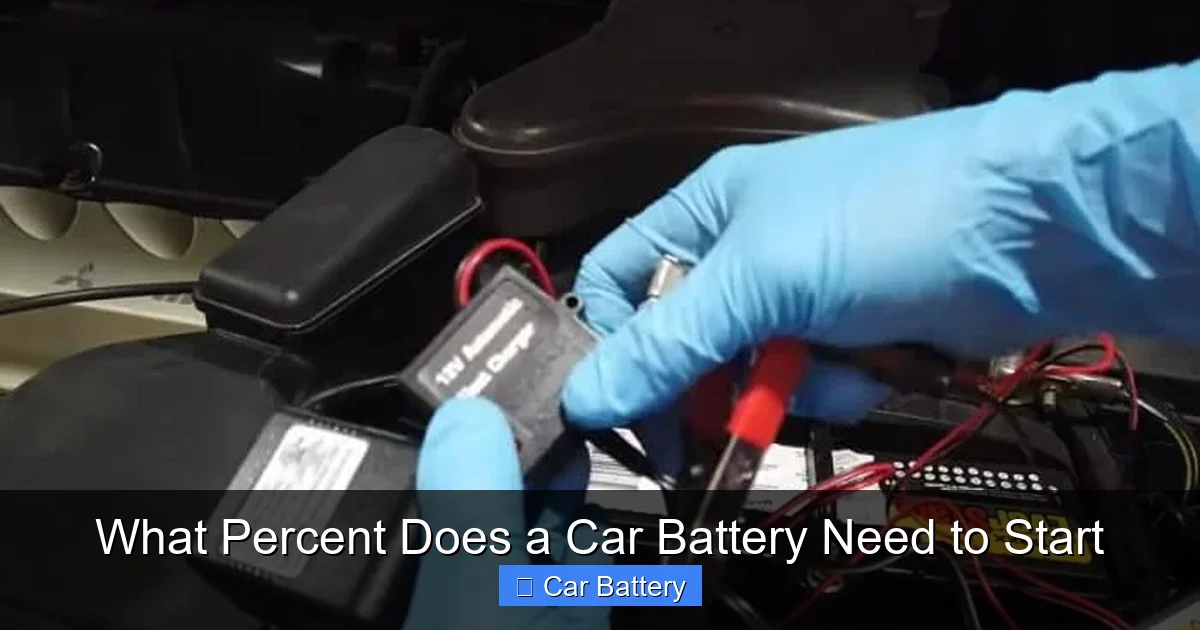
Visual guide about What Percent Does a Car Battery Need to Start
Image source: thepowerfacts.com
So, what percent does a car battery need to start? The short answer: at least 75%. But let’s unpack that.
At 75% charge (about 12.4 volts), your battery has enough power to engage the starter motor and begin the combustion process. However, this is the *minimum* threshold for reliable starts under ideal conditions. If your battery is consistently hovering around 75%, you’re skating on thin ice. One cold night, a forgotten interior light, or a long weekend without driving could push it below the line.
Many drivers assume that if the car starts, the battery is fine. But that’s not always true. A battery at 60% might start your car on a warm day, especially if the engine is well-maintained. But the same battery could fail in winter or after sitting overnight. That’s why 75% is considered the safe zone—it gives you a buffer for real-world variables.
Let’s look at a practical example. Say you park your car at the airport for a week-long trip. During that time, small drains—like the clock, alarm system, or onboard computer—slowly deplete the battery. If it started at 100%, it might drop to 70% by the time you return. On a warm day, it might still start. But if it’s 20°F outside, that 70% might not be enough. The engine turns over sluggishly, or worse—it doesn’t turn at all.
Another factor is battery age. A brand-new battery can deliver strong cranking amps even at 70% charge. But an older battery (3+ years) loses its ability to hold a charge and deliver peak power. So even if it shows 75% on a meter, it might not perform like a younger battery at the same level.
In short, 75% is the sweet spot. It’s the charge level that ensures your car will start reliably in most conditions. Anything below that increases your risk of being stranded.
How to Measure Your Car Battery’s Charge
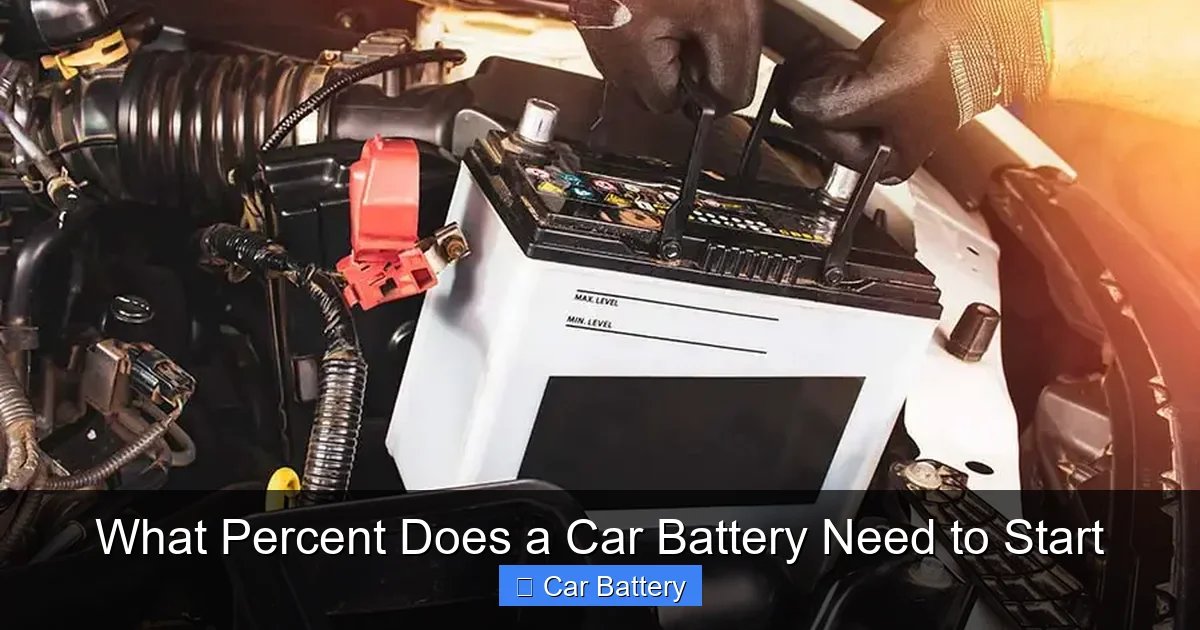
Visual guide about What Percent Does a Car Battery Need to Start
Image source: thepowerall.com
Now that you know what percent your car battery needs to start, how do you actually check it? Fortunately, it’s easier than you might think—and you don’t need to be a mechanic.
The most accurate way is to use a digital multimeter. Here’s how:
1. Turn off the car and all electronics (lights, radio, etc.).
2. Wait at least 1 hour for the battery to “rest” (this gives a true reading).
3. Set your multimeter to DC voltage (usually marked as “V” with a straight line).
4. Touch the red probe to the positive terminal (+) and the black probe to the negative terminal (–).
5. Read the voltage.
Compare the reading to this chart:
– 12.6–12.8V = 100% charged
– 12.4V = ~75%
– 12.2V = ~50%
– 12.0V = ~25%
– Below 11.9V = dead or deeply discharged
If you don’t have a multimeter, many auto parts stores offer free battery testing. They’ll use a load tester, which simulates the demand of starting the engine and gives a more accurate picture of battery health than voltage alone.
Another option is a battery maintainer or smart charger with a built-in display. These devices not only charge your battery but also show its current state of charge. Some even connect to your smartphone via Bluetooth for real-time monitoring.
Pro tip: Check your battery at least twice a year—once before winter and once before summer. Extreme temperatures are the biggest enemies of battery life.
Factors That Affect Battery Starting Power
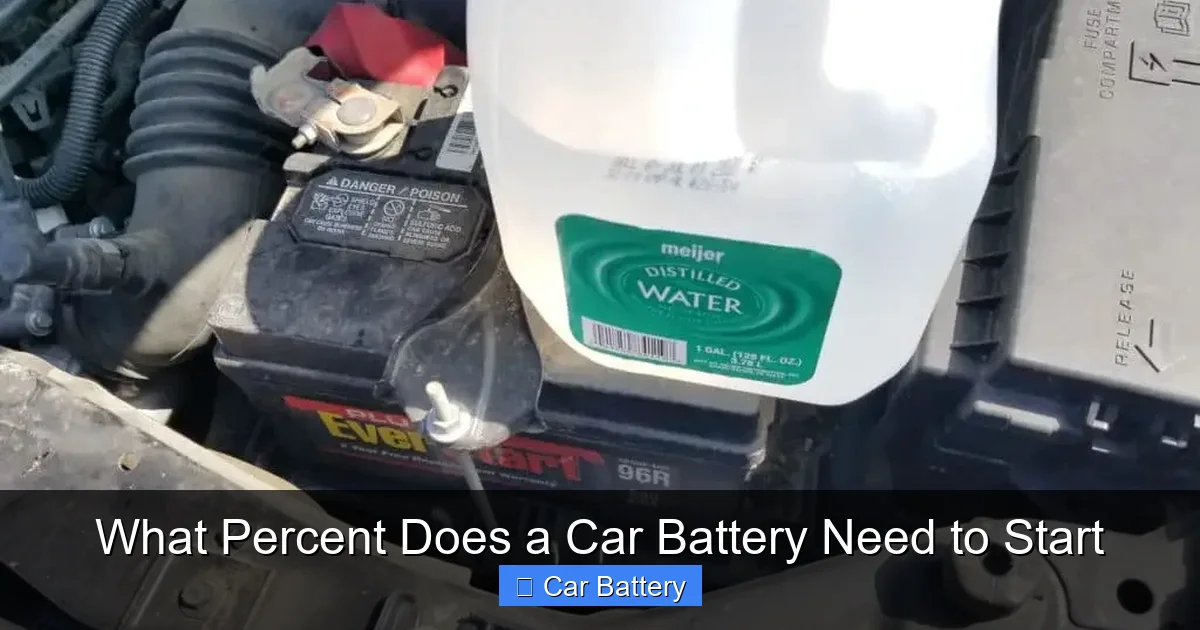
Visual guide about What Percent Does a Car Battery Need to Start
Image source: homebatterybank.com
Even if your battery shows 75% charge, several factors can affect whether it actually starts your car. Let’s look at the most common ones.
Temperature
Cold weather is the #1 enemy of car batteries. At 32°F (0°C), a battery loses about 35% of its cranking power. At 0°F (-18°C), that number jumps to 60%. That means a battery that starts your car easily in summer might struggle in winter—even if the charge level is the same.
Why? Because the chemical reactions inside the battery slow down in the cold. The electrolyte (a mix of sulfuric acid and water) becomes thicker, making it harder for ions to move. This reduces the battery’s ability to deliver the high current needed to start the engine.
On the flip side, extreme heat also damages batteries. Temperatures above 100°F (38°C) accelerate corrosion and evaporation of the electrolyte, shortening the battery’s lifespan. So while heat doesn’t reduce starting power as dramatically as cold, it still takes a toll over time.
Battery Age and Condition
A battery’s ability to hold a charge declines with age. Most car batteries last 3 to 5 years. After that, their capacity drops, and they become more prone to failure.
Signs of an aging battery include:
– Slow cranking (engine turns over sluggishly)
– Dim headlights when idling
– Needing frequent jump-starts
– Swollen or bloated battery case
Even if an old battery shows 75% charge on a meter, it may not deliver the same power as a new one. That’s why load testing is so important—it measures how well the battery performs under stress, not just its voltage.
Parasitic Drain
Parasitic drain refers to small amounts of power that your car uses even when it’s off. Things like the clock, security system, infotainment memory, and onboard computers all draw a tiny bit of current.
Normally, this drain is minimal—around 20–50 milliamps. But if something is malfunctioning (like a stuck relay or a faulty module), the drain can spike to 200+ milliamps. Over time, this can drain your battery even if you don’t drive often.
For example, if your car sits for a week and the parasitic drain is 100 milliamps, it could lose 1–2% of its charge per day. That means a 100% charged battery could drop to 80% in just 10 days—putting it dangerously close to the 75% threshold.
Driving Habits
Short trips are hard on batteries. Every time you start your car, the battery delivers a big burst of power. But if you only drive for 5–10 minutes, the alternator doesn’t have enough time to fully recharge the battery. Over time, this leads to a gradual decline in charge.
If your daily routine involves lots of short trips, consider using a battery maintainer or taking longer drives once a week to help recharge the battery.
How to Maintain a Healthy Battery Charge
Now that you know what percent your car battery needs to start and what affects it, let’s talk about how to keep it in great shape.
Drive Regularly
The best way to keep your battery charged is to drive your car regularly. Aim for at least 20–30 minutes of driving a few times a week. This gives the alternator enough time to replenish the battery after starting.
If you don’t drive often (like during vacations or remote work), consider using a battery maintainer. These devices plug into a wall outlet and keep your battery at 100% charge without overcharging it.
Turn Off Electronics
Always turn off lights, the radio, and other electronics when the engine is off. It’s easy to forget a dome light or leave the headlights on, but even a small drain can kill a weak battery overnight.
Modern cars often have automatic shutoffs, but it’s still good practice to double-check.
Check Connections
Loose or corroded battery terminals can prevent proper charging. Over time, a white or green powdery substance (corrosion) can build up on the terminals, blocking the flow of electricity.
To clean them:
1. Disconnect the negative cable first, then the positive.
2. Use a wire brush or battery terminal cleaner to remove corrosion.
3. Reconnect the positive cable first, then the negative.
4. Apply a thin layer of petroleum jelly to prevent future corrosion.
Test and Replace When Needed
Don’t wait for your battery to die. Test it every 6 months, especially if it’s over 3 years old. If it consistently reads below 75% or fails a load test, it’s time to replace it.
When buying a new battery, choose one with a high cold cranking amp (CCA) rating—especially if you live in a cold climate. CCA measures how well the battery can start the engine in cold weather.
When to Jump-Start or Replace Your Battery
Even with the best care, batteries eventually fail. Here’s how to know when to jump-start and when to replace.
If your car won’t start but the battery shows 50–70% charge, a jump-start might work. Use jumper cables and another vehicle (or a portable jump starter) to give it a boost. Once the engine is running, let it idle for 20–30 minutes to recharge the battery.
But if the battery is below 50%, or if it fails to hold a charge after jumping, it’s likely time for a replacement. Repeated jump-starts can damage the alternator and other components.
Also, if your battery is more than 5 years old, consider replacing it proactively. It’s cheaper than being stranded and paying for a tow.
Conclusion
So, what percent does a car battery need to start? The answer is clear: at least 75%. While your car might start at lower levels, consistent, reliable performance requires a healthy charge. Factors like temperature, age, and driving habits all play a role, but regular maintenance and testing can keep you ahead of problems.
Think of your battery like your car’s heartbeat. It doesn’t need to be perfect, but it needs to be strong enough to keep things running. By understanding charge levels, monitoring voltage, and taking simple care steps, you can avoid the frustration of a dead battery and keep your car ready to go—whenever you are.
Frequently Asked Questions
Can a car start with a 50% charged battery?
Yes, a car might start with a 50% charged battery, especially in warm weather. However, it may crank slowly or fail under stress, like cold starts or heavy electrical load. It’s not reliable for daily use.
How long does it take to recharge a dead car battery?
It typically takes 20–30 minutes of driving at highway speeds to recharge a dead battery. However, deeply discharged batteries may need longer or a dedicated charger to reach full capacity.
What voltage is too low for a car battery?
A voltage below 12.0 volts usually indicates a deeply discharged or failing battery. At this level, starting the car is unlikely, and the battery may be damaged from sulfation.
Does idling charge a car battery?
Idling provides some charge, but not enough to fully recharge a depleted battery. The alternator works best at higher RPMs, so driving is far more effective than idling.
How often should I test my car battery?
Test your battery every 6 months, or before extreme weather seasons. If it’s over 3 years old, consider testing it more frequently to catch issues early.
Can a bad alternator mimic a dead battery?
Yes, a failing alternator can cause symptoms similar to a dead battery, like dim lights or slow cranking. If your battery keeps dying, have both the battery and alternator tested.