
Can You Pressure Wash a Car Cover? What to Use Instead
Quick Answer
No, pressure washing a car cover is generally not recommended. A high-pressure water jet can damage delicate fibers, weaken bonded fabric layers, or affect water-resistant coatings, depending on the cover’s construction. Use a garden hose, mild cleaner approved by the manufacturer, and a soft sponge or brush instead.
The safest way to clean a car cover
- Check the label: Follow the care instructions for your specific cover material and model.
- Remove loose dirt: Shake the cover gently or brush away dust before adding water.
- Use gentle water: Rinse with a garden hose rather than a pressure washer.
- Clean carefully: Use a compatible mild cleaner and a soft sponge or brush without aggressive scrubbing.
- Rinse thoroughly: Remove all soap residue that could attract dirt or leave a film.
- Dry completely: Air-dry the cover fully before folding it or putting it into storage.
One important exception
- If your cover’s manufacturer explicitly approves a particular powered-cleaning method, follow its stated limits. Otherwise, choose the gentler option.
I’m Jason Carter, and I approach vehicle maintenance with a simple rule: protect the parts that protect your car. When a car cover collects road dust, bird droppings, pollen, or mildew, blasting it with a pressure washer might seem like the quickest fix.
However, cleaning speed isn’t the only thing that matters. I’ll explain why pressure washing can be risky, how to clean different types of covers, and what to do when ordinary rinsing doesn’t remove stubborn dirt.
In This Guide
Why Is Pressure Washing a Car Cover Risky?
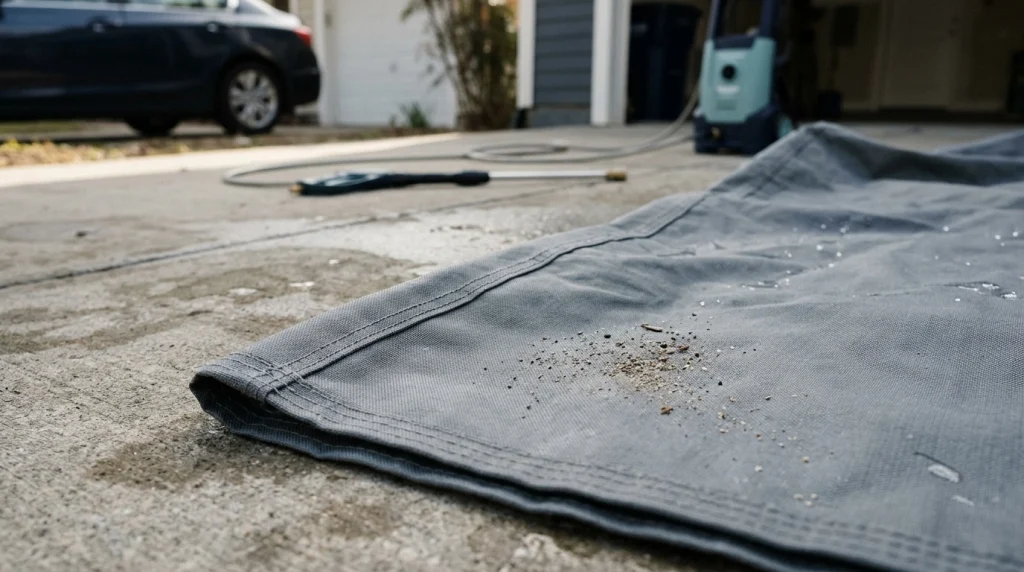
Pressure washing a car cover is risky because a concentrated water jet can put excessive force on the fabric and its protective finishes. The extent of the damage depends on the material, construction, nozzle, distance, and pressure setting.
What is a car cover, and how does it protect your vehicle?
A car cover is a protective fabric barrier placed over a vehicle to help shield its exterior from dust, pollen, bird droppings, sunlight, and other environmental contaminants. Depending on its design, it may also provide water resistance, breathability, or a soft inner surface.
Some covers use a single layer of woven fabric, while others combine several layers or include specialized coatings. Those differences matter because a cleaning method that works for a basic cloth cover may be unsuitable for a more advanced outdoor cover.
Can high-pressure water damage the fabric?
Yes, particularly when the nozzle is close to the material or the jet is concentrated on one small area. Strong water pressure can stress fibers, disturb seams, and potentially damage laminated or bonded layers.
Water can also penetrate the fabric more forcefully than it would during ordinary rinsing. That doesn’t mean every brief exposure will destroy a cover, but it introduces unnecessary risk when gentler methods can remove most everyday dirt.
Can pressure washing affect water resistance?
It can, depending on how the cover is made and whether the cleaning process damages its coating or layered construction. Water resistance and waterproofing are not the same thing, and neither property should be assumed to survive every cleaning method.
Dirt buildup can also make a cover appear less water-resistant by encouraging moisture to spread through the material. Cleaning may improve its performance, but it cannot reliably restore a coating that has worn away.
Could a pressure washer damage your car’s paint indirectly?
Yes. If a cover is cleaned while it remains on the vehicle, forceful water can drive grit against the paint or move the fabric across the surface.
Even without a pressure washer, rubbing a dirty cover against dusty paint can cause fine scratches. For that reason, removing loose debris before cleaning is just as important as choosing the right water pressure.
Practical tip: Remove the cover from the vehicle before washing it whenever practical. Clean it on a suitable, clean surface so trapped grit is less likely to scratch the paint.
Section takeaway: A pressure washer offers little benefit for routine car-cover cleaning compared with the added risk to fabric, coatings, and vehicle paint.
How Do You Clean a Car Cover Safely?
The safest general approach is to remove loose debris, rinse with a garden hose, gently wash with a compatible cleaner, and allow the cover to dry completely. Always check the manufacturer’s instructions first because cleaning requirements vary between products.
Step 1: Check the manufacturer’s care instructions
Before using water or detergent, identify the cover’s brand and material. Look for instructions on the sewn-in label, packaging, product manual, or manufacturer’s website.
For example, Covercraft’s car cover information directs owners to follow the care instructions for their specific cover. Its published guidance also demonstrates that washing and drying recommendations can vary by fabric.
Check these details before starting:
- Whether the cover can be washed with water and which cleaners are approved.
- Whether machine washing is permitted for that particular material.
- Whether the fabric needs cold or warm water.
- Whether the cover must be air-dried or can tolerate a specified dryer setting.
- Whether a water-repellent treatment needs special care.
Step 2: Remove loose dirt and grit
Shake the cover gently or use a soft brush to remove dry debris. Pay attention to the inside surface because grit trapped against the vehicle can be especially troublesome.
Don’t drag the cover across concrete or another dirty surface. That can introduce fresh particles before you even begin washing.
Step 3: Rinse with a garden hose
Spread the cover over a clean area or follow the manufacturer’s recommended cleaning setup. Use ordinary hose flow to wet the material and loosen dust, pollen, and surface grime.
A gentle, steady rinse is usually enough to remove loose contaminants. Avoid concentrating the water on seams, elastic edges, or areas where the material is already frayed.
Step 4: Use a compatible mild cleaner
For stubborn grime, apply a mild cleaner approved for your cover’s fabric. Work it in gently with a soft sponge or brush, and test a small, inconspicuous area first if the manufacturer permits this approach.
Avoid bleach, solvents, harsh degreasers, and unapproved household products. These can affect dyes, fabric coatings, adhesives, or water-repellent finishes.
Also avoid fabric softener unless the manufacturer specifically directs otherwise. Many car-cover care instructions expressly prohibit it.
Step 5: Rinse away all residue
Rinse the cover thoroughly with clean water until the cleaning solution is gone. Leftover detergent can leave a film, attract more dirt, or interfere with the material’s intended performance.
Follow any specific rinsing requirements in the manual. Some manufacturers recommend more than one rinse for machine-washed covers.
Step 6: Air-dry before storing
Hang or spread the cover in a clean, well-ventilated location and let it dry completely. Avoid excessive heat and direct drying methods that the manufacturer prohibits.
Never fold a damp cover and leave it in a storage bag. Trapped moisture can encourage mildew, create unpleasant odors, and make the cover less pleasant to use.
Section takeaway: A careful rinse and gentle hand wash are the best starting points for most covers, but the manufacturer’s instructions should determine the final method.
Pressure Washer vs. Garden Hose vs. Hand Washing: Which Is Best?
For routine car-cover maintenance, a garden hose combined with gentle hand washing is the most practical choice. A pressure washer is generally the least suitable option unless the cover manufacturer explicitly approves its use.
The right approach depends on how dirty the cover is, what it is made from, and whether it has special protective layers. Here’s how the main options compare.
| Cleaning method | Best use | Main concern | Recommendation |
|---|---|---|---|
| Pressure washer | Not recommended for routine cleaning | May damage fibers, coatings, or bonded layers | Avoid unless explicitly approved |
| Garden hose | Dust, pollen, and loose dirt | Limited effect on ingrained grime | Best for initial rinsing |
| Gentle hand washing | Routine cleaning and moderate dirt | Excessive scrubbing can stress fabric | Best general-purpose method |
| Approved machine washing | Covers specifically labeled machine-washable | Wrong machine, cycle, or detergent | Use only as directed |
Note: These recommendations are general guidance, not a substitute for product-specific instructions. There is no universal pressure setting that makes pressure washing safe for every car cover.
Why not simply lower the pressure?
Reducing a pressure washer’s output may reduce the risk, but it doesn’t establish that the cleaning method is safe. The actual force reaching the fabric depends on the machine, nozzle, distance, and spray pattern.
Some covers use multiple bonded layers or specialized water-resistant finishes. Without explicit manufacturer guidance, switching to a garden hose is the more sensible choice.
When is machine washing an option?
Some car covers can be machine-washed, while others require hand cleaning. Covercraft’s published care instructions, for example, specify different washing and drying methods for different fabrics.
Never assume that a cover suitable for machine washing can also tolerate a pressure washer. These methods apply water and mechanical forces in different ways.
Section takeaway: Use a hose for rinsing and gentle hand washing for deeper cleaning. Machine-wash only when approved, and don’t treat reduced pressure as automatic permission to use a pressure washer.
Can You Pressure Wash Different Car Cover Materials?
Not every car cover responds to water in the same way. The material, number of layers, seam construction, and protective finish all influence which cleaning methods are suitable.
Single-layer woven and fabric covers
Basic woven covers may appear sturdy enough to withstand a strong water jet, but their visible strength doesn’t guarantee that the fibers or stitching can tolerate concentrated pressure. Use a hose and a compatible cleaner unless the product instructions say otherwise.
For indoor covers, dust removal is often more important than aggressive washing. A soft brush and occasional gentle cleaning can help keep the material suitable for protecting the vehicle’s finish.
Multilayer and nonwoven covers
Multilayer covers can combine different materials to balance softness, breathability, weather resistance, and durability. Some constructions use bonded layers that may be vulnerable to forceful water jets.
These covers deserve particular care. Check the manufacturer’s instructions before choosing hand washing, machine washing, or any powered cleaning method.
Water-resistant and waterproof covers
A water-resistant cover slows water penetration, while a waterproof design aims to prevent water from passing through under its intended conditions. Neither label means the cover can withstand unlimited water pressure.
Harsh cleaners, excessive heat, abrasion, and unsuitable washing methods may affect a protective finish. Gentle cleaning helps avoid adding unnecessary stress to the material.
Indoor versus outdoor car covers
Indoor covers often prioritize a soft surface and dust protection, while outdoor covers may need to handle rain, sunlight, and changing temperatures. Their care requirements can differ considerably.
- Indoor cover: Focus on removing fine dust and grit without damaging the inner surface.
- Outdoor cover: Preserve the intended weather-resistant properties and follow its fabric-specific cleaning instructions.
- Custom-fit cover: Pay attention to seams, elastic hems, mirror pockets, and fitted sections.
- Specialty cover: Follow the manufacturer’s specific directions rather than assuming generic fabric-care advice applies.
For additional context, Covercraft’s car-cover range and care guidance illustrates why the exact product matters more than a one-size-fits-all cleaning rule.
Section takeaway: Material and construction determine the safest cleaning method. When the fabric type is uncertain, avoid high-pressure water and check the product instructions.
How Do You Remove Stubborn Dirt and Mildew?
Stubborn dirt usually needs more careful cleaning rather than stronger water pressure. Loosening the contamination with an approved cleaner and gentle agitation can be more effective while putting less stress on the fabric.
Removing dried mud and road grime
Let dried mud soften with ordinary water before trying to remove it. Scraping hardened dirt or scrubbing immediately can damage fibers and spread abrasive particles across the surface.
Work in small sections and use a soft sponge or brush. Rinse frequently so loosened grit doesn’t get pushed back into the material.
Removing bird droppings and tree residue
Bird droppings and sticky tree residue can cling to a cover, particularly after exposure to heat or sunlight. Moisten the affected area with water and allow it to soften before gently cleaning it.
Don’t reach for strong solvents or automotive degreasers without checking compatibility. A product that is safe for a painted metal panel may not be suitable for a coated textile.
Cleaning mildew and musty odors
Mildew can develop when moisture remains trapped in a cover, particularly if the material is folded or stored before it dries. Clean affected areas with a manufacturer-approved product, then rinse and dry the cover thoroughly.
Staining may remain even after the contamination is removed. If the cover has extensive mildew, damaged stitching, or a persistent odor, contact the manufacturer about appropriate cleaning or replacement.
Never mix cleaning chemicals. In particular, don’t combine bleach with ammonia-based cleaners or other household products.
What if the cover still looks dirty after washing?
First, determine whether you’re seeing remaining dirt, permanent discoloration, or a change in the fabric’s finish. Repeated aggressive washing can make the situation worse without restoring the original appearance.
Try a second gentle cleaning only if the care instructions permit it. If the cover’s water resistance or structural integrity appears compromised, consult the manufacturer before applying a new treatment.
Important: Don’t use a pressure washer to compensate for a cleaner that isn’t working. Change to a compatible cleaning product or ask the cover manufacturer for advice instead.
Section takeaway: Soaking, gentle cleaning, and thorough rinsing are safer first steps for stubborn contamination. Persistent stains don’t necessarily mean the fabric needs more force.
How Should You Dry and Maintain a Car Cover?
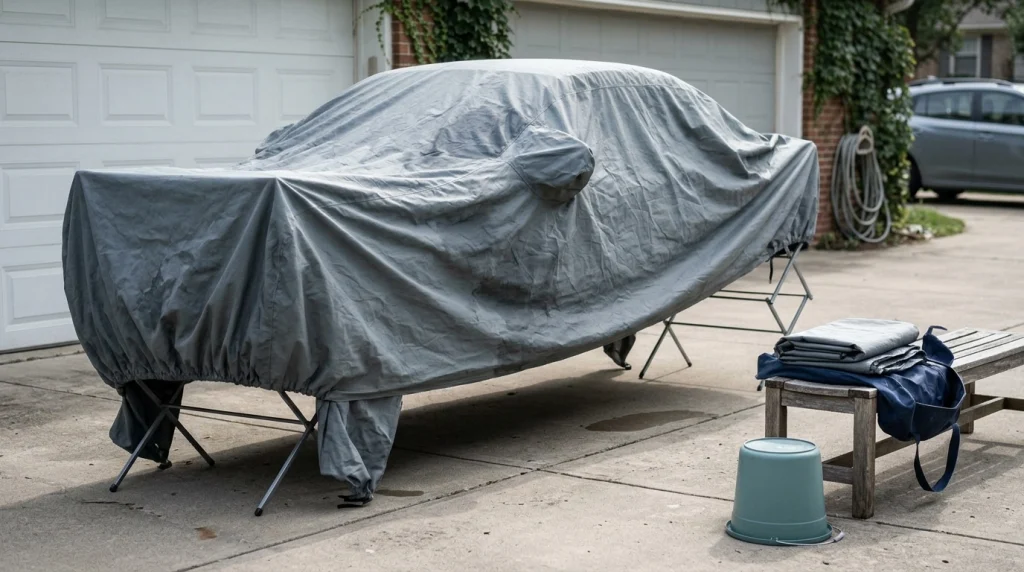
Drying is an essential part of cleaning a car cover. A cover that remains damp can develop musty odors or mildew during storage, even if the washing itself went well.
How long should a car cover take to dry?
Drying time depends on the fabric, temperature, humidity, airflow, and how much water the material retains. Rather than relying on a fixed number of hours, check that both sides and the seams are completely dry.
Choose a clean, ventilated drying area and spread the cover out as much as practical. Follow any specific guidance about sunlight or heat because some materials tolerate these conditions better than others.
Should you dry a car cover in a dryer?
Only if the manufacturer explicitly permits machine drying for your particular cover. Some fabrics tolerate specified low or medium heat, while others should be air-dried.
Never assume that a tumble dryer is safe simply because the cover is machine-washable. Excessive heat or mechanical movement may damage the material or its protective construction.
How can you maintain water repellency?
Start by keeping the cover clean and following its recommended care schedule. Dirt can affect how water behaves on the fabric, but cleaning alone won’t necessarily restore a worn water-repellent finish.
Once the cover is clean and dry, you can perform a simple water-beading check if the manufacturer permits it. If water no longer beads as expected, consult the manufacturer before applying a compatible fabric treatment.
A treatment designed for outdoor clothing isn’t automatically suitable for every automotive cover. Confirm compatibility and follow the application and curing instructions carefully.
How can you prevent damage between washes?
- Remove loose dirt before putting the cover on the vehicle.
- Keep the car’s paint clean before covering it.
- Inspect the inside surface for grit, rough patches, and debris.
- Secure the cover according to its instructions to reduce wind movement.
- Store the cover only when it is completely dry.
- Inspect seams, elastic hems, and worn areas periodically.
Section takeaway: Proper drying and routine maintenance help preserve a cover’s usefulness. Avoid unapproved heat, treatments, and storage methods that could compromise the material.
Car Cover Cleaning FAQs
Can I pressure wash a car cover while it’s on my car?
It’s best not to. High-pressure water may force grit against the paint, move the fabric across the bodywork, or damage the cover itself. Remove the cover when practical and clean it separately with a garden hose and a suitable cleaner.
Can I use a low-pressure setting on a pressure washer?
Not unless the manufacturer confirms that the method is suitable. A lower setting may reduce the risk, but the actual force depends on the equipment, nozzle, and distance. A garden hose is the safer default for routine cleaning.
Can I use car shampoo to wash a car cover?
Only if the cover manufacturer confirms that the shampoo is compatible with the material and its protective finish. Car shampoo is designed for vehicle surfaces, not necessarily for coated textiles or bonded fabric layers.
Can I wash a car cover in a washing machine?
Some covers can be machine-washed, but others require different care. Check the manufacturer’s instructions for the correct machine type, cycle, detergent, water temperature, rinsing, and drying method before washing.
Will washing a car cover make it waterproof again?
Not necessarily. Cleaning can remove dirt that affects water behavior, but it cannot reliably restore a worn or damaged waterproof coating. If water resistance remains poor after cleaning, consult the manufacturer about compatible treatments or replacement.
How often should I clean my car cover?
There is no universal cleaning interval for every cover. Clean it when dirt accumulates, contaminants become noticeable, or the manufacturer recommends maintenance, while avoiding unnecessary washing that could wear the material.
Can I use bleach or fabric softener on a car cover?
Avoid both unless the manufacturer explicitly approves them. Bleach may damage fibers or finishes, while fabric softener can leave residues that interfere with a cover’s intended performance. Use only compatible cleaning products.
Final Takeaway: Skip the Pressure Washer
So, can you pressure wash a car cover? In most cases, you shouldn’t. The potential damage to fabric, seams, and protective finishes isn’t worth the convenience when ordinary rinsing and gentle hand washing can handle routine dirt.
My recommendation is straightforward: check the care label, remove loose debris, rinse with a garden hose, use a compatible mild cleaner when needed, and let the cover dry completely before storing it.
If you own a premium multilayer or weather-resistant cover, be especially careful about experimenting with cleaning equipment. Follow the product-specific instructions, and contact the manufacturer if you’re unsure which method is safe.
A little patience during cleaning can help your cover continue protecting your vehicle without introducing unnecessary risks.
Disclosure: This article is for general educational purposes. Cleaning methods and material compatibility vary by manufacturer, so consult your specific product’s care instructions before proceeding.