
Moisture Under Car Cover: Causes, Risks, and How to Stop It

Quick Answer
Moisture under a car cover usually comes from condensation, covering a damp vehicle, rain getting through the cover, or humid air becoming trapped underneath. A small amount of temporary condensation is usually manageable, but repeated moisture should be corrected by drying the vehicle and using a properly fitted cover with good vapor escape, consistent with breathable car cover guidance.
Most Likely Causes
- Condensation: Humid air cools against the vehicle and turns into droplets underneath the cover.
- Wet paint: Covering the car before it fully dries traps water against the body.
- Rain intrusion: Water can pass through weak fabric, seams, openings, or damaged areas.
- Poor ventilation: A low-breathability material may slow evaporation after humidity or rain enters.
- Ground moisture: Damp pavement, soil, or grass can increase humidity around an outdoor vehicle.
What to Do First
- Remove the cover: Let both the vehicle and cover dry completely before covering the car again.
Finding droplets beneath a cover can make it look as if the cover has failed. When I troubleshoot moisture under a car cover, I first separate rain leakage from condensation because the fixes are different.
This guide explains where the moisture comes from, when it can hurt the vehicle, and how to keep a covered car drier without creating new paint problems.
In This Guide
- Why Is There Moisture Under My Car Cover?
- Is Moisture Under a Car Cover Bad for Paint?
- How Do I Stop Condensation Under a Car Cover?
- Breathable vs. Waterproof Car Covers: Which Is Better?
- What Should I Do If My Car Is Wet Under the Cover?
- When Should I Replace My Car Cover?
- Frequently Asked Questions
Why Is There Moisture Under My Car Cover?
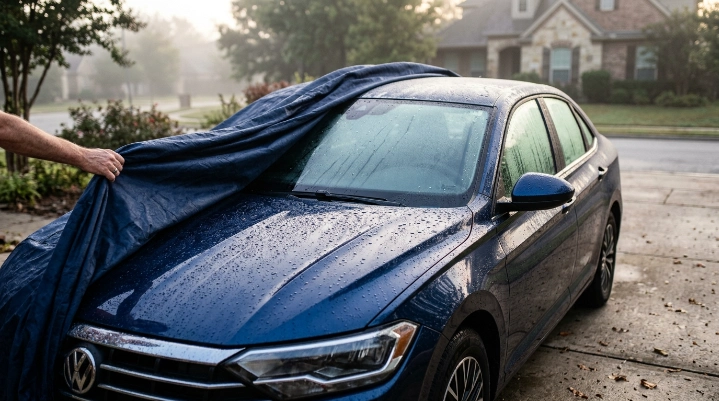
Moisture under a car cover most often develops because water vapor becomes trapped near the vehicle and then condenses. It does not automatically mean rain has leaked straight through the fabric.
Definition: Moisture under a car cover is liquid water or dampness that develops between the vehicle’s exterior surfaces and the cover, either from outside water intrusion or condensation of humid air.
How does condensation form under a cover?
Warm air can hold more water vapor than cooler air. When that humid air contacts a cooler body panel and reaches its dew point, some vapor becomes liquid droplets.
This often happens overnight. The vehicle, cover, pavement, and surrounding air can cool at different rates.
- Warm day, cool night: Humid air trapped beneath the cover cools after sunset.
- Car covered while warm: Heat remaining after a drive can raise temperature and humidity underneath the fabric.
- Damp parking surface: Wet pavement, grass, or soil adds moisture to the air around the vehicle.
- Recent washing: Water hidden around mirrors, trim, handles, and panel gaps can evaporate after the cover goes on.
- High outdoor humidity: Even without rain, humid weather can produce condensation during a temperature change.
How can I tell condensation from a leaking cover?
Condensation tends to look like fine, widespread droplets on several body panels. Rain leakage is more likely to create concentrated wet areas beneath seams, openings, or worn sections of fabric.
Check the cover itself after rain. A soaked inner surface in one specific area points more toward water penetration than normal condensation.
Car-cover performance also varies substantially. In Car and Driver’s 2026 car-cover testing, one outdoor cover prevented water penetration during a month-long test, while another showed traces of moisture and dust after a month.
Is Moisture Under a Car Cover Bad for Paint?
A brief episode of clean condensation does not mean your clear coat is ruined. Persistent dampness becomes more concerning when dirt, salt, contaminants, damaged paint, or cover movement are also present.
Can trapped water damage clear coat?
The bigger problem is usually what stays with the water. Mineral residue can leave water spots, while contaminants held against the surface can make cleaning harder.
Repeated dampness also keeps chips, scratches, seams, and exposed metal wet longer. Those vulnerable areas deserve more attention than intact factory paint.
Can a wet car cover scratch the paint?
Yes, but moisture is only part of the problem. Dirt between the paint and cover can act like an abrasive when wind moves a loose cover.
Kelley Blue Book specifically advises using a cover sized for the vehicle and securing it because a loose cover can flap against the paint. Its car storage guidance also recommends cleaning the vehicle before storage.
| What You See | Likely Explanation | Best Response |
|---|---|---|
| Fine droplets across several panels | Condensation | Dry car and cover; improve ventilation |
| One wet area below a seam | Possible rain penetration | Inspect seam and cover condition |
| Dirt marks or light scuffing | Dirty or loose cover movement | Wash vehicle and cover; improve fit |
| Musty smell or recurring dampness | Long-term moisture retention | Stop covering until everything dries |
| Rust at an existing chip or bare edge | Metal repeatedly exposed to moisture | Dry area and address damaged finish |
If you uncover the car and find blistering paint, spreading corrosion, or a persistent musty interior, the issue has moved beyond normal cover condensation. A qualified body or repair shop should inspect the affected area.
How Do I Stop Condensation Under a Car Cover?
The best fix is to reduce the amount of water entering the covered space and give unavoidable water vapor a way to escape. Start with the vehicle, then inspect the cover and parking location.
Should the car be completely dry before covering?
Yes. Whenever possible, cover a clean vehicle only after the paint, glass, trim, mirrors, door handles, wheels, and panel gaps have dried.
Water can hide in small crevices after washing. Putting the cover on immediately traps that water in a confined space.
- Wash away loose dirt: Dirt trapped beneath fabric increases the chance of rubbing marks.
- Dry the exterior: Pay attention to mirrors, trim, door handles, fuel doors, and panel gaps.
- Let heat escape: After driving, allow the vehicle to cool before covering it.
- Check the parking surface: A dry paved area is generally preferable to wet grass or saturated soil.
- Install the cover correctly: Keep it secure without forcing an undersized cover over sharp edges.
- Inspect after major weather: Uncover the vehicle when practical and check for trapped water.
Does ventilation really matter?
Yes. A cover that allows water vapor to escape can dry more effectively after humidity enters beneath it.
That does not mean every breathable fabric will stop heavy rain. Outdoor protection needs both suitable weather resistance and moisture management.
For longer storage, Edmunds recommends keeping a stored vehicle clean and using an all-weather or weatherproof cover when a garage is unavailable.
Breathable vs. Waterproof Car Covers: Which Is Better?
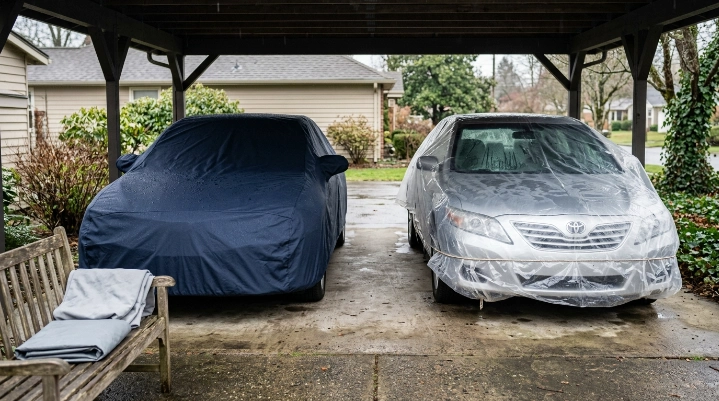
For most outdoor owners, the best answer is not simply “waterproof.” Look for a vehicle-specific outdoor cover that combines rain protection with a design that can release water vapor.
Some modern materials can be highly water-resistant or waterproof while still allowing vapor transmission. A plain plastic tarp usually cannot do that nearly as well.
| Cover Type | Rain Protection | Vapor Escape | Best Use |
|---|---|---|---|
| Indoor dust cover | Low | Usually good | Dry garage |
| Breathable multilayer outdoor cover | Moderate to high | Good | Typical outdoor parking |
| Waterproof/breathable outdoor membrane | High | Material-dependent | Frequent rain exposure |
| Generic plastic tarp | High liquid barrier | Poor | Temporary protection, not ideal for direct long-term contact |
Is a loose cover better for ventilation?
No. Leaving a cover loose is not a good way to create airflow because wind can make the fabric move across dirty paint.
The better solution is a correctly sized cover designed for outdoor use. Secure it using the manufacturer’s intended straps, hems, or attachment points.
As of 2026, real-world cover testing still shows large differences between products. Fit, inner-surface softness, weather resistance, and moisture control matter more than a single marketing word on the package.
What Should I Do If My Car Is Wet Under the Cover?
Remove the cover instead of leaving the car sealed while wet. Give both surfaces enough airflow to dry before putting them back together.
What is the safest drying process?
Move the vehicle to a dry, ventilated location if possible. If conditions allow, leave the car uncovered until droplets and damp areas disappear.
- Shake excess water from the cover without dragging the dirty fabric across the paint.
- Hang or spread the cover according to its care instructions so both sides can dry.
- Inspect the paint for dirt, water spots, sap, bird droppings, or other contamination.
- Wash the car if grit or dirty runoff is present rather than wiping it across dry paint.
- Check seams, mirror pockets, elastic edges, and damaged coating on the cover.
- Reinstall the cover only when the vehicle and inside surface of the cover are dry.
For long-term storage, keeping the vehicle clean matters as much as keeping it covered. Kelley Blue Book notes that water, mud, salt stains, sap, bugs, and bird droppings should not be left sitting on stored paint for extended periods.
Should I polish or wax the car after condensation?
Not automatically. First determine whether you have simple moisture, mineral spotting, contamination, or actual paint damage.
A proper wash may be all that is needed. Consumer Reports’ car maintenance and repair guidance is a useful starting point for routine exterior-care decisions rather than jumping straight to aggressive polishing.
When Should I Replace My Car Cover?
Replace or repair the cover when it no longer performs the job you bought it for. Repeated wet areas in the same location are one of the clearest warning signs.
What signs indicate a worn-out cover?
Look at the cover in bright light and check it while dry. Damage is often easier to spot when the fabric is stretched normally over the vehicle.
- Torn seams: Open stitching creates direct paths for rain.
- Peeling coating: Deteriorating weather-resistant layers may no longer repel water consistently.
- Thin or worn fabric: High-contact areas around mirrors and corners can lose protection first.
- Damaged inner lining: A roughened underside may increase the risk of paint marks.
- Failed straps: Poor securing allows the cover to flap in wind.
- Recurring musty odor: A cover that stays damp between uses needs cleaning, complete drying, or replacement.
Do not assume a brand-new cover is automatically correct for your car. Incorrect sizing can create tension at corners or excess loose material along the sides.
A cover should fit securely without being stretched like a drum. It also should not billow and slap the vehicle whenever the wind picks up.
Frequently Asked Questions
Is condensation under a car cover normal?
Occasional light condensation can happen when humid air and vehicle surfaces change temperature at different rates. Recurring heavy moisture is a sign to check the cover’s breathability, fit, weather protection, parking surface, and whether the vehicle was damp when covered.
Will a car cover make my car rust?
A car cover does not automatically cause rust. However, keeping exposed metal, damaged paint, seams, or existing corrosion persistently damp can encourage further corrosion, so repeated trapped moisture should be corrected.
Can I put a car cover on after washing the car?
Yes, but let the vehicle dry first. Check mirrors, trim, handles, wheels, panel gaps, and other places where water can remain hidden after the main paint surfaces appear dry.
Should I cover a wet car before it rains?
Usually, trapping existing water beneath a cover is not ideal. If you have a choice, dry the car first and install a clean, suitable outdoor cover rather than sealing moisture underneath it.
Does a waterproof car cover prevent condensation?
Not necessarily. Waterproofing addresses liquid water coming from outside, while condensation comes from water vapor already present beneath the cover, so vapor escape and ventilation still matter.
Should I use a plastic tarp instead of a car cover?
A generic tarp can block rain, but it is not designed around automotive paint, fit, or moisture management. For regular storage, a properly fitted vehicle cover made for the intended indoor or outdoor environment is the safer choice.
Final takeaway: Moisture under a car cover is usually fixable once you identify whether the water is leaking in or condensing underneath. Keep the car and cover clean and dry, use the right cover for the environment, secure it properly, and investigate recurring wet areas instead of leaving the vehicle damp.
If the moisture continues after those changes, stop using the cover temporarily and inspect its seams, material, fit, and the parking environment before protecting the car again.
