
Car Cover Rubbing Paint: Causes, Damage, and How to Stop It

Quick Answer
A car cover can rub or scratch paint when dust, sand, or other grit gets trapped between the fabric and the vehicle. Wind, a loose fit, and dragging the cover during installation make the problem worse, so keeping both surfaces clean is the most important prevention step; proper car-washing technique also helps reduce paint scratches before the cover goes on.
Most Common Reasons a Cover Rubs Paint
- Dirt underneath: Fine grit becomes abrasive when fabric moves across it.
- Loose fit: Excess fabric can flap repeatedly in windy conditions.
- Dirty cover: The inner lining can collect dust after touching the ground.
- Dragging during removal: Sliding fabric across panels increases friction.
- Wrong cover type: A lightweight indoor cover may move too much when used outside.
What to Do First
- Stop using the cover until you inspect the paint, clean the vehicle, clean the cover, and check its fit.
A car cover is supposed to protect your paint, so finding swirl marks underneath one feels backwards. The problem usually isn’t simply that a cover touched the car.
The real issue is movement combined with contamination. This guide explains why car cover rubbing paint happens, how to identify the damage, and how to prevent it without giving up outdoor or indoor protection.
In This Guide
- Can a Car Cover Really Rub Paint?
- Why Is My Car Cover Scratching the Paint?
- How Can I Tell Whether the Damage Came From the Cover?
- How Do I Stop a Car Cover From Rubbing Paint?
- What Should I Do If the Paint Is Already Scratched?
- What Kind of Car Cover Is Safest for Paint?
- FAQs About Car Cover Rubbing Paint
Can a Car Cover Really Rub Paint?
Yes, a car cover can contribute to paint marring, swirl marks, or scratches. The risk rises when the fabric moves across contamination sitting on the paint.
Definition: Car cover paint rubbing is surface damage caused when a cover, or abrasive material trapped beneath it, repeatedly moves across a vehicle’s painted finish.
Modern glossy automotive finishes usually have a clear coat over the color layer. That clear surface provides gloss and protection, but it can still develop fine scratches from abrasive contact.
- Micro-marring: Very fine marks that may look hazy under direct light.
- Swirl marks: Circular or curved scratches that become obvious in sunlight.
- Scuffing: More concentrated rubbing, often on corners or raised body lines.
- Deeper scratches: Damage that may extend beyond the upper clear-coat surface.
A manufacturer paint-care bulletin available through the NHTSA technical service bulletin database warns that stiff materials and dry wiping can mar or scratch vehicle finishes. The same basic friction principle matters when a contaminated cover moves against paint.
I’ve found the location of the marks often tells the story. Repeated rubbing around mirrors, roof edges, fender peaks, and bumpers usually points toward cover movement rather than random road damage.
Why Is My Car Cover Scratching the Paint?
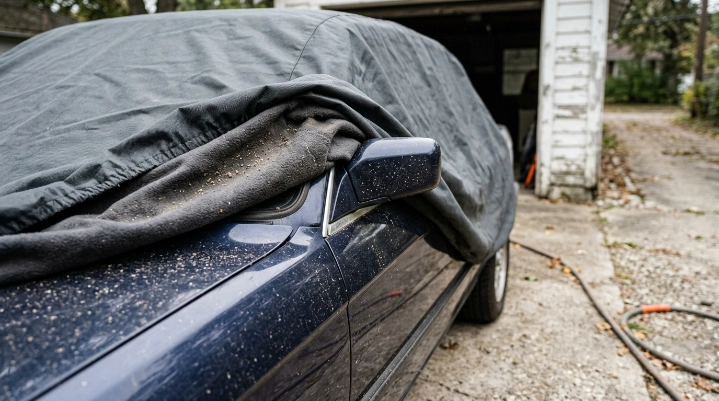
The most common cause is grit between the car and the cover. The cover then moves that grit across the clear coat like a mild abrasive.
1. You Covered a Dusty or Dirty Car
A vehicle doesn’t need to look dirty to create trouble. Fine road dust, pollen, brake dust, and sand can remain on the surface after a short drive.
Once trapped under fabric, those particles move whenever the cover shifts. Repeated motion can create visible swirls over time.
2. Wind Is Making the Cover Move
A loose outdoor cover can inflate, lift, and settle repeatedly during windy weather. High spots on the body receive much of that repeated contact.
- Mirror housings
- Roof edges
- Fender shoulders
- Door edges
- Front and rear bumper corners
A cover shouldn’t be stretched dangerously tight, but it also shouldn’t behave like a flag. The goal is a secure fit with minimal movement.
3. The Inside of the Cover Is Dirty
A clean car doesn’t help much if the cover’s inner surface contains grit. This often happens when part of the cover falls onto a driveway during removal.
I treat the inside lining almost like a large detailing towel. Once it touches a dirty floor, I wouldn’t put that section straight back against polished paint.
4. You’re Dragging the Cover Across the Vehicle
Installation technique matters even with a soft cover. Pulling a bundled cover from one end of the vehicle to the other creates unnecessary sliding contact.
Instead, position and unfold it progressively. Lift the material whenever possible rather than dragging it sideways.
5. The Cover Doesn’t Match the Environment
Indoor covers and outdoor covers solve different problems. A thin indoor dust cover may lack the secure fit and weather resistance needed outdoors.
| Situation | Paint Risk | Better Approach |
|---|---|---|
| Clean car, clean fitted cover, indoor storage | Lower | Use a soft indoor cover and careful handling |
| Dusty car under a cover | High | Wash and dry before covering |
| Loose cover in wind | High | Use a properly fitted outdoor cover and restraints |
| Cover lining contaminated with grit | High | Clean the cover before reuse |
Section Takeaway: Most car-cover scratches result from contamination plus movement. Control those two factors first.
How Can I Tell Whether the Damage Came From the Cover?
Look at where the scratches appear and how they repeat. Cover-related damage often follows areas where fabric moves or presses against the body.
Wash the vehicle carefully before inspecting it. Dirt and residue can hide both scratches and harmless surface marks.
| What You See | Possible Cause | Next Step |
|---|---|---|
| Fine swirls over broad panels | Dust or grit moving under fabric | Inspect under strong, angled lighting |
| Marks on mirrors and corners | Wind movement or poor fit | Check how tightly the cover sits in those areas |
| Long straight scratches | Dragging during installation or removal | Change your folding technique |
| Scratch doesn’t catch a fingernail | Often shallow clear-coat damage | Consider gentle polishing |
| Scratch clearly catches a fingernail | Potentially deeper damage | Have a detailer or body shop assess it |
The fingernail check is only a quick screening method. Car and Driver’s scratch-removal guidance similarly distinguishes shallow clear-coat marks from deeper scratches when considering DIY correction.
How Do I Stop a Car Cover From Rubbing Paint?
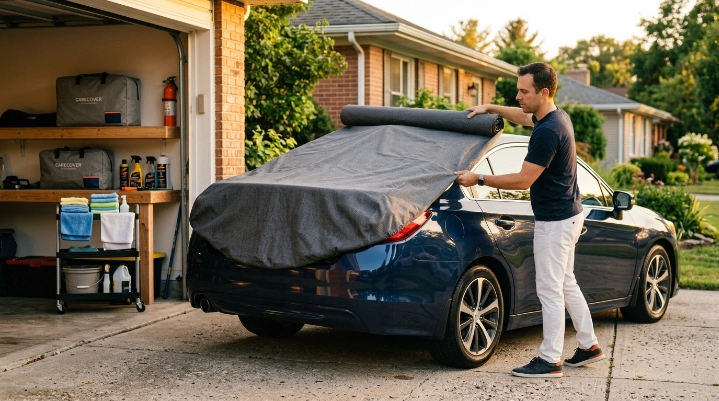
Start by eliminating dirt and unnecessary fabric movement. You don’t need specialized tools for the basic prevention routine.
- Wash the vehicle first. Remove road film, dust, pollen, and visible contamination.
- Dry it completely. Don’t trap unnecessary water beneath the cover.
- Inspect the cover lining. Look for grit, leaves, sand, or rough contamination.
- Position the cover centrally. Identify the front and rear before unfolding it.
- Unroll instead of dragging. Work across the roof and down the sides with minimal sliding.
- Secure the cover correctly. Use the manufacturer’s intended straps, hems, or retention system.
- Check it after windy weather. Look for shifted fabric around mirrors, corners, and body lines.
Good washing habits matter because improper washing can create the same type of fine paint defects you’re trying to avoid. Edmunds’ exterior-care guidance notes that gentler microfiber materials help reduce marring compared with rougher wiping materials.
Don’t Cover the Car Immediately After Every Drive
If the vehicle picked up road dust, don’t automatically throw the cover over it. A quick visual check isn’t always enough because fine contamination can be hard to see.
For a daily driver, repeatedly washing before every cover installation may become impractical. In that situation, reconsider whether daily covering is helping more than it hurts.
Keep the Cover Off the Ground
This habit makes a surprisingly large difference. Concrete, asphalt, and garage floors can transfer fine grit directly onto the lining.
- Fold the sides toward the roof.
- Fold the front and rear sections inward.
- Keep the inner lining facing inward while storing it.
- Use the cover’s storage bag when available.
Section Takeaway: A clean surface, clean lining, proper fit, and careful removal routine eliminate most preventable rubbing problems.
What Should I Do If the Paint Is Already Scratched?
First determine whether you’re dealing with light clear-coat marring or deeper damage. Don’t immediately attack every mark with an aggressive compound.
For Light Swirls or Haze
Wash and dry the area before correction. Then inspect it under direct sunlight or a bright inspection light.
Light clear-coat imperfections may respond to a mild polish or dedicated scratch-removal product. Start with the least aggressive method that can produce the result you want.
- Use a clean applicator or polishing pad.
- Work a small test area first.
- Follow the product’s instructions.
- Inspect the finish before making another pass.
- Stop if you aren’t comfortable removing clear coat.
Products designed for minor surface scratches typically rely on fine abrasives that level a tiny amount of surrounding clear coat. That means repeated aggressive polishing isn’t harmless.
For Deep Scratches or Exposed Paint Layers
If a scratch is deep, sharply visible, or appears to reach through the clear coat, professional assessment is safer. Paint correction can’t replace material that has already been removed through multiple coating layers.
Mechanic Alert: If you’re unsure how deep the damage is or you’re considering machine polishing without experience, have a qualified detailer or body-repair professional inspect the finish first.
As of 2026, established automotive sources continue to treat polishing as appropriate mainly for surface-level defects. Consumer Reports detailing guidance also emphasizes proper washing, polishing, and paint-care technique rather than aggressive correction by default.
What Kind of Car Cover Is Safest for Paint?
The safest cover is one designed for your storage environment and shaped closely enough to minimize movement. Softness alone doesn’t guarantee paint safety.
Indoor Storage
An indoor cover mainly protects against dust and light accidental contact. Breathability, a clean inner surface, and gentle fabric are more important than heavy weather protection.
Outdoor Storage
An outdoor cover needs better weather resistance and more secure retention. A loose indoor-style cover can become a problem when exposed to repeated wind.
- Fit: Choose vehicle-specific sizing when practical.
- Inner surface: Look for a paint-friendly lining.
- Retention: Make sure the cover can stay secure during expected weather.
- Breathability: Avoid treating an ordinary plastic tarp as a substitute for a vehicle cover.
- Care instructions: Pick a cover you can realistically keep clean.
A ceramic coating may make cleaning easier and can provide limited resistance to minor surface abrasion, but it isn’t a shield against constant rubbing. Even coated paint can develop defects if grit is repeatedly dragged across it.
For higher-risk areas, professionally installed paint protection film provides a more substantial physical barrier against minor abrasion than a liquid coating. Edmunds’ car-maintenance resources provide broader guidance on paint protection and vehicle-care options.
The best solution may also be no cover at all. If your daily driver stays outdoors and gets dusty every day, repeatedly putting a cover on and taking it off can create more handling than the paint needs.
Section Takeaway: Choose the cover around your real storage conditions, not just marketing claims. A perfect cover still needs a clean car and careful handling.
FAQs About Car Cover Rubbing Paint
Do car covers scratch clear coat?
They can. A clean, properly fitted cover presents less risk, while trapped grit and repeated movement can create swirl marks or fine scratches in the clear coat.
Can wind make a car cover damage paint?
Yes. Wind can make loose fabric repeatedly move across mirrors, roof edges, fenders, and other high points, especially when dirt is trapped between the surfaces.
Should I put a car cover on a dusty car?
It’s better not to. Dust and road grit can become abrasive when the cover shifts, so washing and drying the vehicle before extended covered storage is the safer approach.
Will a soft car cover prevent scratches?
A soft lining helps, but it doesn’t remove the risk. Dirt on the car, contamination inside the cover, poor fit, and wind movement can still cause paint marring.
Can I polish out scratches caused by a car cover?
Many light clear-coat swirls can improve with proper polishing. Deep scratches, damaged edges, exposed color coat, or uncertain paint thickness are better evaluated by an experienced detailer or body shop.
Is a ceramic coating enough to stop cover rubbing?
No. Ceramic coatings can offer some resistance to minor marks and make cleaning easier, but they don’t make paint immune to abrasive grit or repeated fabric movement.
Is it better to leave a car uncovered?
Sometimes. If you use the vehicle daily and can’t keep both the paint and cover clean, avoiding frequent covering may reduce rubbing risk, while a garage or sheltered parking space offers protection without constant fabric contact.
Final Takeaway: If your car cover is rubbing the paint, stop focusing only on how soft the fabric feels. Check for trapped dirt, wind movement, incorrect sizing, contamination inside the cover, and dragging during installation.
Fix those problems before using the cover again. A clean, correctly fitted cover handled carefully can protect a vehicle without turning everyday dust into an abrasive against the finish.
