
How Much Does It Cost to Reupholster a Car Seat? Complete Cost Guide

A torn, cracked, stained, or badly worn car seat can make an otherwise good vehicle feel old. Reupholstering can restore the interior without replacing the entire seat, but the price can vary widely depending on the material, seat design, damage, and labor involved.
So, how much does it cost to reupholster a car seat? For many U.S. vehicles, expect to spend roughly $200 to $750 per seat for basic professional work, while leather, custom stitching, foam replacement, and complicated power seats can push the price above $1,000 per seat. A complete interior can cost several thousand dollars.
This guide explains realistic costs, what changes the price, when a simple repair is enough, and when professional help is the smarter choice.
Quick Answer
Car seat reupholstery typically costs about $200 to $750 per seat, although leather or custom work may cost $500 to $1,500 or more per seat. Reupholstering a complete set of seats may run roughly $1,500 to $5,000+, depending on materials, seat condition, vehicle type, foam repairs, and labor.
Average Car Seat Reupholstery Cost
There is no single price that fits every vehicle. A simple cloth seat in an older sedan is very different from a heated leather seat with power adjustments and a seat-mounted side airbag.
Here is a practical starting point for budgeting.
| Reupholstery Job | Typical Cost Range |
|---|---|
| Small damaged panel or bolster | $100–$300 |
| Seat-bottom cushion only | $150–$500 |
| One basic cloth or vinyl seat | $300–$800 |
| One leather seat | $500–$1,500+ |
| Two front seats | $800–$2,500+ |
| Full set of standard seats | $1,500–$5,000+ |
| Luxury or custom interior | $3,000–$10,000+ |
These are general U.S. budgeting ranges rather than guaranteed prices. Labor rates, materials, seat construction, vehicle size, and local competition can cause substantial differences.
Always get an itemized quote for your specific vehicle before authorizing the work.
What Does Reupholstering a Car Seat Actually Include?
Reupholstering usually means removing the existing seat covering and installing new upholstery.
A professional job may involve:
- Removing the seat from the vehicle
- Removing the old cloth, vinyl, or leather
- Inspecting the seat foam
- Repairing damaged foam or bolsters
- Creating or installing replacement upholstery panels
- Replacing damaged padding
- Installing new hog rings, clips, or fasteners
- Reassembling the seat
- Reinstalling and testing the seat
The amount of work depends heavily on the seat.
Replacing one torn side panel can be relatively inexpensive. Completely rebuilding a leather power seat with damaged foam takes considerably more labor.
What Factors Affect the Cost to Reupholster a Car Seat?
Understanding the major cost factors helps you judge whether a quote is reasonable.
1. Upholstery Material
Material choice is one of the biggest price factors.
Cloth
Standard automotive cloth is usually the least expensive traditional option.
It can be comfortable, durable, and easier to match in economy vehicles.
Expect cloth upholstery to stay toward the lower end of most estimates.
Vinyl
Automotive vinyl can imitate leather at a lower price.
Good-quality vinyl is durable and relatively easy to clean, making it practical for trucks, work vehicles, and family cars.
Premium automotive vinyl may cost more than basic cloth but generally less than genuine leather.
Leather
Leather usually increases both material and labor costs.
Matching the original grain, perforation pattern, color, stitching, and finish can make the project considerably more expensive.
Premium hides and luxury-car interiors can push costs far beyond average estimates.
2. How Much of the Seat Needs Work
You may not need to reupholster the entire seat.
For example, the common driver’s-side outer bolster often wears out long before the rest of the upholstery.
Replacing only that damaged panel may save hundreds of dollars.
Ask the upholsterer whether they can repair:
- One bolster
- The seat bottom
- One leather panel
- A damaged seam
- One seatback section
A targeted repair often makes more financial sense when most of the original upholstery is still in good condition.
3. Foam Condition
The fabric or leather is only the visible layer.
Underneath it is molded foam that gives the seat its shape and support.
Older seats may have:
- Collapsed bolsters
- Crumbling foam
- Deep depressions
- Broken support material
- Exposed seat-frame sections
Foam repair adds labor and materials, but ignoring damaged foam can make new upholstery look loose or uneven.
Replacing the cover without correcting badly worn foam is usually false economy.
4. Seat Design
A basic manual seat is relatively straightforward.
A modern front seat may contain:
- Power-adjustment motors
- Lumbar-support systems
- Heating elements
- Ventilation fans
- Occupancy sensors
- Seat-belt wiring
- Side-impact airbags
More complicated seats take longer to remove, disassemble, and reinstall correctly.
That additional labor increases the price.
Car Seat Reupholstery Cost by Material
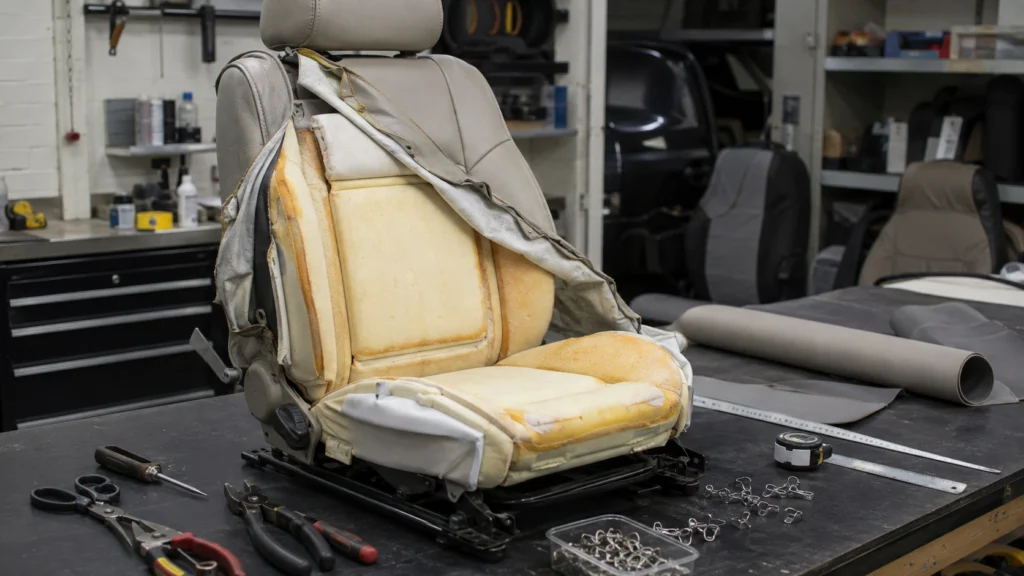
Material selection can change the final bill substantially.
| Material | Relative Cost | Best For | Main Limitation |
|---|---|---|---|
| Cloth | Low | Daily drivers and budget repairs | Can absorb spills |
| Vinyl | Low to moderate | Easy cleaning and durability | Can get hot in summer |
| Synthetic leather | Moderate | Leather appearance at lower cost | Quality varies |
| Genuine leather | High | Premium appearance and feel | More expensive |
| Custom premium leather | Very high | Restorations and luxury vehicles | High material and labor cost |
You do not necessarily need to replace the original material with the same type.
A shop may be able to convert cloth seats to vinyl or leather. However, changing materials can affect appearance, perforation requirements, and compatibility with heated or ventilated seats.
Is Repairing a Car Seat Cheaper Than Reupholstering It?
Usually, yes.
If the damage is limited to one small area, repair should normally be considered before complete reupholstery.
Repair May Make Sense When:
- One seam has opened
- A single bolster is worn
- There is a small leather crack
- One panel is torn
- The rest of the upholstery still looks good
- The foam remains supportive
Full Reupholstery May Make Sense When:
- Multiple panels are cracked or torn
- The upholstery is badly faded
- Several seats need restoration
- Foam is deteriorating
- You want to change the interior color
- You are restoring a classic or collectible car
For an inexpensive older vehicle, spending several thousand dollars on a complete custom interior may not increase the car’s resale value by the same amount.
The decision should consider both comfort and vehicle value, not appearance alone.
Reupholster vs Seat Covers vs Replacement Seats
There are several ways to deal with worn upholstery.
| Option | Cost | Appearance | Durability | Best Use |
|---|---|---|---|---|
| Repair damaged panel | Low | Very good if matched properly | Good | Small localized damage |
| Universal seat covers | Very low | Basic | Low to moderate | Temporary solution |
| Custom-fit seat covers | Moderate | Good | Good | Protecting usable seats |
| Professional reupholstery | High | Excellent | Excellent | Long-term restoration |
| Used replacement seat | Varies | Depends on condition | Varies | Severely damaged seat |
| New OEM seat/components | Very high | Factory original | Excellent | Newer or high-value vehicle |
A used seat from a salvage vehicle can sometimes be cheaper than extensive upholstery work.
However, verify that the replacement seat matches your vehicle’s airbags, electrical connectors, occupancy sensors, and mounting system.
Be Careful With Seats That Contain Airbags
This is one area where appearance should never take priority over safety.
Many vehicles have side-impact airbags built directly into the front seatbacks. The upholstery and seams may be designed so the airbag can deploy through a specific area.
The NHTSA airbag safety guidance explains the important role side and frontal airbags play in protecting occupants. NHTSA has also addressed the potential for seat coverings to interfere with seat-mounted airbags.
Do not allow an inexperienced person to sew, modify, reinforce, or cover an airbag deployment seam.
Before reupholstering the seat, confirm whether it contains a side airbag.
Look for an “AIRBAG” or “SRS AIRBAG” marking on the outer side of the seatback, and check your owner’s manual.
Heated, Ventilated, and Power Seats Can Cost More
Modern seat features add complexity.
Heated seats contain electrical heating elements beneath the upholstery. Ventilated seats may use perforated upholstery, internal channels, and small fans.
Replacing the original material with the wrong type could reduce airflow or affect how the system works.
Power seats can also contain several motors and wiring harnesses.
Make sure the shop understands the equipment installed in your particular seat before disassembly begins.
How to Get an Accurate Car Seat Reupholstery Quote
Do not choose a shop based only on the lowest advertised price.
Get quotes based on the exact work your vehicle needs.
1. Photograph the Damage
Take clear photos of:
- The entire seat
- Damaged areas
- Side bolsters
- Seat bottom
- Seatback
- Existing material
Photos may allow the shop to give you an initial estimate before you drive there.
2. Provide Your Vehicle Information
Give the shop:
- Year
- Make
- Model
- Trim level
- Number of seats needing work
Mention heated, ventilated, power, or airbag-equipped seats.
3. Ask What the Quote Includes
Find out whether the estimate covers:
- Material
- Labor
- Seat removal
- Seat installation
- Foam repair
- New fasteners
- Color matching
- Taxes
- Warranty
The FTC’s auto repair guidance recommends asking for a written estimate that identifies the work, required parts, and anticipated labor charges before authorizing vehicle repairs.
That is a smart practice for upholstery work as well.
4. Compare Similar Quotes
A $500 quote and a $900 quote may not actually cover the same work.
One shop may be replacing only the visible material. Another may include foam restoration, seat removal, premium material, and a warranty.
Compare the scope of work, not just the final number.
Expert Tip:
Ask the upholstery shop to separate the quote into material, labor, foam repair, and seat removal/reinstallation. An itemized estimate makes it much easier to compare shops and identify unnecessary upgrades.
Can You Reupholster a Car Seat Yourself?
Technically, yes.
Basic older seats can sometimes be reupholstered at home using replacement upholstery kits.
DIY work may involve:
- Removing the seat.
- Disconnecting appropriate electrical connections.
- Removing trim panels.
- Cutting or removing upholstery fasteners.
- Pulling off the old cover.
- Repairing foam.
- Stretching and fastening the new material.
- Reassembling and reinstalling the seat.
However, professional-looking upholstery requires patience and skill. Poor tension can leave wrinkles, uneven seams, or loose material.
More importantly, DIY work becomes much riskier when the seat contains airbags, occupancy sensors, seat-belt components, or electrical systems.
Disconnecting electrical connectors incorrectly may also trigger an SRS or airbag warning light.
When to Call a Professional Mechanic
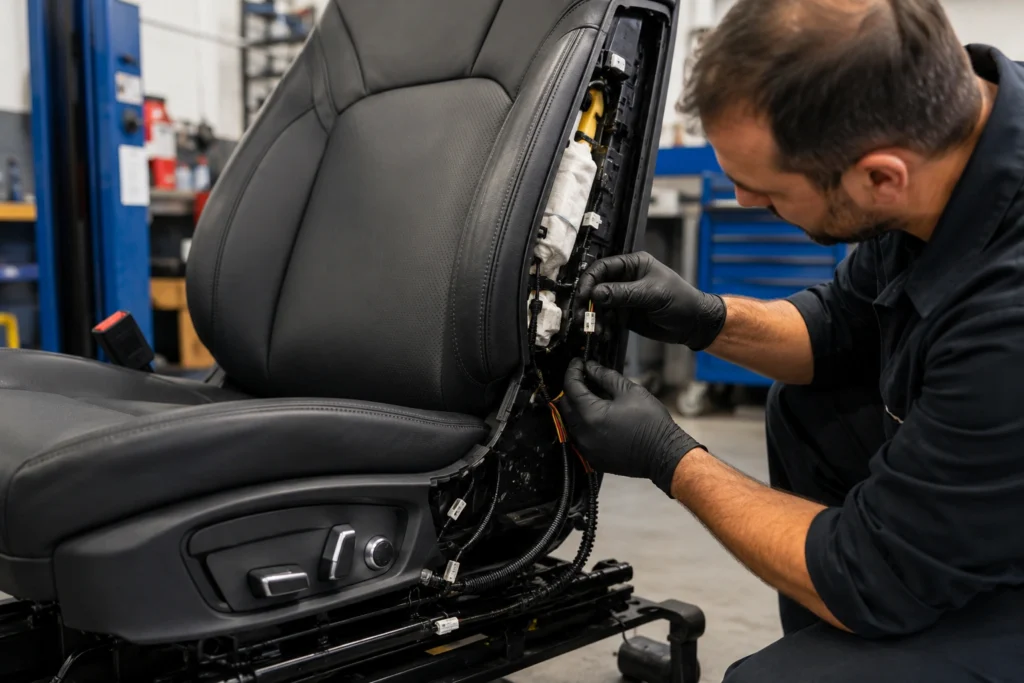
An automotive upholsterer is usually the right specialist for replacing seat material, but certain problems should involve a qualified mechanic, dealer technician, or automotive electrical specialist.
Get professional help if:
- The airbag warning light appears after seat removal.
- The seat contains a side-impact airbag.
- An occupancy sensor is damaged.
- Power adjustments stop working.
- Heated or ventilated seats malfunction.
- Seat-belt wiring or pretensioner components are involved.
- Electrical connectors are damaged.
- The seat frame or mounting points are bent.
You can use the ASE Blue Seal repair shop locator as one way to identify repair businesses that employ ASE-certified service professionals.
Also check whether your vehicle has any outstanding safety recalls through the NHTSA vehicle recall lookup before paying for related seat or airbag repairs. A qualifying recall repair is handled through the manufacturer.
Is Car Seat Reupholstery Worth the Money?
It can be.
Reupholstery makes the most sense when:
- You plan to keep the vehicle for several years.
- The car is otherwise in good condition.
- Replacement seats are difficult to find.
- Seat damage affects comfort.
- You are restoring a classic vehicle.
- Interior appearance matters to you.
It may be harder to justify if the upholstery job costs a large percentage of the vehicle’s total value.
For example, spending $3,000 restoring the seats of a $4,000 commuter car may not make financial sense unless you intend to keep the vehicle for a long time.
A $300 driver’s-seat repair could be a much smarter solution.
Common Mistakes Car Owners Should Avoid
- Assuming the whole seat needs reupholstery. Ask whether replacing one damaged panel will solve the problem.
- Choosing the cheapest material available. Low-quality upholstery may fade, crack, stretch, or wear prematurely.
- Ignoring damaged foam. New upholstery cannot properly hide severely collapsed seat padding.
- Forgetting about airbags. Seat-mounted side airbags require special attention.
- Installing incompatible seat covers. Never use upholstery or covers that may interfere with safety equipment.
- Accepting a verbal quote only. Get the work and expected cost in writing.
- Comparing quotes without comparing materials. Genuine leather, synthetic leather, vinyl, and cloth have very different costs.
- Assuming reupholstery automatically increases resale value. The financial return may be smaller than the amount you spend.
- Attempting complicated seat removal without understanding the electrical system. Modern seats can contain airbag and occupancy-sensor wiring.
FAQs
How much does it cost to reupholster one car seat?
A basic professional job may cost roughly $200 to $750, while leather, extensive foam repair, custom stitching, or complex seat designs may push the price to $1,000–$1,500 or more.
How much does it cost to reupholster leather car seats?
A complete leather seat can commonly cost around $500 to $1,500+ per seat. Premium hides, perforated leather, custom stitching, sport seats, and complicated seat designs increase the cost.
Is it cheaper to reupholster or replace a car seat?
It depends on the vehicle. Reupholstery can be cheaper when the frame, electronics, and foam are still good. A used replacement seat may be cheaper if the existing seat has extensive structural, foam, electrical, and upholstery damage.
Can I reupholster only the driver’s seat?
Yes. You do not have to reupholster every seat. Repairing only the driver’s seat is common because it normally experiences the most wear from repeated entry and exit.
The main challenge is matching the new material to the older passenger and rear seats.
Can an upholstery shop repair only one torn section?
Often, yes.
A skilled upholsterer may replace a damaged bolster, cushion panel, or seatback section without replacing the entire cover. This can significantly reduce the cost when the remaining material is still usable.
How long does car seat reupholstery take?
A straightforward seat may take a shop a day or two of actual working time, but the vehicle may remain at the shop longer depending on workload, material availability, custom sewing, and foam repairs.
A full interior or custom project can take considerably longer.
Does reupholstering a car seat affect airbags?
It can if the vehicle uses seat-mounted side airbags.
The upholstery around the deployment area may have specially designed seams. Never modify an airbag-equipped seat without confirming that the work will preserve the manufacturer’s intended airbag operation.
Conclusion
So, how much does it cost to reupholster a car seat? A reasonable starting budget is about $200 to $750 for many individual seat jobs, with leather or complicated seats often reaching $500 to $1,500 or more. Complete interiors can easily cost $1,500 to $5,000+, while luxury and custom work may go much higher.
Before spending the money, find out whether you actually need full reupholstery. A damaged bolster, cushion, or individual panel may be repairable for much less.
If you decide to proceed, get several itemized quotes, compare materials carefully, ask about foam condition, and make sure the shop understands any airbags, heaters, ventilation systems, sensors, and power equipment inside the seat.
Start by having a reputable upholstery professional inspect the damaged seat and quote both a targeted repair and full reupholstery. Comparing those two options is often the easiest way to make the smartest decision for your car and your budget.
