
How to Get Water Stains Out of a Car Seat

Nothing is quite as frustrating as realizing a simple water spill has left an ugly, dark ring on your vehicle’s upholstery. Whether you left the window cracked during a sudden rainstorm, dropped a leaky water bottle, or had damp clothes after a gym session, water spots are a common headache for vehicle owners.
It seems unfair that clean water can cause a stain, but ignoring it can make your interior look neglected and even lower your car’s overall value. If you are wondering how to get water stains out of a car seat, you are in the right place. You do not need to be a professional detailer to fix this problem.
In this guide, we will walk you through exactly why these annoying rings form and provide simple, proven methods to remove them. Using common household items and basic car care techniques, you can restore your car seats to their original, pristine condition without spending a fortune at an auto shop.
Quick Answer
To get water stains out of a car seat, start by thoroughly vacuuming the area to remove loose dirt. Lightly mist the stained area with a mixture of warm water and a few drops of mild dish soap, or white vinegar. Gently agitate the stain with a soft-bristle brush, working from the outside edge inward. Blot the moisture away with a clean, dry microfiber cloth, and leave your car doors or windows open until the seat is completely air-dried.
Why Does Water Leave a Stain on Car Seats?
It might seem illogical that water, a cleaning agent, can leave a dirty stain behind. The truth is, the water itself is not what you are seeing.
When your car seat gets wet, the liquid seeps into the fabric and the foam cushion underneath. As it does this, the water dissolves hidden dirt, dust, and natural oils that have settled deeply into the seat over time. As the moisture slowly evaporates and dries, it pulls that dissolved dirt up to the surface and pushes it outward.
The dark ring you see—the “water stain”—is simply a concentrated outline of dirt that was left behind when the water finally evaporated at the edge of the spill. Additionally, hard water contains minerals like calcium and magnesium, which can also leave a chalky or discolored residue on darker fabrics.
This is why keeping your interior in top shape is so important. According to valuation experts at Kelley Blue Book, the condition of your car’s interior directly impacts your vehicle’s resale value and trade-in pricing.
Essential Supplies You Will Need
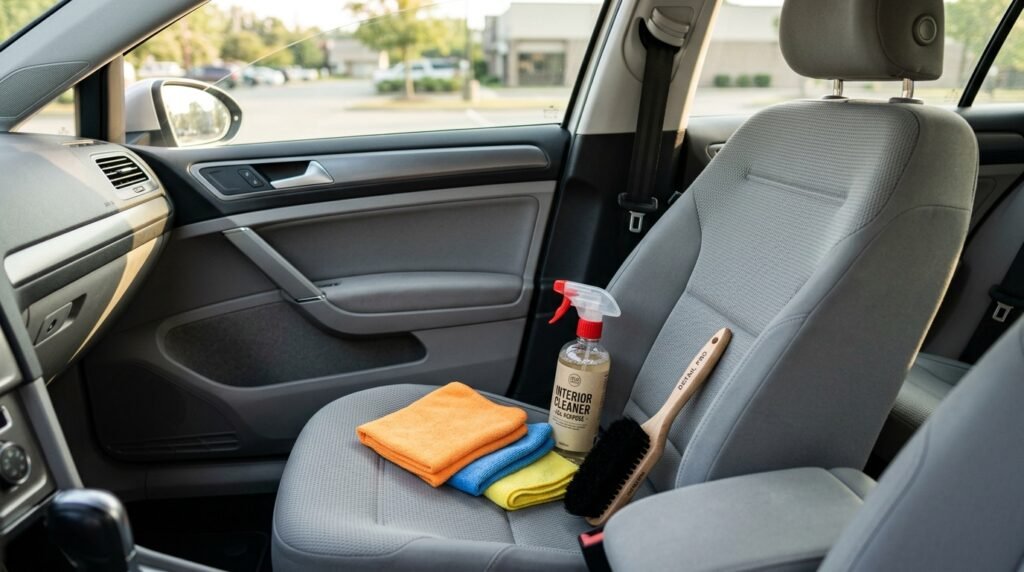
Before you start scrubbing, gather your materials. Having the right tools on hand prevents you from overwetting the seat or damaging the fabric.
Here is what you will need for a successful DIY interior detail:
- A car vacuum or shop vac: Essential for pulling up loose dirt before you apply any liquids.
- Clean microfiber cloths: These are ultra-absorbent and will not leave lint behind.
- A soft-bristle brush: Look for a detailing brush or a soft toothbrush for gentle agitation.
- White vinegar: A natural, effective cleaner that breaks down mineral deposits.
- Mild dish soap: Helps lift grease and oils trapped in the fabric.
- Distilled water: Using distilled water instead of tap water prevents new mineral stains from forming.
- A plastic spray bottle: For applying cleaning solutions in a fine, controlled mist.
Step-by-Step: How to Remove Water Stains from Cloth Seats
Cloth seats are the most susceptible to water stains because the woven fabric acts like a sponge. Follow this simple process to lift the stain safely.
Step 1: Vacuum the Seat Thoroughly
Never skip this step. If you apply water or cleaners to a dusty seat, you will turn that dust into mud, creating a much bigger stain. Vacuum the entire seat, paying special attention to the seams and crevices where dirt gathers.
Step 2: Mix Your Cleaning Solution
In your spray bottle, mix a simple DIY solution. Combine half a cup of white vinegar with half a cup of warm, distilled water. Add just one small drop of mild dish soap. Give the bottle a gentle shake. If you prefer store-bought upholstery cleaner, follow the dilution instructions on the bottle.
When choosing commercial chemical cleaners, it is always a smart idea to look for products recognized by the EPA’s Safer Choice program, which helps consumers find products that are safer for human health and the environment—especially in the enclosed space of a vehicle.
Step 3: Mist the Stain Lightly
Spray the stained area lightly. Do not soak the seat. You only want the surface fabric to be damp, not the foam padding underneath. If the foam gets soaked, it can take days to dry and may develop a musty, mildew smell.
Step 4: Agitate with a Soft Brush
Take your soft-bristle brush and gently work the solution into the fabric. Use light, circular motions. Start slightly outside the dark ring of the stain and slowly work your way into the center. This prevents the dirt from spreading further outward.
Step 5: Blot with a Microfiber Cloth
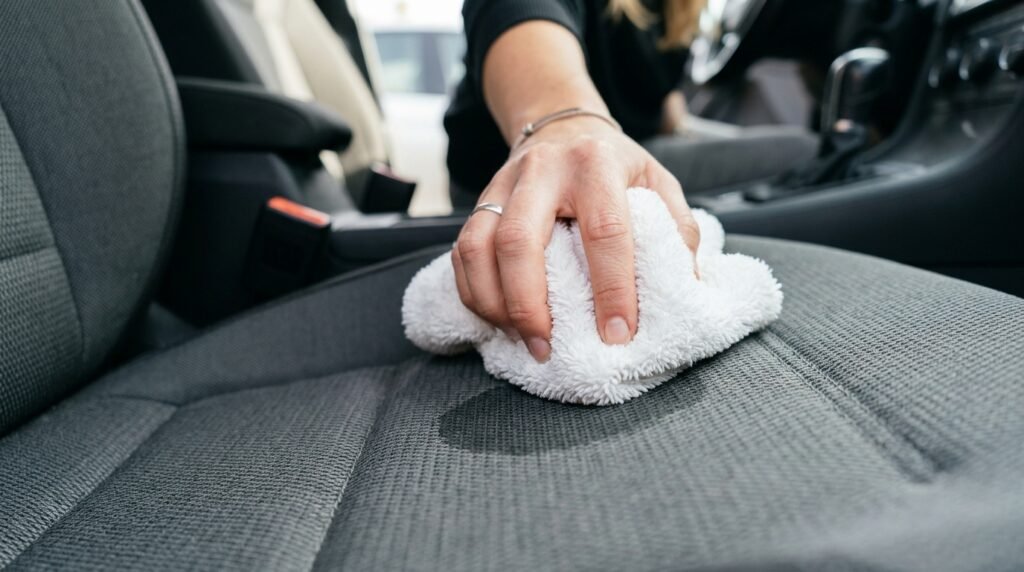
Once you have agitated the stain, immediately take a dry, clean microfiber cloth and firmly press it into the damp area. Blot, do not rub. Rubbing can fray the fabric fibers and push the dirt back into the weave. You should see the dirt transferring from the seat onto your cloth. Switch to a dry side of the cloth and repeat until no more moisture transfers.
Step 6: Air Dry Completely
Leave your car windows rolled down or the doors open to allow fresh air to circulate. If you have a portable fan, point it at the seat to speed up the process. Do not sit on the seat until it is 100% dry.
Expert Tip:
If you are cleaning a stain in the winter or live in a highly humid climate, turn on your car’s engine, roll up the windows, and blast the vehicle’s heater and AC at the same time. The AC acts as a dehumidifier, pulling moisture out of the cabin air and drying your seats rapidly.
Cleaning Water Stains from Leather and Vinyl Seats
Leather and vinyl seats generally repel water, making them much easier to maintain. However, if water sits on leather for too long, it can leave a chalky white mineral outline or cause the leather to stiffen.
Here is how to safely treat leather:
- Wipe the seat: Use a slightly damp microfiber cloth to gently wipe the affected area. Often, a fresh water spot on leather will disappear with just a quick wipe.
- Apply a leather cleaner: If the stain persists, apply a dedicated, pH-balanced automotive leather cleaner to a microfiber applicator pad.
- Clean in sections: Gently rub the cleaner into the leather using circular motions. Do not scrub hard, as you can damage the protective topcoat of the leather.
- Wipe dry: Immediately wipe the excess cleaner away with a fresh, dry cloth.
- Condition the leather: Water can strip natural oils from leather. Always follow up with a high-quality leather conditioner to keep the seat soft, supple, and resistant to future spills.
If you are dealing with a child’s safety seat that has water stains, always refer to the manufacturer’s manual. The National Highway Traffic Safety Administration (NHTSA) strongly advises against using harsh chemicals or bleach on child car seat harnesses, as this can degrade the webbing and compromise crash safety.
Cleaning Methods Comparison Table
To help you decide the best approach for your specific situation, here is a quick breakdown of common water stain removal methods:
| Cleaning Method | Best Used For | Average Cost | Pros | Cons |
| Vinegar & Water (DIY) | Light to moderate, recent water rings | Under $5 | Cheap, uses natural household items, effective. | Vinegar smell lingers for a day; not for deep stains. |
| Upholstery Foaming Spray | Older, darker stains on cloth seats | $8 – $15 | Foams up to lift dirt without soaking the seat cushion. | Contains chemicals; requires careful wiping to avoid residue. |
| Carpet/Upholstery Extractor | Severe stains, full interior details | $30 (Rental) | Pulls dirt from deep inside the foam cushion. | Requires renting equipment; easy to overwet the seat. |
| Professional Detailing | Luxury cars, heavily soiled interiors | $100 – $250 | Guaranteed results, zero effort required. | Most expensive option; requires scheduling an appointment. |
Common Mistakes Car Owners Should Avoid
When trying to fix a stain quickly, many car owners accidentally make the problem worse. Avoid these common pitfalls to protect your vehicle’s interior:
- Using Too Much Water: This is the most common mistake. Soaking the seat pushes dirt deeper into the foam. When it eventually dries, the stain will be much larger.
- Scrubbing Too Hard: Aggressive scrubbing will not lift the stain faster. It will only fray fabric fibers (causing “pilling”) or scratch the dye off leather seats.
- Using Harsh Household Cleaners: Avoid bleach, ammonia, or heavy-duty household degreasers. These will strip the color from your upholstery and degrade the foam padding over time.
- Skipping the Vacuuming Step: If you spray liquid onto a dusty seat, you are essentially making mud. Always vacuum first.
- Using Tap Water: Hard tap water contains minerals. As the water dries, those minerals are left behind, often creating a brand new stain. Always use distilled water when mixing cleaners.
When to Call a Professional Mechanic or Detailer
While most water stains are easily handled in your driveway, there are times when DIY methods are not enough. Knowing when to hand the keys over to a professional can save you from permanently damaging your interior.
You should seek professional help if:
- You suspect mold or mildew: If the water spill happened days ago and the car was left closed, mold spores may have developed deep inside the foam. A lingering, musty smell is a major warning sign. Professionals have ozone generators and industrial extractors to kill mold safely.
- The seats have sensitive electronics: Modern car seats are packed with technology, including airbags, heating elements, and ventilation fans. Soaking these components can cause electrical shorts or trigger dashboard airbag warning lights.
- You have perforated leather: Luxury seats with tiny cooling holes are very difficult to clean without the right tools. Liquid trapped inside those holes can rot the leather from the inside out.
If you are concerned about water damage affecting the electrical components under your seats, it is always best to have the vehicle inspected by a certified technician. Finding a trustworthy shop is easy when you look for mechanics certified by the National Institute for Automotive Service Excellence (ASE), ensuring your car’s complex safety systems are handled properly.
FAQs
Can water permanently stain a car seat?
No, water itself does not permanently stain car seats. The stain is just trapped dirt, oils, and minerals that were moved to the surface by the evaporating water. With proper cleaning and extraction, water stains can be completely removed.
Will a steam cleaner remove water stains from car seats?
Yes, a steam cleaner is highly effective for removing water stains. The high heat breaks down the dirt and oils trapped in the fabric, while the minimal moisture output ensures the seat cushion does not get soaked.
Can I use baking soda to remove water stains?
Baking soda is better for absorbing odors than removing water stains. While a baking soda paste can lift some surface dirt, it is often difficult to vacuum out completely once it dries, leaving a gritty, white residue on your seats.
How long does it take a car seat to dry after cleaning?
If you used the light misting method, a car seat should air dry in 2 to 4 hours on a warm day with the windows down. If you soaked the seat heavily, it can take up to 24 hours.
Is rubbing alcohol safe to use on cloth car seats?
Rubbing alcohol can be used in very small amounts to spot-treat tough stains like ink, but it is not recommended for general water stains. It can dry out synthetic fibers and may cause the seat fabric’s dye to bleed or fade.
Conclusion
Learning how to get water stains out of a car seat is a simple skill that every car owner should know. You do not have to live with unsightly rings on your upholstery or spend hundreds of dollars at a professional detailing shop for a minor spill.
By taking the time to vacuum the seat, mixing a gentle solution of distilled water and vinegar, and using the proper blotting technique, you can easily lift the trapped dirt and restore your vehicle’s interior. Remember to work patiently, avoid soaking the fabric, and let the cabin air out completely.
If your seats are still looking worse for wear, or if you suspect water has seeped into the seat’s internal electronics, do not hesitate to contact a professional detailer or mechanic. Take action today—grab a spray bottle, some microfiber towels, and give your car seats the care they deserve!
