
Can You Wash Car Seat Covers in the Washing Machine? A Complete Guide

Car seat covers take a beating from daily commutes, accidental coffee spills, stubborn pet hair, and sweaty gym clothes. Keeping them clean is essential for maintaining a fresh-smelling interior and protecting your car’s resale value. But when they get exceptionally filthy, can you wash car seat covers in the washing machine, or will that ruin the fabric?
The good news is that many modern seat covers are completely machine washable, provided you use the right settings and understand your specific material. In this comprehensive guide, we will walk you through which materials are safe for the washer, the exact steps to clean them without causing damage, and how to dry them perfectly so they fit like a glove when you put them back on.
Quick Answer
Yes, you can wash car seat covers in the washing machine if they are made of woven fabric, canvas, or certain neoprene blends. However, you should always check the manufacturer’s care tag first. Use a gentle cycle, cold water, and a mild detergent. Never put car seat covers in the dryer; you must air-dry them to prevent shrinkage and material damage.
Know Your Material: Which Seat Covers Are Machine Washable?
Before you toss anything into the washing machine, you need to identify what your seat covers are made of. Different materials react drastically differently to water, detergent, and agitation.
Fabric, Mesh, and Canvas Covers
These are the most common and the easiest to maintain. Woven fabrics, nylon mesh, and heavy-duty canvas (often used in trucks and SUVs) are generally very safe for the washing machine. They are designed to be durable and can handle a gentle wash cycle without fraying or losing their shape.
Neoprene Covers
Neoprene is the material used to make wetsuits. It is highly water-resistant and excellent for active drivers. While some neoprene covers can go in the washing machine on a delicate cycle without the spin setting, many manufacturers recommend hand-washing them. Machine washing neoprene too frequently can break down its UV-protective coating and waterproof backing.
Leather and Faux Leather (Vinyl) Covers
Never put leather, suede, or faux leather seat covers in the washing machine. Submerging these materials in water will completely ruin them. Real leather will dry out, crack, and shrink, while faux leather and vinyl will warp and peel. These materials must be carefully spot-cleaned and treated with dedicated automotive interior conditioners.
Step-by-Step Guide: How to Wash Car Seat Covers in the Washing Machine
If you have confirmed that your covers are machine washable, follow these steps to get them clean without causing any damage or shrinkage.
Step 1: Remove the Covers Carefully
Unclip all straps, hooks, and elastic bands. Take your time, as yanking the covers off can tear the seams or snap the underlying elastic.
Step 2: Vacuum Loose Dirt and Debris
Before washing, take the covers outside and shake them out. Then, use a vacuum with a brush attachment to remove loose crumbs, dirt, and pet hair. Washing machines cannot dissolve pet hair, and excess dirt can turn into mud during the wash cycle, grinding further into the fabric.
Step 3: Pre-Treat Stubborn Stains
If you have dried coffee or grease stains, spot-treat them before washing. Use a mild upholstery cleaner or a simple mixture of water and gentle dish soap. Gently dab the stain with a microfiber cloth. Avoid aggressive scrubbing, which can fray the threads.
Step 4: Wash on a Gentle Cycle
Place the covers in the washing machine. Set the machine to a delicate or gentle cycle using cold water only. Hot water is the enemy of automotive fabrics because it melts elastic bands and causes irreversible shrinkage.
When choosing a soap, opt for a mild, liquid laundry detergent. Using products certified by the EPA Safer Choice program is a great way to ensure you are avoiding harsh, abrasive chemicals that can prematurely degrade automotive textiles.
Step 5: Run an Extra Rinse Cycle
Car seat covers are thick and can hold onto soapy residue. Run an extra rinse cycle to ensure all the detergent is washed away. Leftover soap will dry stiff and can leave a chalky white residue on dark-colored covers.
The Only Way to Dry Car Seat Covers Safely
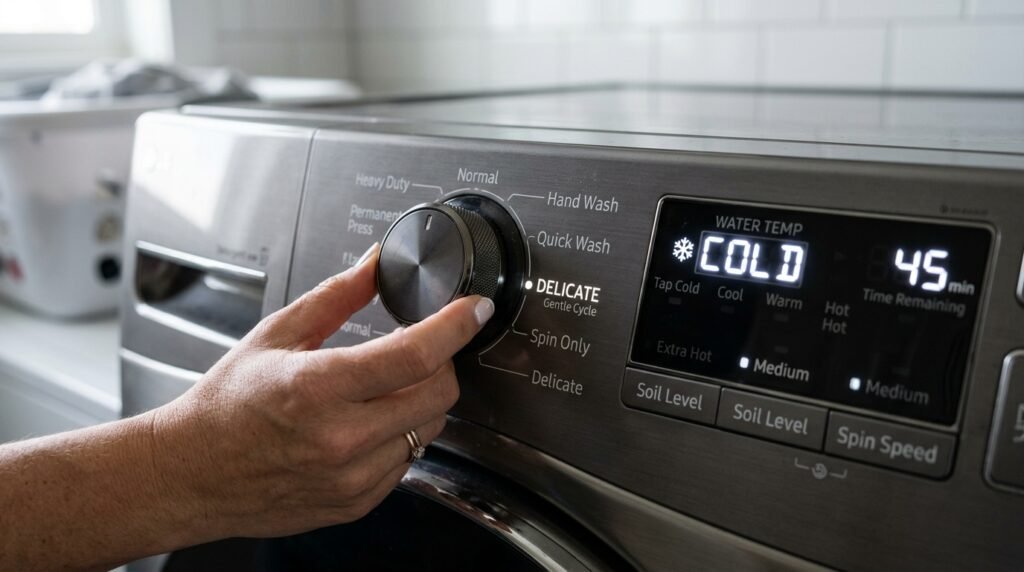
Do not put your car seat covers in the dryer. Even on a low-heat setting, the tumbling action and ambient warmth can melt the foam backing, snap the elastic straps, and shrink the fabric so much that it will never fit over your car seats again.
Instead, you must air-dry them:
- Hang them over a sturdy clothesline, a shower rod, or lay them flat on a clean tarp.
- Keep them out of direct, blazing sunlight, as intense UV rays can fade the dye.
- Ensure they are 100% dry before reinstalling them. Trapped moisture will cause mold, mildew, and horrible odors inside your car’s cabin.
Quick Reference: Machine Washing Guide by Material
To make things simple, use this quick reference table before cleaning your vehicle’s interior.
| Seat Cover Material | Machine Washable? | Recommended Wash Method | Drying Method |
| Cotton / Canvas | Yes | Gentle cycle, cold water, mild detergent | Air dry completely |
| Mesh / Nylon | Yes | Gentle cycle, cold water | Air dry completely |
| Neoprene | Sometimes | Hand wash preferred; delicate cycle if permitted | Air dry flat in the shade |
| Faux Leather / Vinyl | No | Wipe down with damp microfiber cloth | Wipe dry immediately |
| Real Leather | No | Specialized leather cleaner only | Air dry naturally |
Expert Tip:
Never use fabric softener on your car seat covers. Fabric softeners leave behind a slippery, chemical residue that degrades the fabric’s protective coating. Worse, it makes the covers overly slick, which can cause you to slide around in your seat while navigating sharp turns.
Common Mistakes Car Owners Should Avoid
When cleaning car interiors, a simple mistake can lead to a ruined product or even a safety hazard. Keep these points in mind:
- Ignoring airbag compatibility: When reinstalling your clean covers, ensure they are placed exactly as they were. Improperly installed covers can block seat-mounted side airbags. According to NHTSA vehicle safety standards, any obstruction to side-impact airbags can significantly alter their deployment timing and effectiveness during a crash.
- Washing child car seat covers improperly: If you are washing the fabric cover of a child safety seat, you must follow the manufacturer’s manual exactly. Using harsh chemicals or shrinking the cover can compromise the seat’s safety, a point frequently emphasized by pediatric safety experts and the American Academy of Pediatrics.
- Using bleach or harsh stain removers: Bleach will destroy the color of your seat covers and chemically weaken the fabric fibers.
- Washing with heavy items: Do not wash your covers alongside heavy items like jeans or towels with zippers, which can snag and tear the seat cover fabric in the wash.
- Putting covers back on while damp: Rushing the drying process is a guaranteed way to invite a permanent mildew smell into your vehicle.
When to Call a Professional Mechanic
Most car owners can remove, wash, and reinstall aftermarket seat covers on their own. However, there are times when DIY interior care crosses the line into professional territory.
You should consult a professional mechanic or a certified auto detailer if:
- Your seats must be removed to take off the covers: If your custom covers require unbolting the seats from the floorboards, leave this to a mechanic. Removing front seats involves disconnecting factory airbag sensors and seatbelt pre-tensioners. If you reconnect these improperly, your airbags may fail to deploy in an accident.
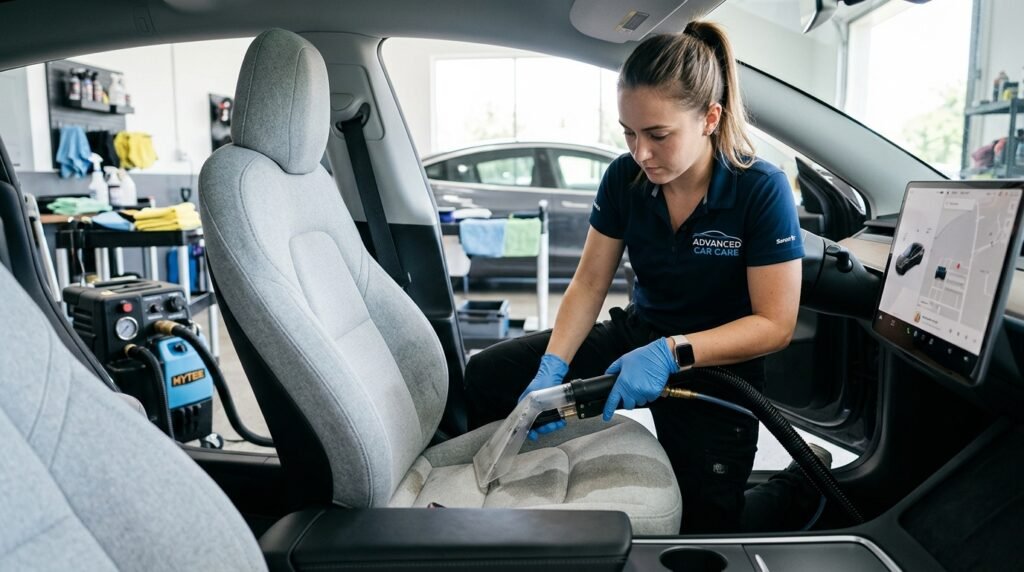
- Your covers are factory upholstery: If you are dealing with the original factory fabric (not aftermarket slip-on covers) that has become deeply stained, do not attempt to peel the fabric off the foam cushion. A professional auto detailer has hot-water extractors and steam cleaners that can deeply clean factory seats without removing them.
- The seat track is jammed: Sometimes, taking covers off reveals that seat tracks or electronic motors are jammed with debris. A mechanic should handle electronic seat motor issues.
FAQs
Can you wash car seat covers in the washing machine if they have foam backing?
Yes, but you must be very careful. Use a delicate cycle with cold water, and ensure your washing machine does not have a central agitator, as the aggressive spinning can shred the foam backing. Air drying is absolutely mandatory, as a dryer will instantly melt the foam.
How often should I wash my car seat covers?
For the average driver, washing them twice a year is sufficient. However, if you work in construction, travel with muddy dogs, or hit the gym daily, you may want to wash them every three to four months to prevent odors from setting in.
Can I use OxiClean on my car seat covers?
You can use oxygen-based cleaners on most durable canvas and cotton seat covers to lift tough stains. However, you should test a small, hidden corner first to ensure it does not cause discoloration, and avoid using it on delicate neoprene.
Will washing my seat covers shrink them?
They will not shrink if you wash them in cold water and allow them to air-dry naturally. Shrinking almost always occurs due to exposure to high heat, either from hot wash water or a tumble dryer.
How do I get dog hair out of seat covers before washing?
A washing machine will not remove embedded pet hair. Before washing, use a rubber pet hair detailing brush or wrap your hand in packing tape (sticky side out) to lift the hair off the fabric.
Can heated seats have washable covers?
Yes, you can use machine-washable covers over heated seats, provided the covers are explicitly designed to be compatible with heated seats. The cover itself can be washed, but you must never introduce heavy water or wet covers directly to the actual heated seat elements in the car.
Conclusion
So, can you wash car seat covers in the washing machine? For most fabric, canvas, and mesh covers, the answer is a resounding yes. Keeping your covers clean is a simple DIY task that instantly refreshes your vehicle’s interior, making your daily drive much more pleasant.
Remember the golden rules of automotive fabric care: always check the manufacturer’s tag, stick to cold water on a gentle cycle, use mild detergents, and never—under any circumstances—put them in the dryer. By taking the time to wash and air-dry your seat covers properly, you will extend their lifespan and keep your car’s interior looking brand new.
Take a look at your seat covers today. If they are looking a little worse for wear, unclip them carefully, double-check their material, and give them the gentle wash they desperately need!
