
Best Infant Car Seat for Air Travel: Top Lightweight, FAA-Approved Picks and Buying Tips

Infant car seats designed for air travel let parents keep their child safe and comfortable while flying. These seats are usually lighter, narrower, and certified for aircraft use so they fit airplane seats and attach to the plane’s seat belt or a certified tether. Many also convert easily for use in cars, making them a handy choice for trips that start and end on the road.
Choosing the right travel car seat comes down to size, weight, and safety certification. The most important thing is to choose a seat that is FAA-approved, fits both your airplane and your stroller or car, and is light enough to carry through airports. We tested and compared popular travel car seats to find options that balance safety, convenience, and comfort for families on the move.
Best Infant Car Seats for Air Travel
We tested and compared popular infant car seats that meet airline rules, focus on safety, and are easy to carry through airports. Below is our list of the best seats for flying with an infant, with quick notes on fit, weight, and travel features.
Guiseapue Travel Car Seat Bag
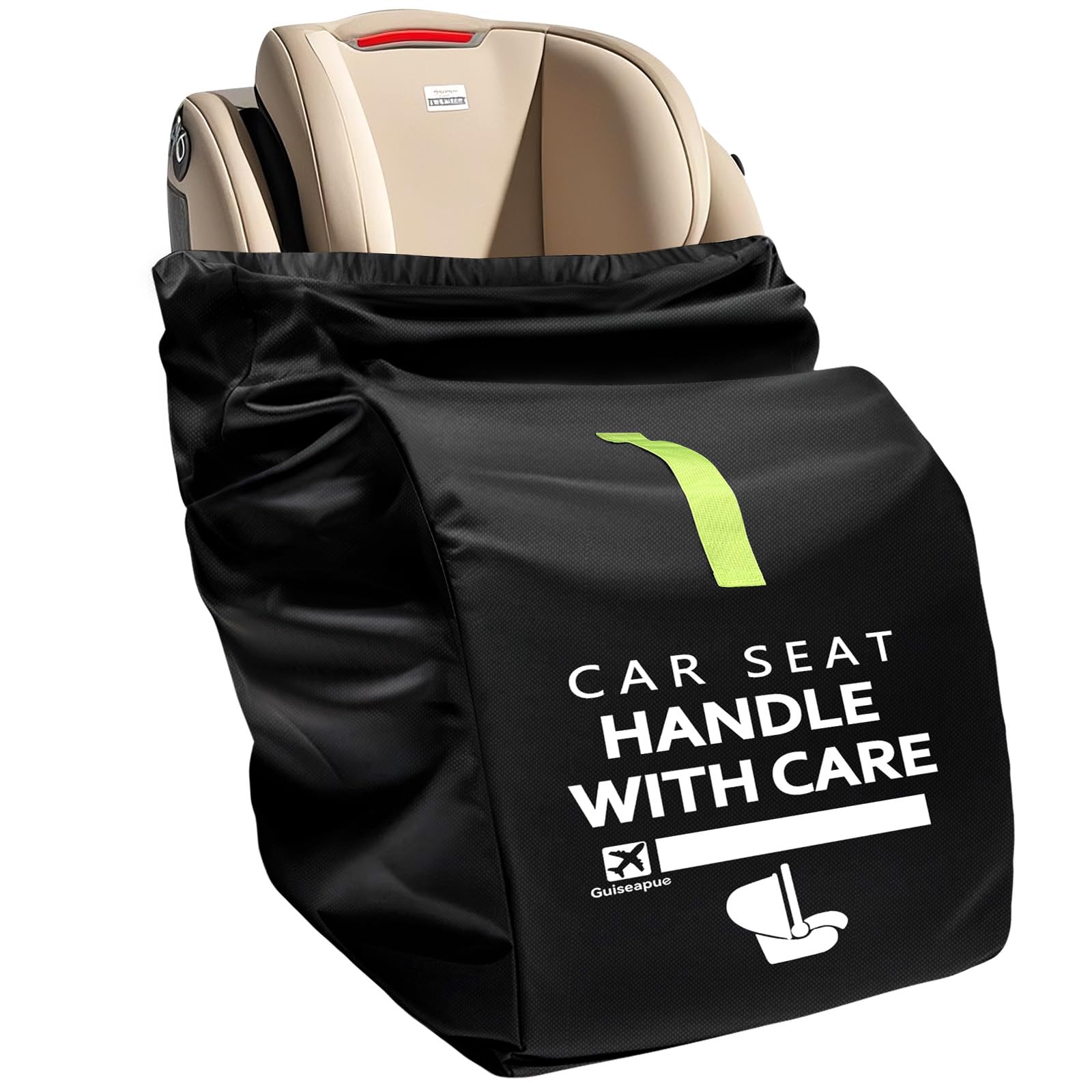
We recommend this bag if you want a lightweight, roomy cover that keeps a baby carrier clean during air travel.
Pros
- Fits most infant carriers and small convertible seats.
- Lightweight and packs into a small pouch.
- Built-in ID pocket and easy grab handles.
Cons
- Material feels thin and can tear with rough handling.
- Very roomy—may be bulkier than needed for tiny carriers.
- Not as protective as hard-shell options.
We used this on a recent trip with our infant carrier and liked how simple it made gate checking. The handles and shoulder strap made moving through the airport easy, and the ID window kept the bag from getting mixed up with luggage.
The fabric saved the seat from dirt and scuffs, and the drawstring closure stayed shut on our flight. One concern: the nylon feels thin. After one rough handling at a busy connection, we noticed small abrasions where thicker material would have held up better.
Stowing the bag into the attached pouch was quick and neat. The extra room is handy when you want to tuck straps or a small blanket inside, but that same space can make the bag awkward to carry if you don’t stuff it down tight.
Overall, we found this bag useful for casual travel where keeping the car seat clean matters more than heavy-duty protection. If you need a lightweight, affordable cover that fits many brands, this is worth considering.
J.L. Childress Gate Check Bag (Red)
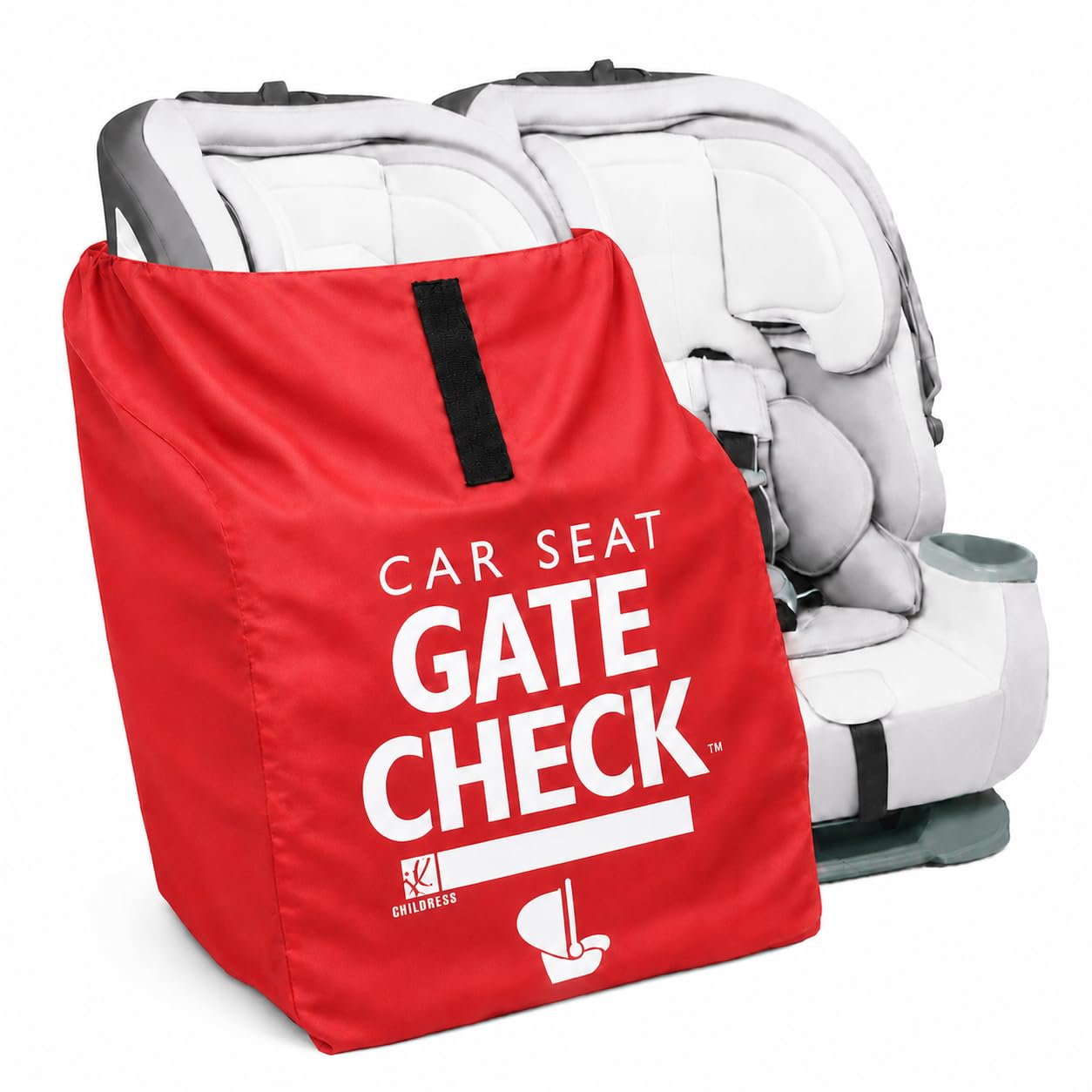
We recommend this if you want an easy, visible bag to protect your car seat at the gate, but expect lighter materials that may wear with heavy use.
Pros
- Bright, easy-to-spot color and big ID box make pickup fast.
- Packs into its own pouch so it stashes well when not used.
- Lockable drawstring keeps dirt out and fits most car seats.
Cons
- Fabric and handles feel thin and can show wear after repeated flights.
- Not fully protective against rough handling — it guards from dirt more than impact.
- Carrying bulky seats still feels awkward despite the handle.
We used this on a weekend trip and liked how fast airport staff returned our seat at the gate. The bold red and large GATE CHECK letters made it stand out on a crowded jetway, and the white ID box saved us time.
Pulling the drawstring closed took seconds and the built-in pouch made folding tidy for the return home. The bag is very light and wipes clean, which helped after a sandy beach layover.
After several uses we noticed stress at the seams and a few small holes on thinner spots. It did its main job—keeping grime off the car seat—but we would not count on it to prevent heavy airline scuffs or tears.
Graco SnugRide Lite LX

We recommend this seat for air travel if you want a very light, easy-to-carry option that still installs securely.
Pros
- Extremely lightweight and easy to lift through airports.
- Simple install with clear level indicator and stay-in-car base.
- Good sun coverage with a rotating canopy.
Cons
- Head insert felt thin on our smallest newborn.
- Not the roomiest for long flights as baby grows.
- Canopy can shift if bumped while carrying.
We used this seat on a recent trip and appreciated how little it weighed. Carrying the infant through terminals felt much easier than with bulkier carriers.
Installation in taxi and rental cars went smoothly. The base’s level indicator removed guesswork, and the seat clicked into place without fuss.
The canopy kept sunlight off our baby during boarding and exits. However, the head padding seemed thin for tiny heads, so we added a safe aftermarket support for short waits.
On the plane the seat fit most economy rows but felt snug after a few months of growth. We liked how the seat attached to Graco strollers for transfers, which made gate-checking and stroller use seamless.
Overall, this is a practical travel seat for short trips and frequent carrying, though parents of very small newborns or fast-growing infants may want to check padding and space before long flights.
Doona Car Seat & Stroller — Nitro Black
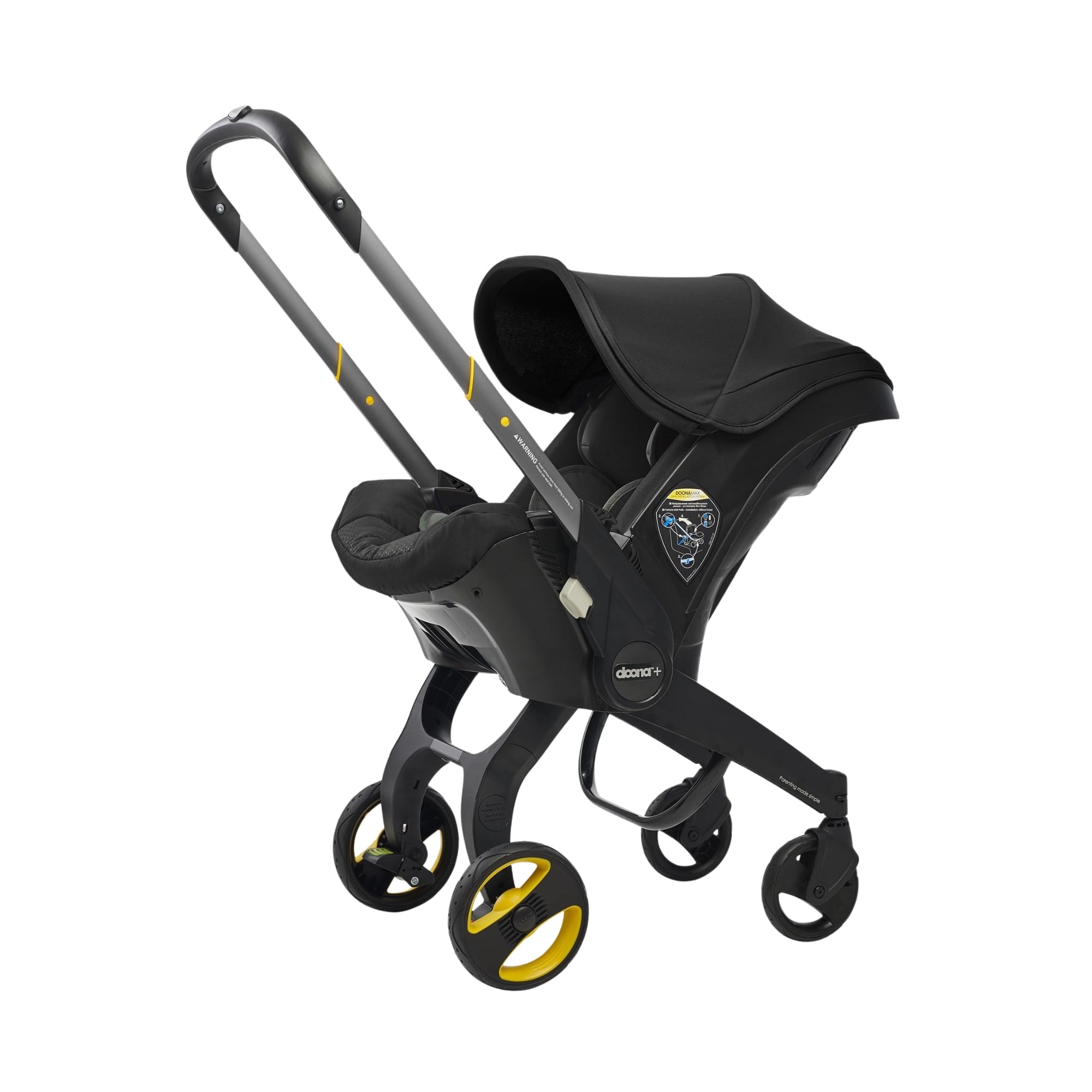
We recommend the Doona when you need a single, fast solution for plane travel and short trips because it turns from car seat to stroller in seconds.
Pros
- Converts to stroller quickly, saves steps in airports.
- Compact fold and easy carrying for tight spaces.
- Feels secure with solid build and easy harness use.
Cons
- Heavier than standard infant seats to carry long distances.
- Short usable lifespan for fast-growing babies.
- Stroller mode is best for smooth surfaces, not rough terrain.
We used the Doona on a recent flight and in busy terminals. It let us slide the baby on board still seated and then snap into stroller mode without waking them. That alone cut down on juggling bags and a sleepy infant.
Installing it felt intuitive and the one-click mechanism gave us confidence we had it locked. The canopy and cushioned insert kept our newborn cozy during carry-throughs and short walks to the gate.
Holding it at the airport showed the weight quickly — it’s noticeably heavier than some infant-only seats. We managed fine for hour-long outings, but we wouldn’t want to carry it on long walks. The stroller wheels roll smoothly on tile and pavement, but they don’t handle gravel or curbs as well as a full-size stroller.
The Doona’s fit and padding made us feel safe while boarding a plane and moving through crowds. If you want the simplest all-in-one for flying with an infant and value quick transitions over long-term use or rough-terrain strolling, this is a practical choice.
Doona Car Seat & Stroller, Nitro Black – All-in-One Travel System
Ellaris 3‑in‑1 Convertible Car Seat (Safety 1st)

We recommend this seat if you want a slim, travel-ready convertible car seat that adapts as your child grows.
Pros
- Slim profile saves space on airplanes and in cars.
- Easy hook‑style LATCH installation we could do quickly.
- Machine‑washable pad and removable cup holders make cleanup simple.
Cons
- Heavier than infant‑only carriers, so lugging it through the airport feels tiring.
- Some older, narrow cars may still find the fit tight.
- A few users reported movement after tightening, so double‑check installation.
We took this seat through airport check‑ins and a short flight. Its slim design made fitting it into airplane seats and a crowded back row much easier than a bulky convertible seat. Installing with the hook LATCH felt straightforward and secure after we followed the instructions.
On the plane, the harness and headrest adjustments worked well for our toddler’s shifting positions. The padding felt comfortable for naps and the cup holders kept small toys from falling into the seat gap. We appreciated the washable cover after a messy snack.
Carrying it was the weakest part. At about a dozen pounds it’s heavier than an infant carrier, and we noticed arm fatigue moving through terminals. In our older sedan, the fit was snug and required extra testing to avoid side‑to‑side play. Overall, this seat gives a good mix of travel convenience and grow‑with‑you use for families who want one solid seat for road trips and flights.
J.L. Childress Premier Car Seat Travel Bag
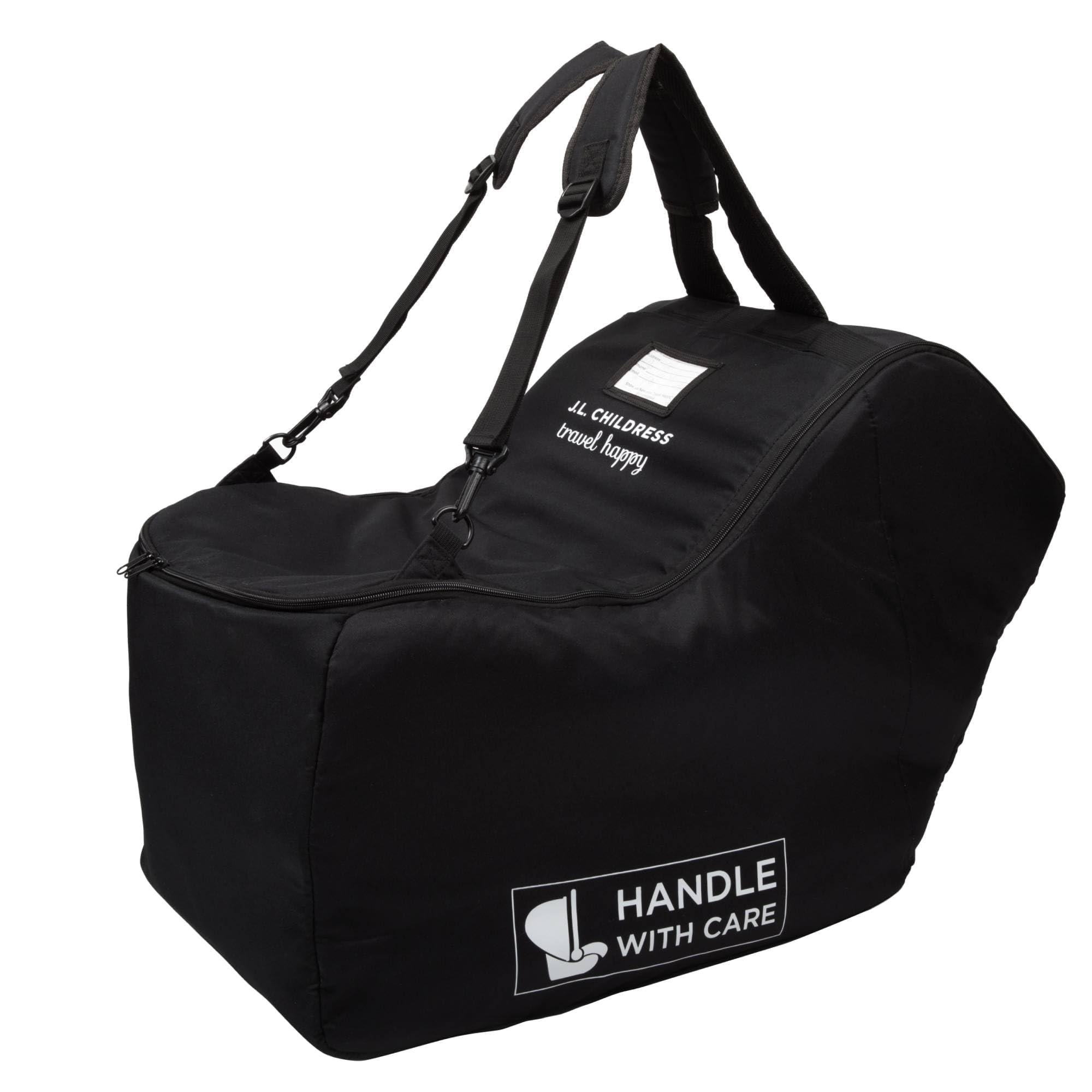
We recommend this bag if you want solid padding, easy carrying options, and the peace of mind of an AirTag slot for air travel.
Pros
- Thick foam padding protects the seat well.
- Padded backpack straps free our hands while hauling luggage.
- Built-in AirTag pocket helps us track the seat.
Cons
- Not all bases with rebound bars or fixed legs will fit.
- Backpack straps show wear after heavy use on some trips.
- No wheels on this model, so it can be bulky to drag.
We used this bag on a recent trip and liked how the padding soaked up bumps when gate-checking our infant seat. The zipper opens wide, so slipping the seat in and out felt quick, even when the baby fussed.
Carrying felt balanced with the padded straps. We tucked the straps away when we checked the seat, and the clear ID slot made it easy to spot at baggage claim.
The AirTag pocket gave us confidence during the flight transfer. After several rides the shell still looked good, though we noticed light wear on a strap after tight handling on return.
Elaia Travel Bag

We recommend this bag if you want an affordable, roomy cover that makes carrying and spotting your infant car seat at the airport easier.
Pros
- Waterproof material keeps the seat dry.
- Shoulder straps let us carry the seat hands-free.
- Large fit holds most car seats and extras.
Cons
- Thin fabric can tear on rough handling.
- Minimal padding gives limited impact protection.
- Drawstring closure can be fiddly with tight packing.
We used this bag on a recent trip and appreciated how easy it made moving a bulky infant seat through terminals. The bright green strap stood out on the carousel, and the shoulder straps freed our hands for bags and a phone.
The bag is lightweight and folds into a small pouch, so it barely added to our luggage. It did not add much shock protection, however — the fabric kept dirt and scratches off but wouldn’t stop hard impacts from rough baggage handling.
Packing and unpacking felt quick thanks to the wide opening and roomy interior. After two flights the seams and straps held up for us, though some users report tearing on tougher trips, so treat it as protective cover rather than heavy-duty armor.
Bugaboo Turtle Air Shield by Nuna
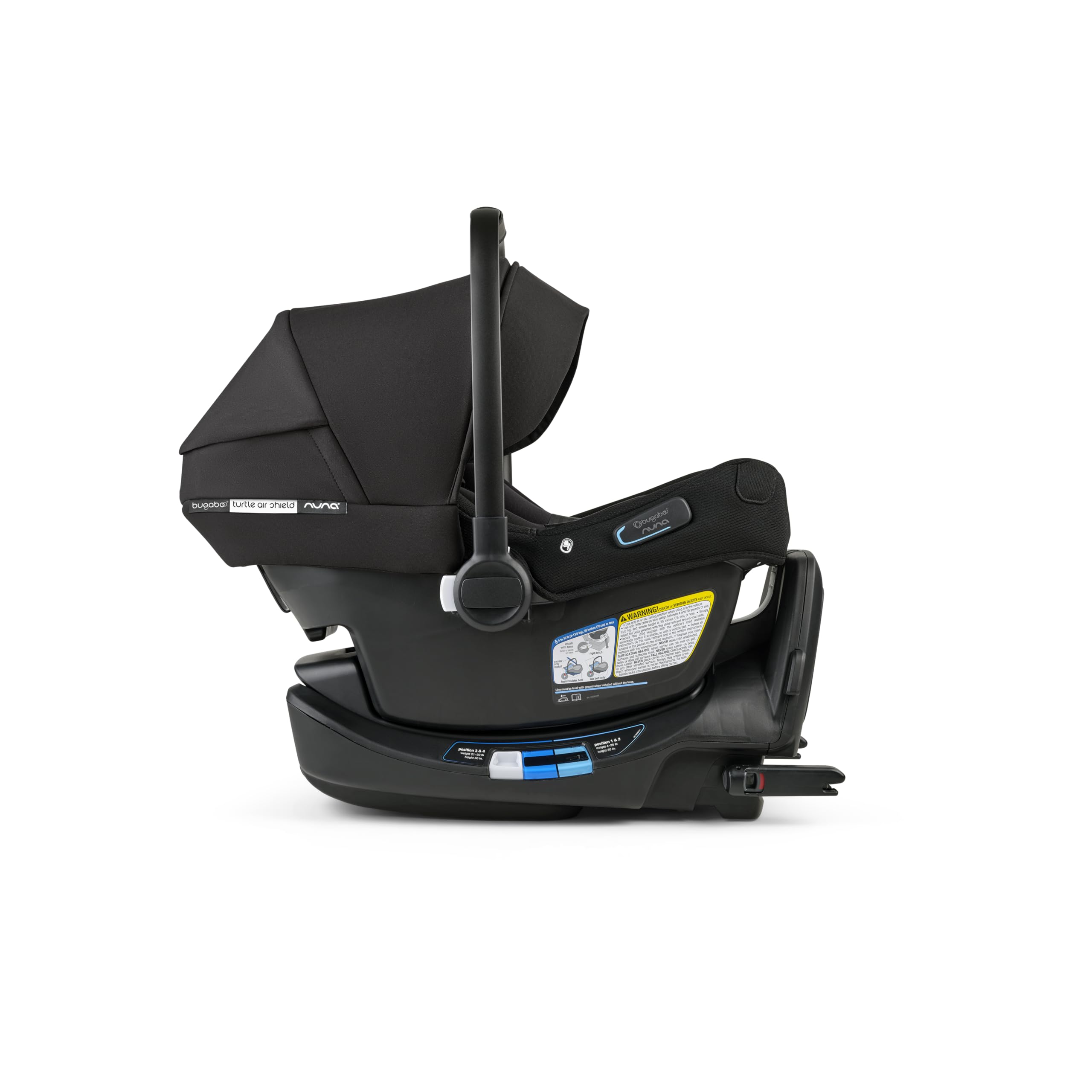
We recommend this seat if you want a very light, plane-approved infant carrier that clicks easily into a stroller and feels premium.
Pros
- Very lightweight and easy to carry through airports.
- Smooth stroller click-in and secure feeling on the recline base.
- Soft, breathable padding with good newborn support.
Cons
- Canopy feels flimsy and can flop onto the baby when folded.
- Premium price for what you get — you pay for brand collaboration.
- Some stroller adapters and base adjustments add small hassle.
We used the Turtle Air Shield on a few flights and day trips. Carrying it through security felt effortless because it’s much lighter than typical infant seats. The memory foam and merino-mix liner kept our baby cozy without overheating.
Installing the recline base was straightforward. The easy-to-read indicators gave us confidence on the road and the plane. Buckling and unbuckling with the magnetic holders saved time when we had our hands full.
Transferring to our Bugaboo stroller clicked in with a satisfying snap, but the canopy bothered us; it folded down onto the baby at times and felt cheap compared with the rest of the seat. Overall, we liked the mix of light weight, safety features, and travel ease — just expect to spend extra for the Bugaboo/Nuna name and bring a small clip or workaround for the sunshade.
Baby Trend EZ‑Lift Plus (Ultra Grey)

We recommend this seat for parents who want a lightweight, comfy infant carrier that makes airport moves and quick trips easier.
Pros
- Very light to carry between car, stroller, and airport gates
- Soft newborn padding keeps baby cozy on short and long hauls
- Easy to move on and off the base for fast transitions
Cons
- Harness can feel short or tight for some babies as they grow
- Not the most advanced fit adjustments compared with pricier models
- Forward-facing orientation may limit long-term infant use
We used this seat on a recent trip and found boarding and deplaning less stressful because the carrier is so easy to lift. The handle felt balanced and the padding made naps on the go quieter and more restful.
Installing it into the car and onto a compatible stroller took moments, which helped when we had tight timing between rides and the terminal. The lightweight build meant we didn’t need extra hands to juggle luggage and baby.
We noticed the harness can require small tweaks and may feel snug at around six months, so plan for periodic adjustments. Overall, it’s a solid, no-fuss option if you want comfort and easy carrying for air travel.
Smooth Ride Travel System

We recommend this travel system if you want a reliable, easy-to-use car seat and stroller combo for short trips and air travel with a newborn.
Pros
- Clicks into stroller and base securely, simple one-hand use.
- Large canopy and inserts keep a small baby comfortable and shaded.
- Folds and stands when closed, which saves space at the gate.
Cons
- Car seat fits rear-facing only up to 30 lbs, so you’ll outgrow it sooner.
- Heavier than ultra-light travel-only seats for strict airline carry rules.
- Some fabrics feel warm on sunny days and can trap heat.
We used this set through airport trips and found the OnBoard FLX car seat very straightforward to snap onto the stroller or the base. The quick-click action gave us peace of mind while juggling bags and baby.
The stroller maneuvers well down narrow jetway aisles and parks easily with a flip-flop friendly brake. The extra-large basket and trays held diaper bags and snacks during layovers, which made moving through terminals less stressful.
For short flights and road-to-plane travel, this combo performed exactly like we needed: secure, comfortable, and convenient. If you need the lightest possible car seat for strict carry-on limits, look elsewhere, but for overall ease and real-world airport use this system did the job.
Buying Guide
We look for safety first. Check for FAA approval if you plan to use the seat on a plane, and confirm the label or manual states it is certified for aircraft use.
We weigh fit and size. Measure the seat dimensions and compare them to the airplane seat width. A narrow base and low profile help fit in tighter rows.
We consider ease of use. Look for simple harness adjustments and a clear installation method. Quick-release buckles and easy-to-read indicators reduce stress at the gate.
We inspect materials and padding. Durable fabrics that clean easily matter. Breathable padding keeps infants comfortable on long flights.
We focus on weight and portability. Lightweight seats are easier to carry through airports. A good carry handle, bag, or detachable straps help hands-free travel.
We check installation options. Seats that install with a lap belt and those that also work with lower anchors give more flexibility. Clear installation guides and built-in belt routing reduce mistakes.
We value extras that matter. A removable canopy, machine-washable cover, and adjustable recline improve comfort. But avoid extra features that add bulk without real benefit.
We review age and weight limits. Ensure the seat matches your infant’s current size and allows room to grow. Using the correct size keeps the harness snug and effective.
We look for service info. Easy-to-find manuals, customer support, and clear warranty terms make ownership simpler. Keep records of purchase and registration for safety alerts.
Editor’s Choice
We picked the Nuna PIPA for its mix of safety, ease, and travel features. It meets FAA rules and installs quickly with a lap belt or base, so airport transfers stay simple.
The shell is lightweight, which helps when lifting through terminals. A sturdy, compact base clicks in and out of strollers for smooth gate checks and short walks.
We like the extended canopy and removable newborn insert for added comfort on long flights. The fabric is easy to clean, and the harness adjusts without much fuss.
Key features at a glance:
- FAA-approved for use on planes.
- Lightweight design eases lifting and carrying.
- Removable base and adapter for stroller compatibility.
- Machine-washable fabric and practical padding.
We recommend testing installation at home before travel. Practice buckling with luggage to speed up airport transitions and reduce stress for you and your baby.
Conclusion
We chose seats and seats with FAA approval, light weight, and easy installation as top priorities for air travel. Those features keep travel safer and less stressful for both infants and caregivers.
We recommend trying a car seat in your car before the flight to learn the harness and base setup. Practice helps prevent delays and keeps your child calm during boarding.
We also suggest checking airline rules and gate-check policies before you pack. Rules change often, and knowing them saves time and reduces surprises at the airport.
We encourage picking a seat that fits your budget, plane type, and how often you fly. A higher price does not always mean better travel use, but safety certification does matter.
Quick checklist:
- FAA approval: required for use on planes
- Lightweight or travel model: easier to carry and gate-check
- Simple installation: saves time and reduces stress
- Fits your car and the airplane seat: confirm dimensions
We hope this helps you choose a car seat that fits your travel needs and keeps your infant secure.
FAQ
Can we use an infant car seat on a plane?
Yes. Many car seats are FAA-approved for use on airplanes. Look for a label that says “Certified for aircraft use” or wording like “This restraint is certified for use in motor vehicles and aircraft.”
Do we need to buy a separate airplane seat for the car seat?
Yes, the car seat must go in an airplane seat and be secured with the airplane seat belt. Infants on laps do not need a car seat, but using one is safer.
How do we install the car seat on a plane?
Place the seat rear-facing in a window or middle or aisle seat if allowed. Use the airplane lap belt through the belt path and tighten firmly. We recommend practicing installation at home.
Can the car seat go in a bassinet or on a stroller in the cabin?
No. Car seats should be on airplane seats only. Strollers and bassinets have different rules and usually must be gate-checked.
What size car seat fits airplane seats?
Check the airline’s seat-width policy and the car seat’s base width. Narrower seats and lightweight travel models fit better. We keep a small list of recommended dimensions.
How do we carry the car seat through security?
You carry it through the X-ray machine or request a manual inspection. Be prepared to remove covers and straps if asked.
Are rental car seats safe for flying?
Rental seats can be OK but check their age, wear, and FAA certification. We prefer bringing our own when possible.